

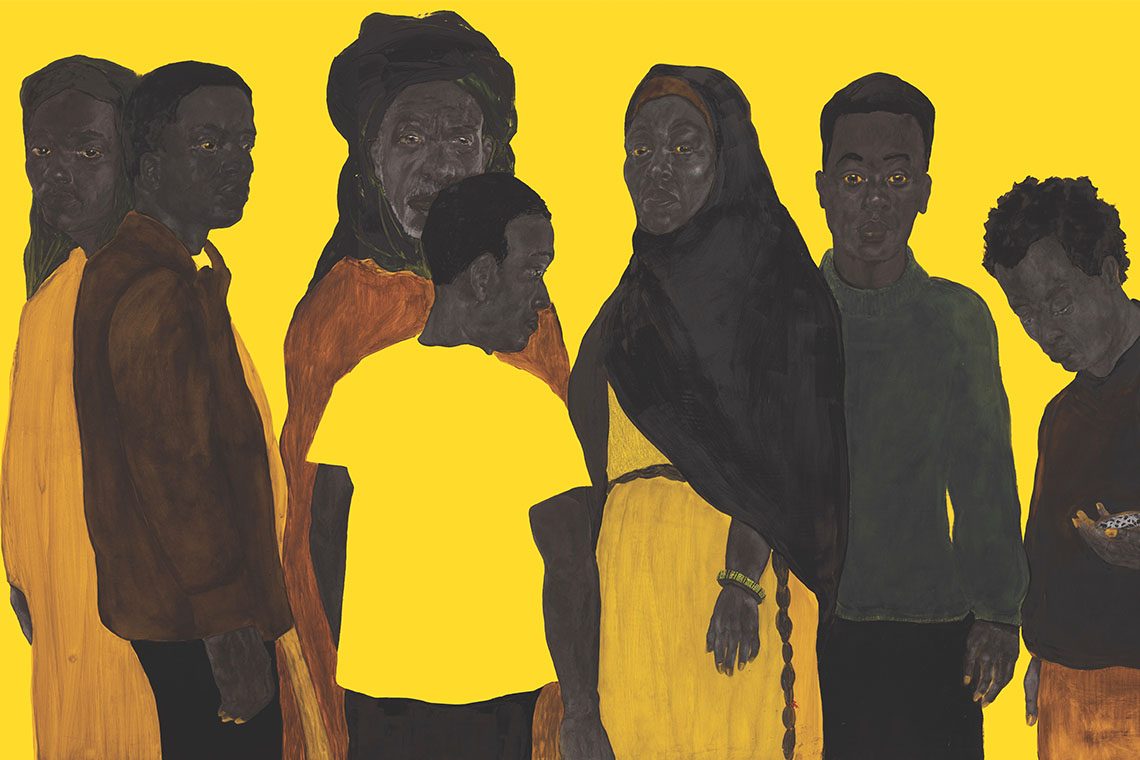
Under the discerning and quietly determined gaze of founder Touria El Glaoui, 1-54 Marrakech has matured into more than a fair. It is a citywide pulse, a meeting point where Moroccan galleries stand confidently alongside international voices, and where art oscillates between market momentum and moral gravity.
First, the silence. At MACAAL, the room held its breath. In front of the 108 clay figures of Statues Also Breathe (2022), the air felt dense, almost fragile. As the story of the Chibok kidnappings was recalled, and as two of the survivors stood quietly among us, no one moved. Horror was no longer abstract. It had weight and texture, embedded in the clay in those sculpted heads shaped in Ile-Ife in Nigeria by students from Obafemi-Awolowo University, craftswomen and families, under the guidance of Prune Nourry.
Here, art was not decorative. It was necessary. It is from this moment of gravity that the seventh edition of 1-54 Marrakech begins to make sense. The fair is no longer simply a sequence of booths inside the hushed salons of La Mamounia, it has become something larger: an ecosystem, a network, a shifting centre of gravity for contemporary African art. The fair has anchored itself in the city’s cultural calendar, attracting international collectors, institutions and auction houses. It has also contributed to the development of the local market while also inserting Marrakech into a broader global circuit. What began as a corrective gesture has become infrastructure.
This year, seven Morocco-based galleries participated in the fair, alongside international exhibitors, their presence not peripheral but distinctly central. La Galerie 38 presented a confident dialogue between historical and contemporary voices. The textured canvases of Ines-Noor Chaqroun push painting toward material experimentation: wool, spray and oil layering into surfaces that oscillate between textile memory and abstraction. The gallery’s decision to place such work in proximity to canonical figures subtly asserted continuity rather than rupture within Moroccan modernity.
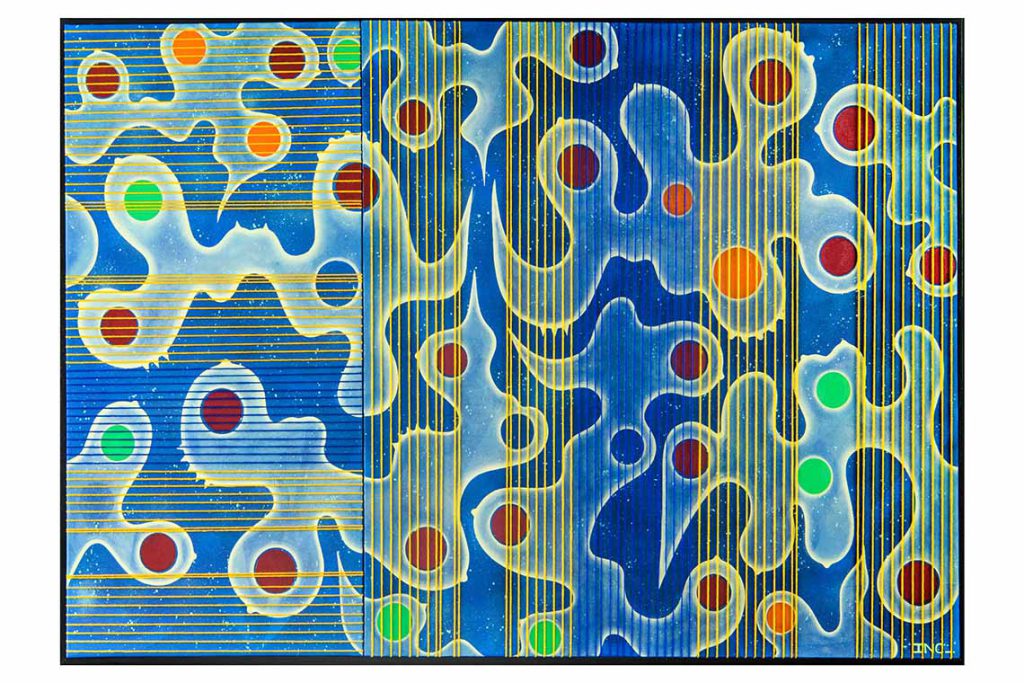
L’Atelier 21 maintained its curatorial rigour, foregrounding artists whose practices revolve around memory, fragility and repair. MCC Gallery leant toward a younger, more immediate visual language, reflecting a generation fluent in contemporary codes without surrendering local grounding. Loft Art Gallery navigated between photography, installation and identity-based practices, signalling a scene comfortable in its hybridity. What was striking was not only the quality of the presentations but also their assurance. Moroccan galleries no longer position themselves in relation to an external focus, operating instead within a multi-centred geography. The axis has both shifted and multiplied.
Of course, the market was present. It moved discreetly through La Mamounia’s corridors, in murmured price discussions and strategic placements. Some works appeared calibrated for quick acquisition, their aesthetic legibility aligned with established collector tastes. Others resisted immediate consumption, requiring slower engagement. This coexistence mirrored the reality of a scene that has matured, one shaped in part by 1-54’s structural intervention.
1-54 founder Touria El Glaoui has often been explicit about this strategy. “Seventy per cent of artworks worldwide are sold through fairs,” she has noted. When she began, none provided meaningful access to artists from Africa. The fair model was not symbolic; it was pragmatic. Visibility needed a market mechanism and today the results are tangible. African artists command higher valuations, galleries from across the continent participate in major international circuits and collectors travel specifically to engage with scenes that once struggled for institutional recognition. The ‘boom’ frequently mentioned in conversations around 1-54 is not hype, it reflects a practical recalibration of visibility and value.
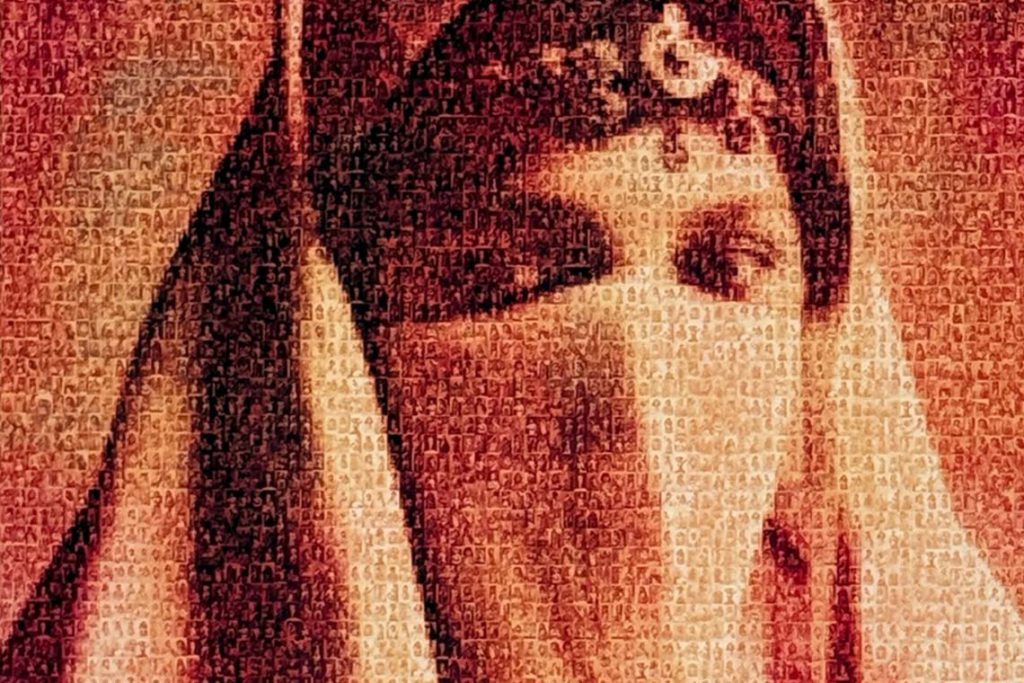
Yet 1-54 Marrakech 2026 extended beyond transaction. Across the city, parallel exhibitions deepened the conversation. At the Musée du Monde des Arts de la Parure, Elladj Lincy Deloumeaux explored ornament and corporeality as vehicles of identity. At DADA, special projects unfolded around materiality and colour. Meanwhile, the Museum of Culinary Art, in collaboration with DAR SOCIETY, proposed an artistic and gastronomic journey where taste became medium. Here, art left the wall and entered the body. The table became site, with creation circulating through the senses.
This dispersion is significant. Marrakech is no longer a picturesque backdrop for contemporary African art. It functions as a laboratory where memory, market, craft and conceptual inquiry intersect. A necessary tension remains, however. How can the political intensity glimpsed at MACAAL coexist with the inevitability of commerce? How does one preserve moments of silence, of collective reckoning, within an event designed for circulation and exchange? Perhaps the answer lies in the project’s origin. In that initial impulse to connect what had been invisible – to create a bridge without flattening difference and build a market without erasing memory.
Leaving Marrakech, two images linger. An army of clay figures holding space for remembrance and Moroccan galleries standing firmly within a global conversation they have helped to shape. Between inheritance and expansion, 1-54 has entered its phase of maturity. Seven years after its Moroccan anchoring, the fair no longer seeks validation –it generates it.
