

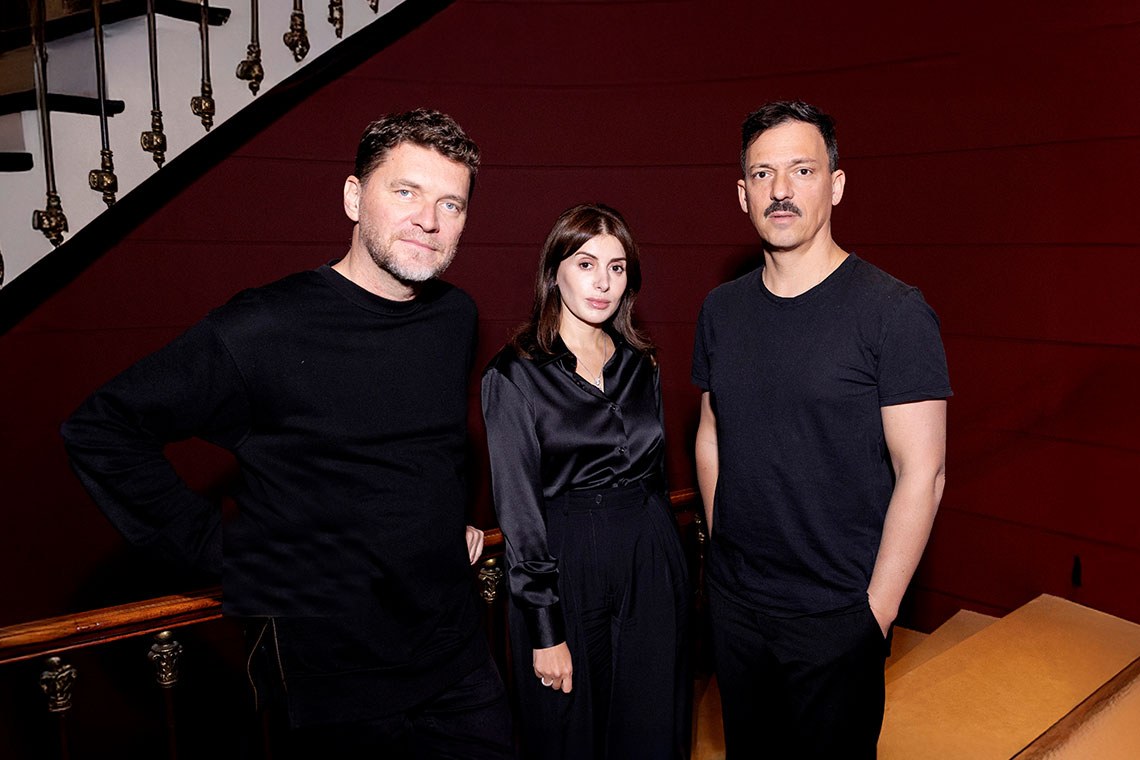
The Centre for Contemporary Arts Tashkent is celebrating the launch of its first year’s programme and inaugural exhibition, Hikmah. Gayane Umerova, chairperson of the Uzbekistan Art and Culture Development Foundation, and Paris-based architecture firm Studio KO, comprising Karl Fournier and Olivier Marty, discuss heritage preservation, how to generate cultural dialogue and what it means for Uzbekistan moving forward.
Gayane Umerova: While the Uzbekistan Art and Cultural Development Foundation is now preserving many things, back in 2017 there was one building that we didn’t manage to save and I still feel bad about it. The governor of Tashkent decided the city needed rebuilding and demolished a cinema, one of the greatest buildings of the Modernist era. Seeing this take place, with no one standing up against it, really affected me. Only after it was gone did people realise what had happened. The fate of that building launched me in my efforts to protect architecture and work towards the addition of Soviet Modernism to the UNESCO World Heritage list. After that, we – along with the French government – saved a Soviet cultural centre that used to host celebrated film festivals. It is now being converted into a restoration centre and a French language and culture space.
The building now used for the Centre for Contemporary Arts Tashkent was also supposed to be demolished. It used to be a tram station and diesel depot from Uzbekistan’s Imperial era, located in the heart of historical Tashkent in the university district alongside four other academic institutions. The state plan was to build another university in its place. I had been looking for a building, so when I realised that we could obtain it, in 2018, I searched for an architect who could rethink the building while respecting and preserving its original brick, which is a very special element. I met Karl [Fournier] and Olivier [Marty] after seeing what they had done for the Musée Yves Saint Laurent in Marrakech. I felt so inspired and loved the way they worked with the material of brick, even though that was a new building. In their practice, they really look into the pre-existing contexts and structures. I was also working with UNESCO and spending a lot of time in France, so it made sense to reach out to French architects specialising in heritage. I invited them to Uzbekistan to see the building and found that the connection was very natural from those first meetings, even though they had not worked in this region before.
Studio KO: When you first encounter the Centre for Contemporary Arts Tashkent, you experience an almost mystical feeling as you enter the diesel station. It was very powerful for us. Gayane was very attentive when we met, and with each subsequent meeting we gradually understood the strength of her vision and her courage in making things happen. She always talked about our mission as creating “a gem of a building”. For a project like this, a typical heritage architect would have an extremely ‘framed’ approach based on scientific research and blueprints. Our approach is a mix of that with personal intuition about the quality of the building. We consider that personal feelings and emotions add to the scientific interest of a structure. All buildings are technically salvageable, but they also need to be saved and want to be saved. We don’t think that there should be a line drawn between preservation and progress. No more so than there should be a line between modernity and history, or modernity and archaism. Our whole approach involves trying to move away from this classical opposition. There is progress in preservation, there is preservation in progress. Progress should come from the layering of the past, really understanding where you’re coming from, and what you do as a result of that. Preservation can imply very modern techniques and sustainable approaches, so they’re very intimately bound together. In terms of cultural sensitivity, we believe that an understanding of history and context is needed, as well as a very modest approach to what you could bring to a world that has done so much in the past.
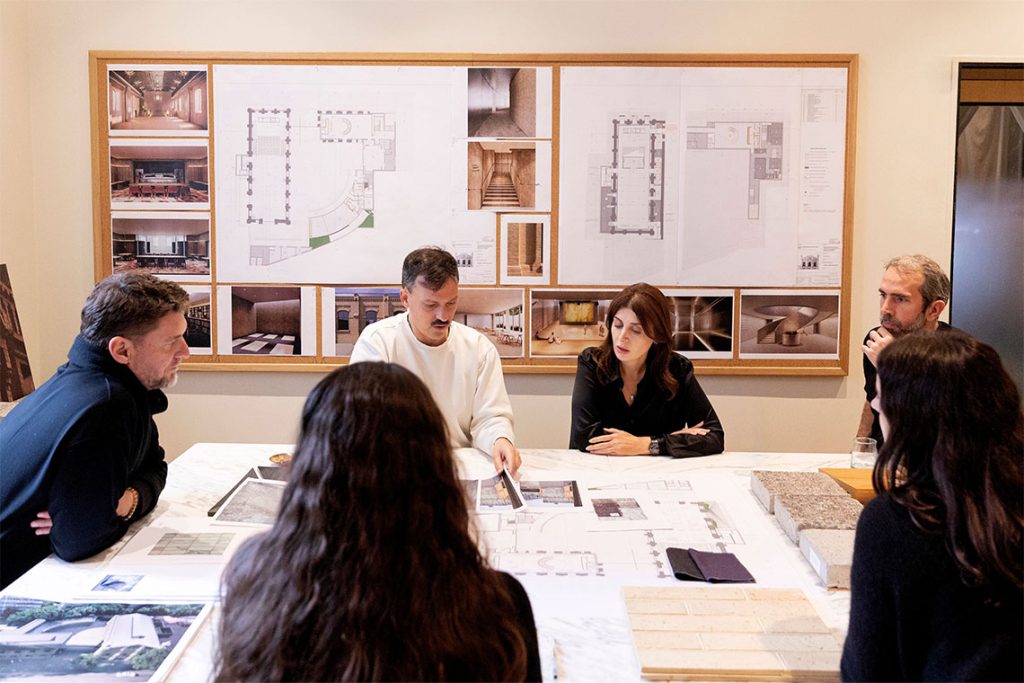
GU: I was born in Soviet times, and Tashkent Modernism, or Soviet Modernism, and even Imperial buildings, are full of nostalgia. My generation wants to continue using these buildings, because periods in our lives were spent witnessing and experiencing them. They were part of the social architecture of the city. Preserving them now is important because we really want to be respectful to the layers of history in our city, and across Uzbekistan more widely. People are ready for these buildings to be in use again, to be given a second life. In reimagining them – maybe with different identities – we adapt the purpose to the building, not the architecture to the purpose. If a building isn’t suitable for specific programming, we find another building. The CCA building itself had already been ‘touched’, it had been used by various state organisations without a specific purpose and had fallen into disrepair. At some point the owners had even built a third floor on top of the weaker lower floors. The way in which we had to remove different elements in order to strengthen the was almost surgical. This is why it was a pure joy to work with Studio KO, who understood that the project was about the architecture and how best to serve the public and revitalise a building that exists in collective memory. We also had to think about the potential use for future generations. This is especially important because the percentage of young people in Uzbekistan – almost 60 per cent – is very high. We want them to learn about and respect the architecture of the Imperial, Soviet and independence eras.
SKO: The CCA’s ornamentation language belongs to the Russian Imperial period. This kind of architecture employs Russian motifs, executed in fired grey-yellow brick known as “Nicolai brick” using local materials and a local labour force. Of course, there’s so much fantasy around ruins and relics and what they reveal about the past, a vanished grandeur that no longer exists. There’s something extremely romantic about the building. Beyond that, however, it has amazing spatial qualities and this is why people have loved it so much over the years. It has remained in people’s memories because of its inherent qualities, and this is related to space.
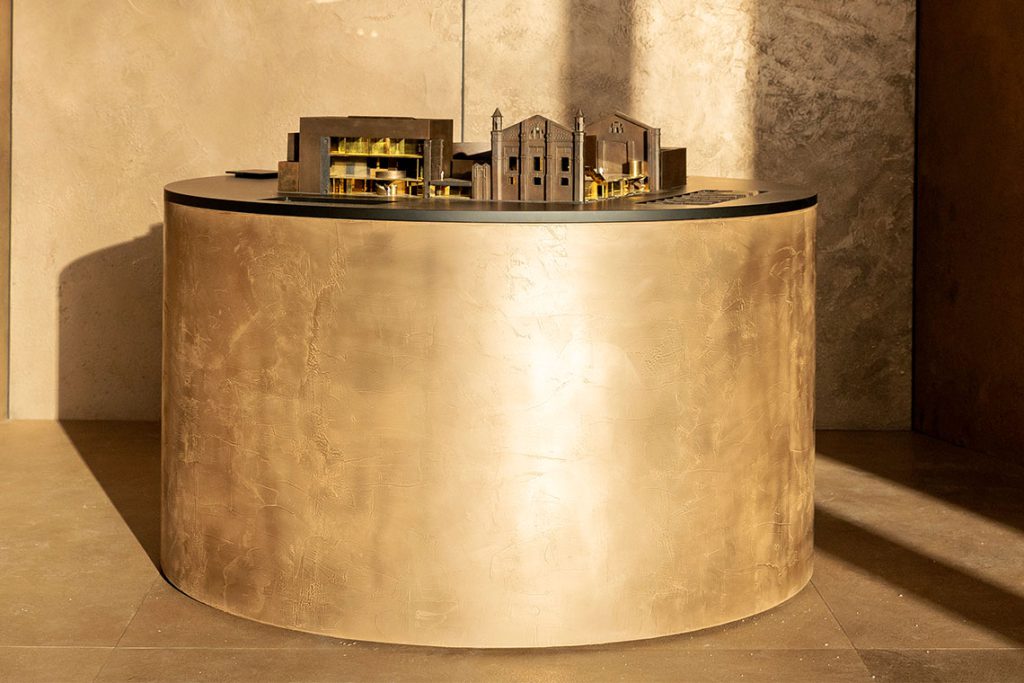
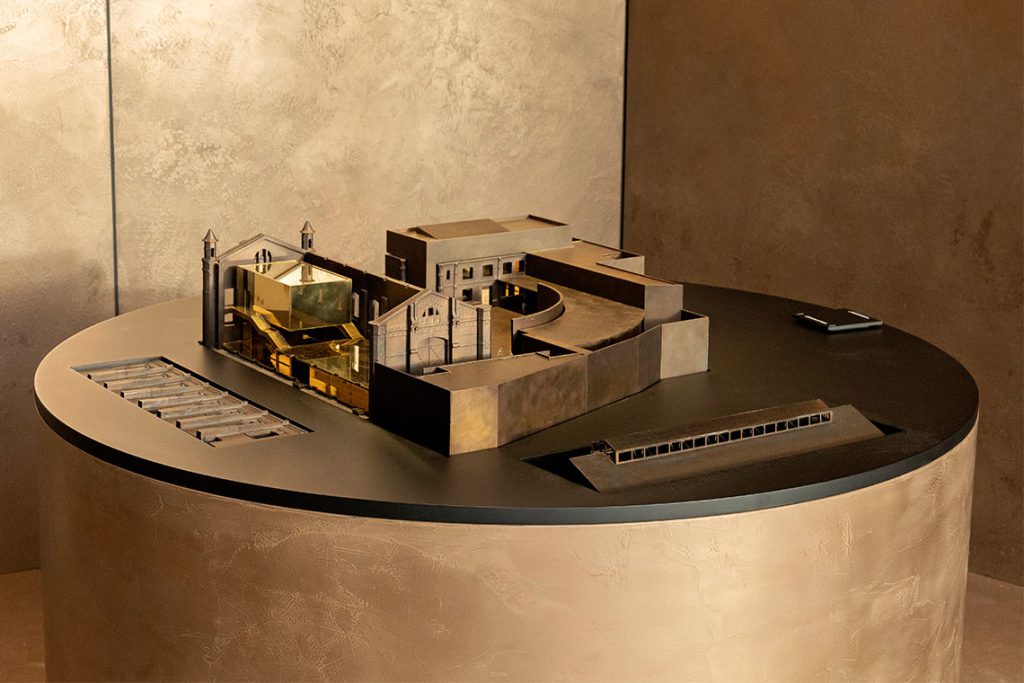
The way different people, younger people, new generations, want to come and use space is fascinating, but we’d rather focus on the continuity rather than the discontinuity, because what we have created at the CCA is a composition around a courtyard. The ways in which these audiences, particularly younger generations, will use this open space will be very informal, porous and loose. They can either enter from the administration building on the side or, when the gate is open, directly from the street to the courtyard in a very continuous way. It is absolutely comparable to the use of the Registan in Samarkand, or the use of a traditional mahallas courtyard, which is where the community gathers, where you find the raised platform pavilion or tapchan, and where men gather to drink tea and play games. The community character of the courtyard transcends all generations.
GU: We’re reimagining for the future, but also looking backwards in a way. Soviet times were collective and now we’re becoming collective again, in the sense of it being all about communities, coexistence. Young people are engaging with each other, which had not been the case for quite some time as these kinds of buildings and spaces were not available to the public. When we started the Uzbekistan Art and Culture Development Foundation in 2017, I had numerous conversations with the state, which was providing funding and asked if there was an actual demand for this sort of activity. We really felt that it’s not about demand, it’s about supply. We have to show that if such buildings exist, people will come. It was the same situation for the children’s library that we created – everyone said there was no need, no one reads, no one has time, let’s make it digital. We insisted and now, three years later, it’s very successful. Children take books home, people use the space for meeting, for work, spending quality time with family. It shows exactly how a well-designed space can trigger a whole city and open it up to new dialogues. The independence era is all about trying to find a new identity and vernacular for the country, and new architecture is part of that. Restoring brickwork, sustaining buildings, is part of that. For a while, architects were more focused on new buildings but now, with the awareness of the creative economy, it’s important to focus on different specialties – painting restoration, heritage preservation, archaeology. Architectural conservation and adaptive reuse also introduce new professions and expertise to the job market.
SKO: Heritage preservation can come from the public, but more generally, we think it is a political approach because it takes a lot of courage and energy to save heritage, and protect it from the speculation and the power of development and markets.
GU: It is the responsibility of the state and private organisations, but I hope it is equally so for the public. We need to be the example, though. That’s why we didn’t build the CCA from scratch, even though we could have. There is lots of land in Uzbekistan on which to build, but we just wanted to give an example of how you can preserve an old building through a new architectural language. There are many buildings still in private hands, and we are setting an example and leading the way in how to repurpose buildings with the help of a dedicated agency. Demolition and rebuilding from scratch for tourism or hospitality might be more appealing financially, but we are working to explain how money can come from cultural purposes too. The public is starting to understand that it isn’t just the role of the state but also the private sector and the people themselves. We have to support and look after our city. Our other big mission is to be listed with UNESCO, and we’ve published a book with Rizzoli on Tashkent Modernism that documents all the buildings that we’re rescuing and reviving. This year, hopefully 12 out of 24 buildings will be added to the list. That will be our biggest success so far.
