

Through film, installation, sound and archival material, the artist traces the legacies of Pan-Africanism and Algerian independence as forms of postcolonial cultural resistance.
In The Wretched of the Earth (1961), Frantz Fanon observed that for African intellectuals to “give battle to colonial lies” would entail a fight waged “on the field of a whole continent”. The Martinican psychiatrist became involved in Algeria’s freedom struggle in the 1950s, joining the National Liberation Front (FLN) in its fight against French occupation. His writings suggest that the affirmation of a widely encompassing African culture that transcended national borders was a fitting response to imperialist systems that sought to diminish the continent’s diverse identities and histories.
An early Spanish translation of Fanon’s seminal text appears in an exhibition in San Sebastian, northern Spain, dedicated to French-Algerian artist Zineb Sedira, whose practice explores postcolonial migration, memory and nationhood. Staged at Tabakalera, the display combines four installations by Sedira with the Basque arts centre’s own curatorial response, which draws links with Spain’s colonial history.
Following its independence from France in 1962, Algeria – from where Sedira’s parents migrated before her birth in Paris – became a hub for anti-colonial political consciousness emerging from various nations. Thinkers and activists involved in liberation struggles far and wide – from Zimbabwe, South Africa, Mozambique and Angola to the US Black Panthers and the Palestinian resistance effort – were drawn to Algiers for its revolutionary spirit.
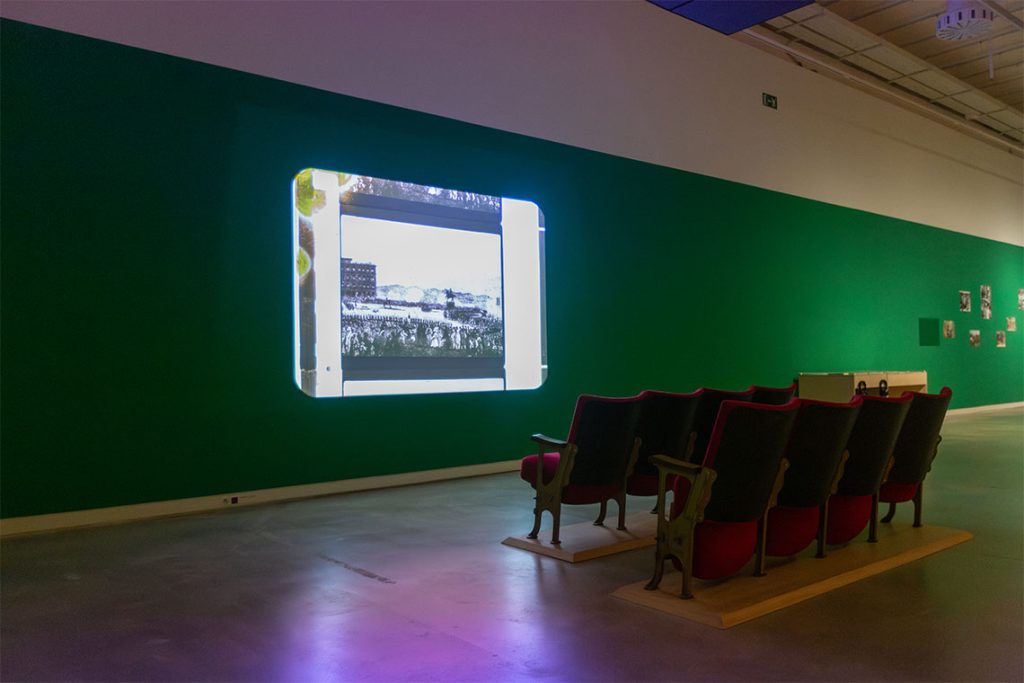
For Sedira, who unveiled a new commission at London’s Tate Britain last month, cultural production was vital for the assertion of postcolonial identity. Her film piece Mise-en-scène (2019) shows newly independent Algeria as an epicentre for militant cinema, a radical form that questioned state power; the installation shows fragments of politically engaged footage screened at the Cinematheque of Algiers, founded in 1965 – one of the first archives of its kind in Africa. Even more notable for Sedira was the first Pan-African Festival of Algiers (PANAF), held in 1969, which gathered artists, musicians and literary figures united by a sense of African identity that was pivotal for Algeria’s new nationhood.
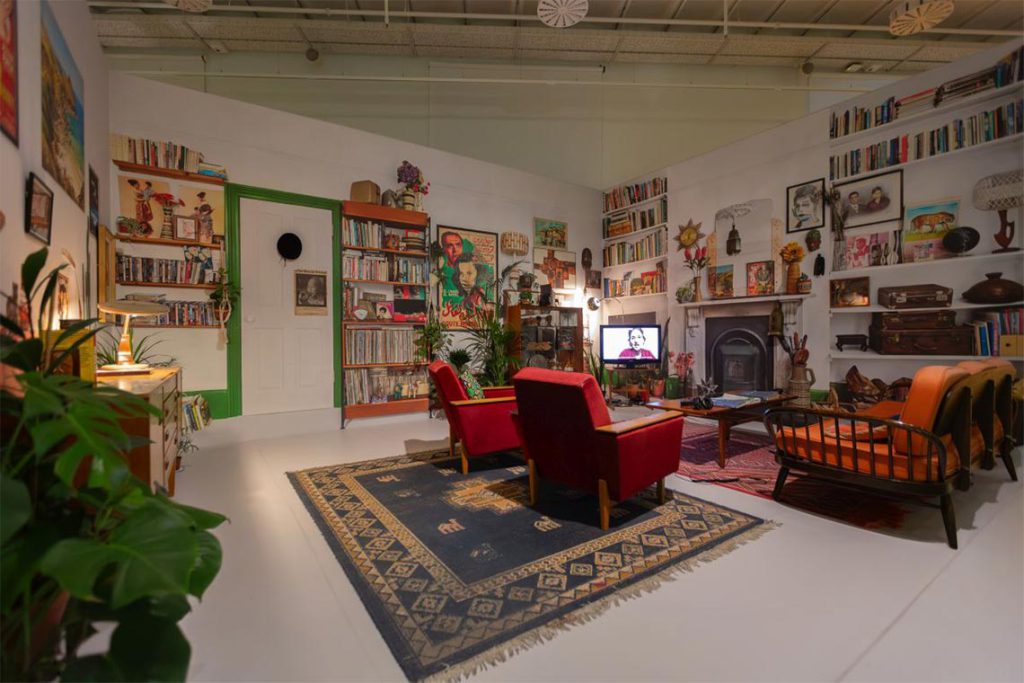
The Algiers festival underpins Way of Life (2019) – a replica of Sedira’s London living room, first exhibited at the Venice Biennale in 2022. Mid-century modernist furniture and colourful woven rugs are set against books, posters, artworks and decorative objects representing North Africa’s cultural diversity. The coffee table displays a collection of political speeches delivered at PANAF, while the television shows art critic and researcher Nadira Laggoune discussing her own memories of the event, which she says represented a reclaiming of identities and aesthetics erased from Algeria by French rule.
According to Laggoune, Pan-Africanism allowed Algerians to feel a sense of belonging “not just to a continent, but to a culture”. Emerging in the early 1900s, the ideology – which is also the focus of a exhibition shown recently at MACBA in Barcelona and which opens at London’s Barbican later this month – invigorated cultural and intellectual movements that flourished as European empires began surrendering their African colonies from the mid-twentieth century onwards. For Algeria, it helped to dissolve cultural and ideological boundaries not only with other Arab nations like Tunisia and Morocco but also with the rest of the continent and its global diaspora.
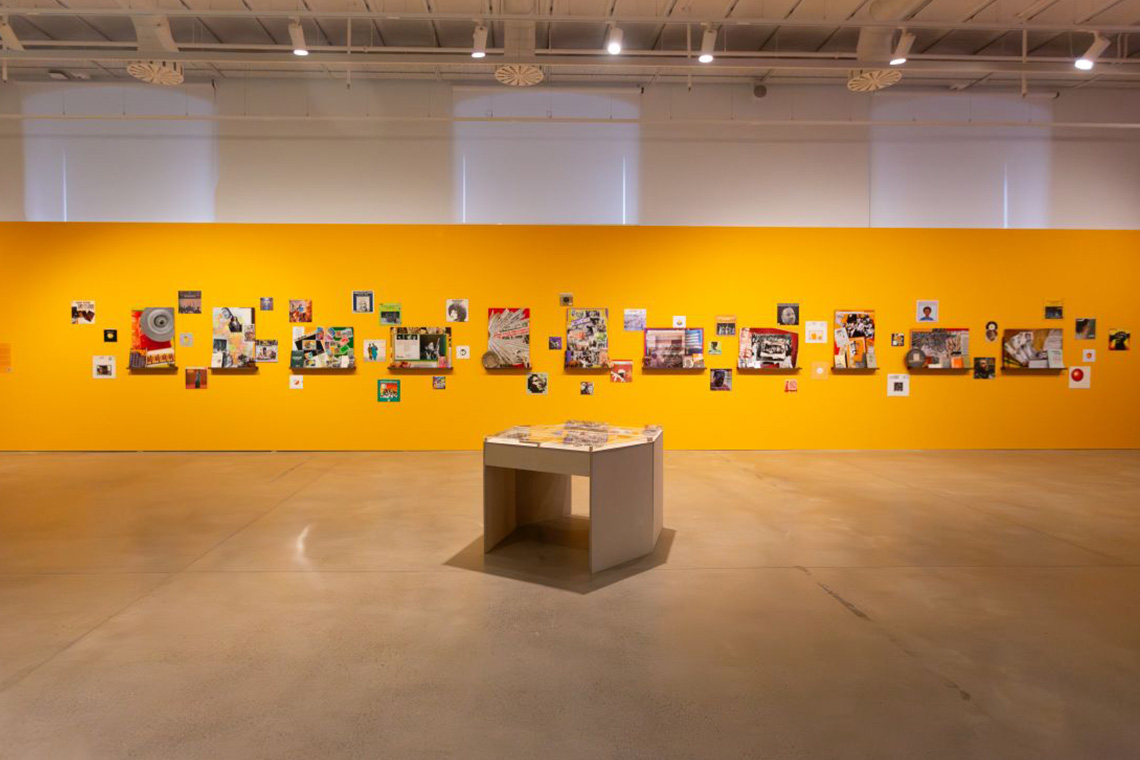
These transnational intersections are highlighted in For a Brief Moment the World Was on Fire (2019), featuring several photomontages made of press cuttings, photographs, maps, stamps, pamphlets and other items related to the people and organisations involved in PANAF. These are interspersed with pieces from We Have Come Back (2019), which highlights Black American cultural figures who formed part of Algeria’s Pan-Africanist milieu: vinyls by James Brown, Nina Simone and Aretha Franklin and recordings of political leaders like Martin Luther King and Angela Davis are displayed alongside South Africa’s Miriam Makeba and Algeria’s own Mohamed Lamari.
The exhibition’s curators, Ane Agirre Loinaz and Rita Fabiana, believe Sedira’s examination of Algeria’s liberation resonates in countries like Spain and Portugal. A display at Tabakalera highlights Equatorial Guinea’s referendum process for independence from Spain that took place at the same time, while images by Algerian photographer Boubaker Adjali show armed resistance groups in Mozambique and Angola – both former Portuguese colonies – in the 1970s.
Algiers was also the place of exile during the Franco dictatorship for Spanish politician and activist Antonio Cubillo, founder of the Movement for the Self-Determination and Independence of the Canary Archipelago (MPAIAC). The body called for Spain’s secession of the Canary Islands, whose conquest and settlement in the 1400s resulted in the genocide of the native Guanche population and set a model for the subsequent colonisation of the Americas. Exhibited materials show how MPAIAC – thanks to its presence in Algeria – was supported by the Organisation of African Unity, while being demonised in Francoist Spain.
By linking Sedira’s work to Spanish-controlled territories, the show highlights how the independence era of the artist’s ancestral land galvanised decolonisation efforts elsewhere. Because European colonialism was, in Fanon’s words, “continental in its scope”, Pan-Africanism offered transnational unity against it – and questions of such unity persist today, as Arab and African populations bear ongoing violence engendered by European imperialist history. Sedira’s work shows how cultural alliances can transcend borders drawn by colonial rule, as a form of artistic resistance produced through the recovery of memories, identities and aesthetics.
Standing Here Wondering Which Way to Go runs until 14 June
