

Located in the medieval Belgian town of Hasselt, Z33 presents a group exhibition that lingers on the act of looking.
We are living through an era of relentless visibility. Images of war, displacement and state violence arrive on our screens in real time, accumulating faster than they can be processed. Yet the unprecedented circulation of these images has not necessarily translated into political actions. Instead, a strange contradiction has emerged – never before have we seen so much, and rarely have images appeared so incapable of changing the course of events. In such a moment, the question is no longer whether we can see, but what it means to continue looking.
It is within this tension that Before Our Eyes at Z33 in Hasselt positions itself. Bringing together 11 international artists working across Europe, the exhibition is less concerned with documenting crises than with interrogating what it means to witness them. Curator Tim Roerig proposes a reflective approach, asking how artists might respond to such events without turning violence into spectacle. From its title, the show suggests immediacy, yet much of what unfolds resists instant recognition, requiring viewers to linger and confront their own position as witnesses.
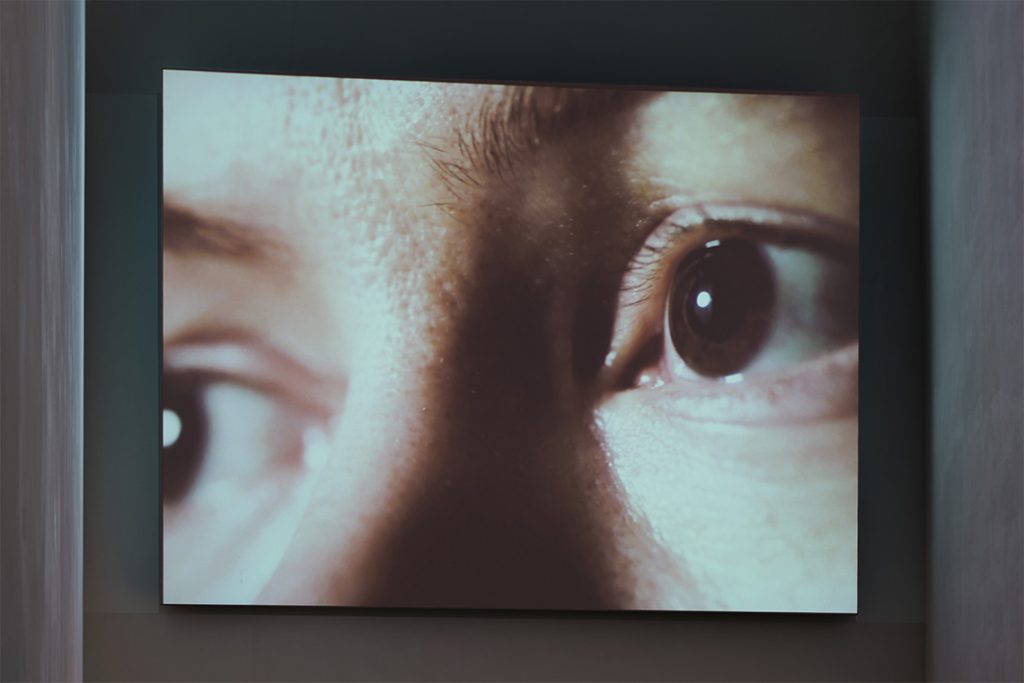
Positioned at the entrance of the exhibition space, Angharad Williams’s Solo Performance (2025) presents a monumental close-up of the artist’s face. Her gaze appears fixed somewhere beyond the camera, creating an unsettling uncertainty about whom she is addressing. At intervals, her lips begin to move, yet no sound emerges. The instinctive response is to read her mouth, to search for meaning within the silent utterance. Communication appears tantalisingly close while remaining inaccessible.
This uncertainty reappears throughout the exhibition. Lebanese artist Rabih Mroué’s Black Boxes (2006–16) assembles newspaper photographs collected over a decade and reconfigures them into illuminated collages. References to the 2006 Israel-Lebanon war, the Arab Spring and the Syrian revolution emerge and dissolve within the fragmented works. Accompanied by an unexpected soundscape delivered through headphones, the work disestablished the viewer’s relationship to the documentary of evidence. Advertisements, voices and overlapping audio fragments interrupt any straightforward reading of the images.
Memory lingers throughout the works of Marianne Berenhaut, particularly À chacun sa taille (1971–73), an installation in which fragmented mirrored surfaces are assembled into a delicate yet charged constellation of objects. The artist spent her childhood in hiding during the Holocaust, and her practice transforms remnants and discarded materials into acts of preservation. Berenhaut’s works function as historical anchors within the show, recalling a lineage of artistic responses to catastrophe that continues to shape how artists approach representation today.
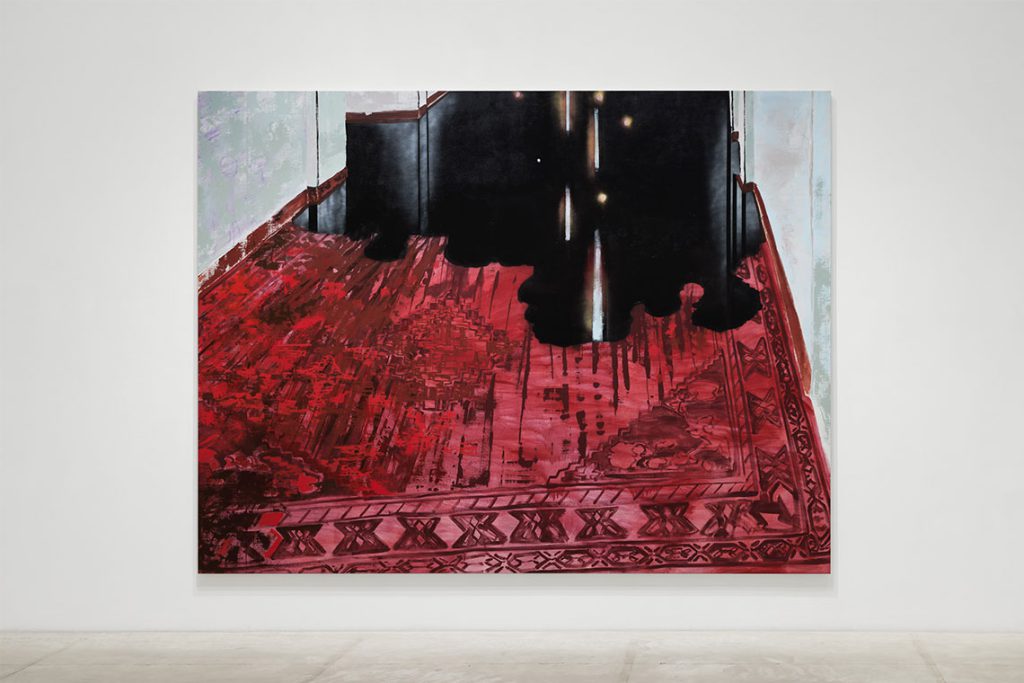
In Mohammed Sami’s Emotional Home (2024), absence acquires an almost physical weight. The painting depicts an interior that appears recognisable, even domestic, yet it remains inaccessible. A corridor stretches into the distance, while a black liquid disrupts the floor’s perspective. Like much of Sami’s work, the painting is less concerned with depicting events than with tracing their aftermath. Memory surfaces here not as a narrative but as atmosphere, discernible within the architecture itself.
On the second floor, sounds of waves mingle with conversations, drawing visitors to Rosalind Nashashibi’s Electrical Gaza (2015–16). Filmed shortly before the devastating Israeli bombardment on Gaza in 2014, the work offers a portrait of everyday life that resists the visual language through which Gaza is most commonly represented. Children play, streets bustle with activity and there are moments of ordinary intimacy. Violence remains largely off-screen, yet its presence is felt throughout, lingering at the edges of the image. Beginning and ending at the Rafah border, a threshold through which movement is both desired and restricted, the film is haunted by questions of mobility and containment. Nashashibi directs the viewer’s attention towards what existed before, the everyday life that persists under occupation.
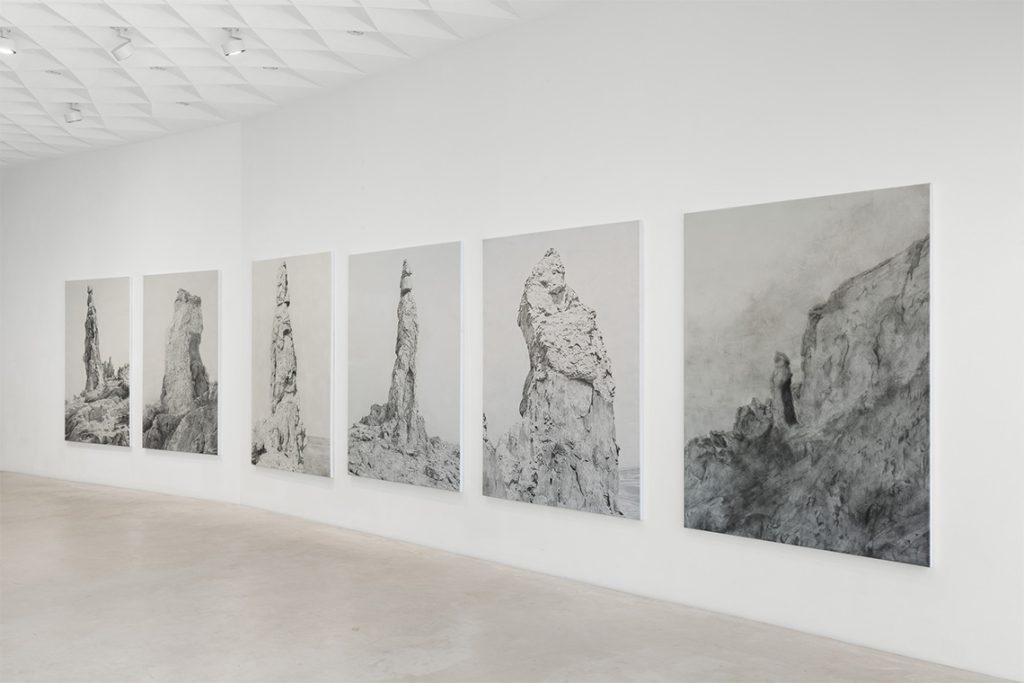
Nearby, Lot’s Wife (2025) is a series of paintings by Berlin-based artist Hamishi Farah and draws upon tourist photographs of rock formations along the shores of the Dead Sea. Rendered in subdued tones, the works depict landscapes that initially appear familiar, almost identical – the type of images collected and archived by travellers. The title references the biblical story of Lot’s wife, who, while fleeing the destruction of Sodom, turned back for one final look and was transformed into a pillar of salt. The landscape itself bears the imprint of 1948, where one of the formations is located on Palestinian territory that has remained under Israeli control since. Farah seizes upon this act of looking back, focusing on the conditions through which violence is remembered and understood.
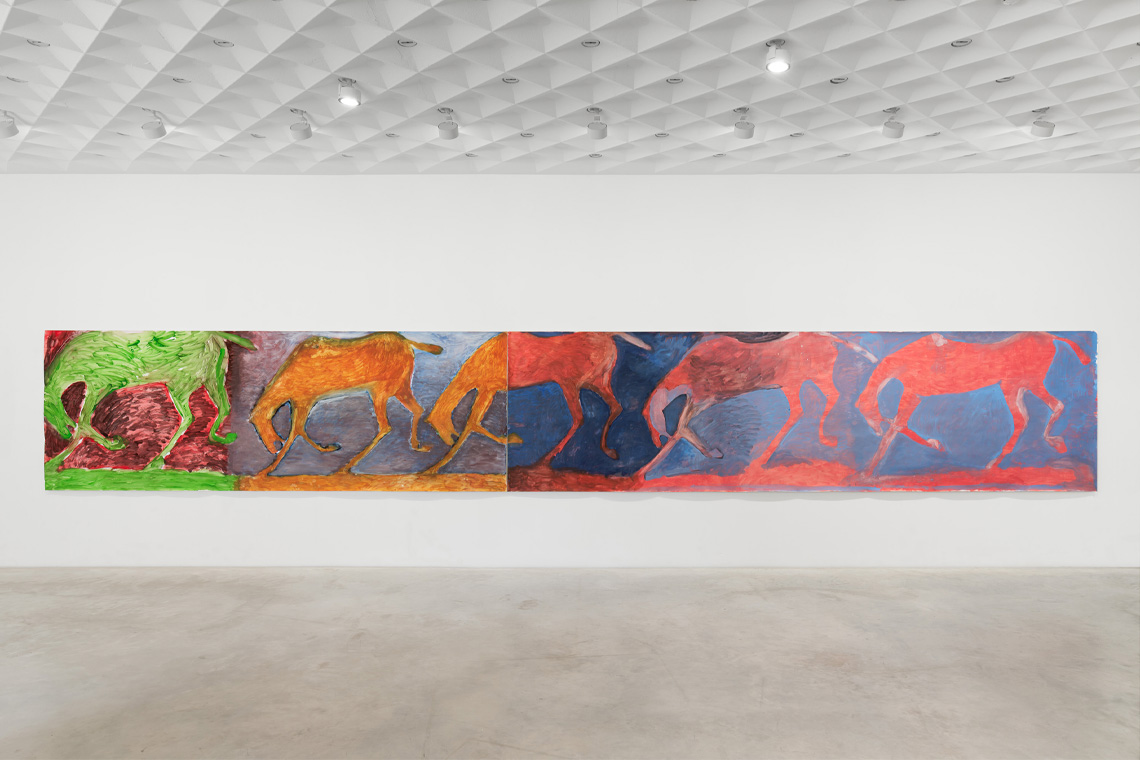
The exhibition concludes by returning to Nashashibi’s practice. In The Return (2026), hands clutch a series of stones that symbolise the resistance and resilience of Palestinians. Close by, another painting with the same title shows five horses moving together in one direction. It recalls scenes repeatedly broadcast by news outlets – people fleeing, carrying what they can, often accompanied by animals. What is usually framed as forced movement away from home is reoriented here as a movement toward it. What remains is not what we have seen, but the fragile terms under which we are still able to look.
