

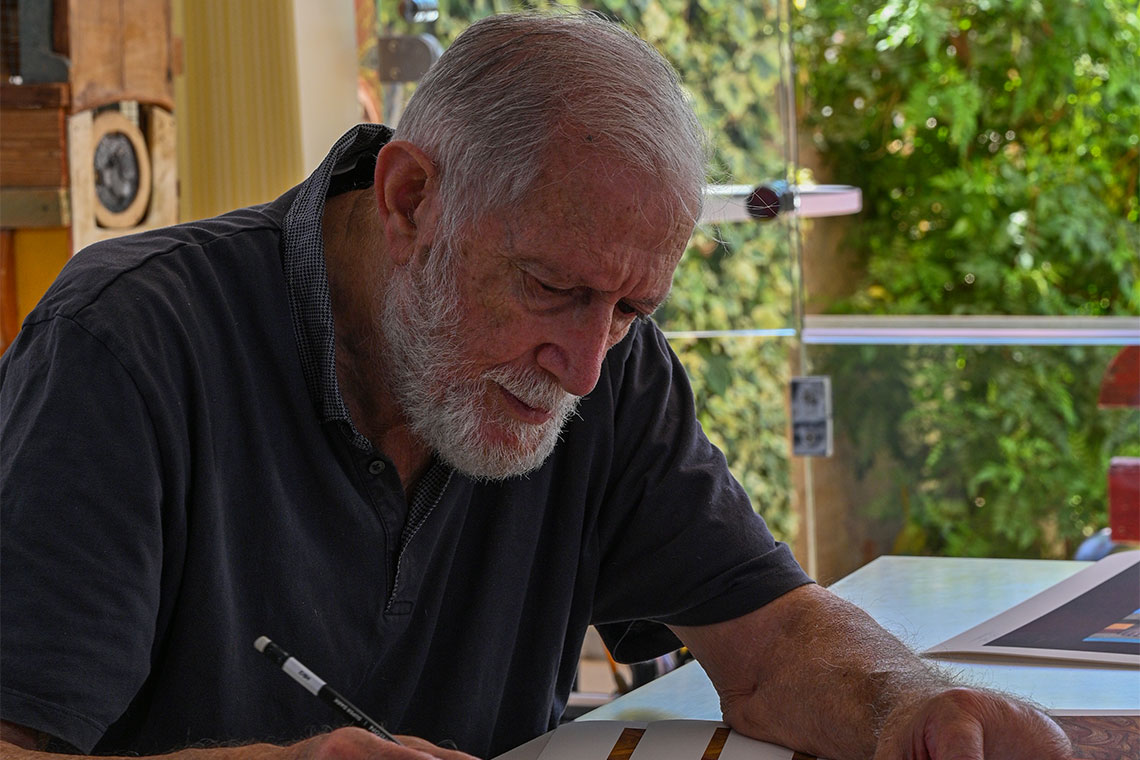
On 24 August, renowned Palestinian artist Sliman Mansour passed away in Jerusalem at age 79.
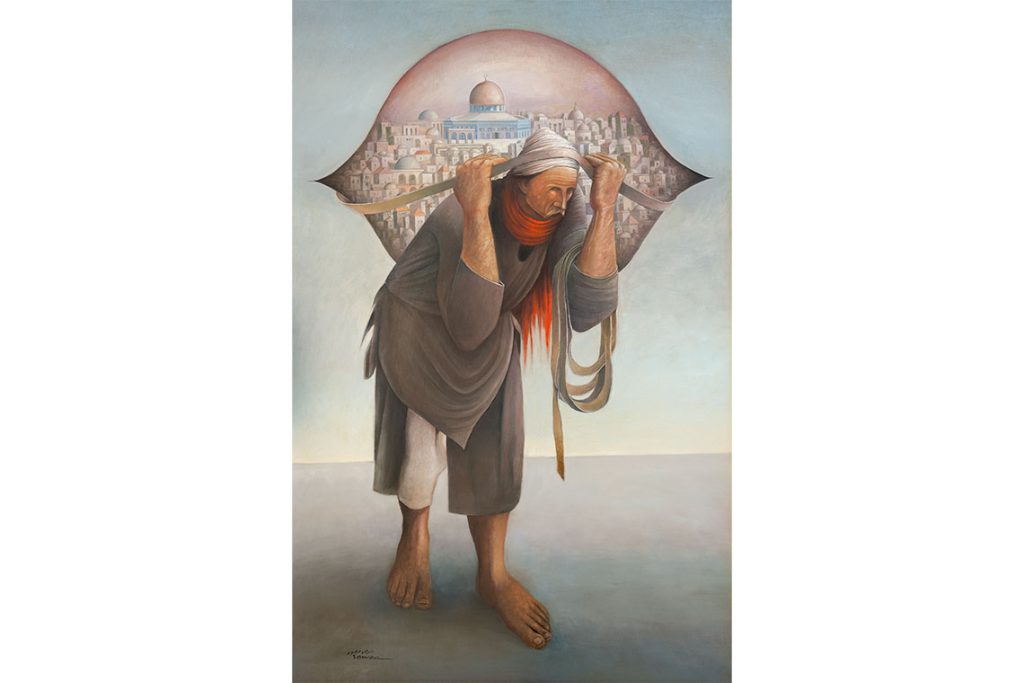
A pioneering painter who captured more than five decades of his country, Mansour’s practice became a celebration of Palestinian culture and heritage and a symbol of resistance. Known for works such as his 1973 Camel of Hardship (Jamal al-Mahamel), depicting an old porter carrying Jerusalem on his back, Mansour chronicled the Palestinian struggle and perseverance.
In 1989, during the first Intifada, Mansour and other artists from the New Visions art collective boycotted Israeli art supplies, leading them to produce work with local materials such as henna, mud, coffee and straw.
More recently, Mansour’s practice used olive tree, fruits, foliage, crops and landscapes as memories and an anchor of human relationship to their homeland.
Born in 1947 in Birzeit, Palestine, Mansour studied Fine Art at the Bezalel Art Academy in Jerusalem and became a key founder of the contemporary Palestinian art movement. In the 1980s, he became head of the League of Palestinian Artists, and in the 1990s he helped establish the International Academy of Art Palestine and the Al-Wasti Art Center in East Jerusalem, which was established to preserve and archive art in Palestine.
Mansour also contributed cartoons and illustrations to the Al Fajr English weekly and Al-Awda magazine (1981–1993) and was a professor at Al-Quds University from 2000 until 2014.
He’s received several awards such as the Grand Nile Prize, Seventh Cairo Biennial in 1998, and the Palestine Prize for the Visual Arts the same year. In 2019 he was a recipient of the UNSECO Sharjah Prize for Arab Culture and most recently in 2025 the Necip Fazıl Award.
His works have been shown around the world and remain in international public and private collections, including the Guggenheim Abu Dhabi, Mathaf: Arab Museum of Modern Art in Doha, Barjeel Art Foundation in Sharjah, Darat Al Funun in Amman, and the Institut du Monde Arabe in Paris, among others.
