

Presented by Parasol unit at the Palazzo Cavalli-Franchetti, the foundation’s official collateral event in Venice highlights how a reappraisal of the past always yields fresh insights.
Parasol Unit’s TURANDOT: To the Daughters of the East, curated by Dr Ziba Ardalan, delves into a range of thorny contemporary challenges, foremost among which is a focus on the cultural and historical impact of migration and invasion on the roles of women across Central Asia.
The exhibition takes its title from the story made famous by Giacomo Puccini’s opera of the same name, which premiered two years after his death in 1926. However, the story originated far earlier as a twelfth-century Persian tale by poet Nizami Ganjei (with multiple translations and adaptations in between), and its title comes from the term Turandokht, meaning ‘Daughter of Turan’ in Farsi – Turan was the name traditionally given to a vast swathe of Central Asian territory, encompassing much of present-day Kazakhstan, Kyrgyzstan, Tajikistan, Turkmenistan and Uzbekistan. In contrast to Puccini’s cold, ruthless princess, Ganjei’s original version portrays the story’s protagonist as a decisive, wise and strong woman.
Linking to shared cultural traditions and diverse histories across Central Asia, Nazira Karimi’s towering installation, Return Policy (2019), explores how local customs change as a result of colonisation, impacting family heritage and maternal lineage. Weighty dresses created from textiles, cement and steel hangers explore traditional aspects of marriage customs in Tajikistan, where over a 40-day period following the wedding, a bride will wear a new dress each day to mark her transition into the marriage or, in the case of the union failing, a return to her family. The work becomes a monument, holding the load of expectations placed upon women, within family, marriage or their own interests, as while each piece is heavy and self-contained, together they act as a community.
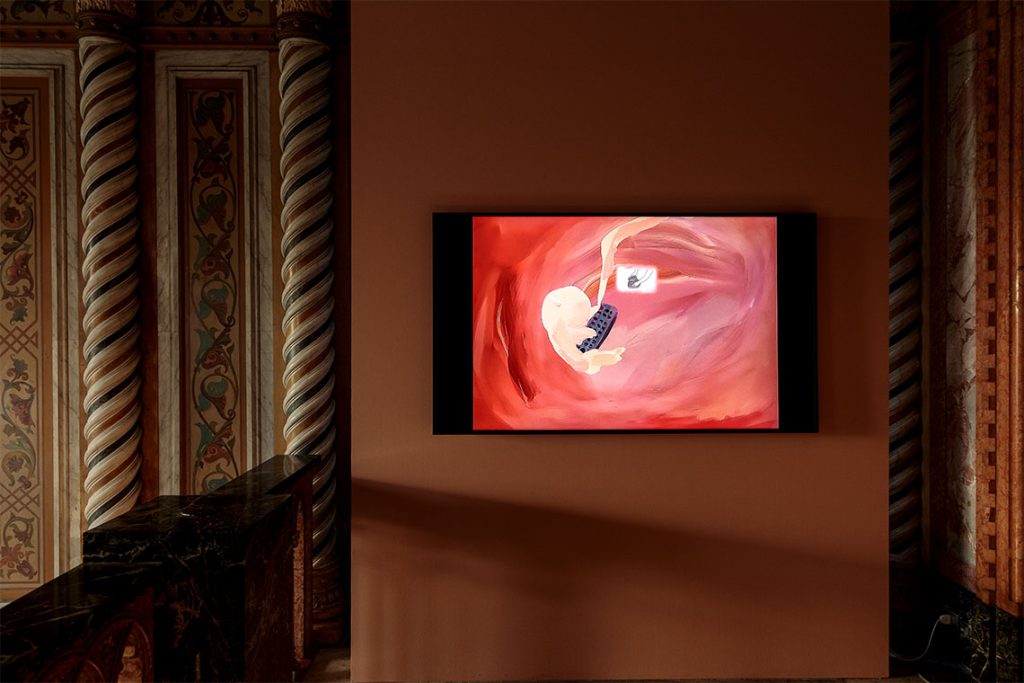
Tala Madani’s stop-motion painted animated video, The Womb (2019), similarly reflects on maternal lines through its depiction of a growing embryo watching world history through images projected inside the mother. With growing frustration as the visuals become increasingly disturbing, the foetus attempts to use a remote control to change the scenes. The short three-minute video culminates with the baby – by now increasingly conscious – taking a revolver to shoot through the walls of the uterus in an attempt to free itself from a reality it did not ask to be a part of.
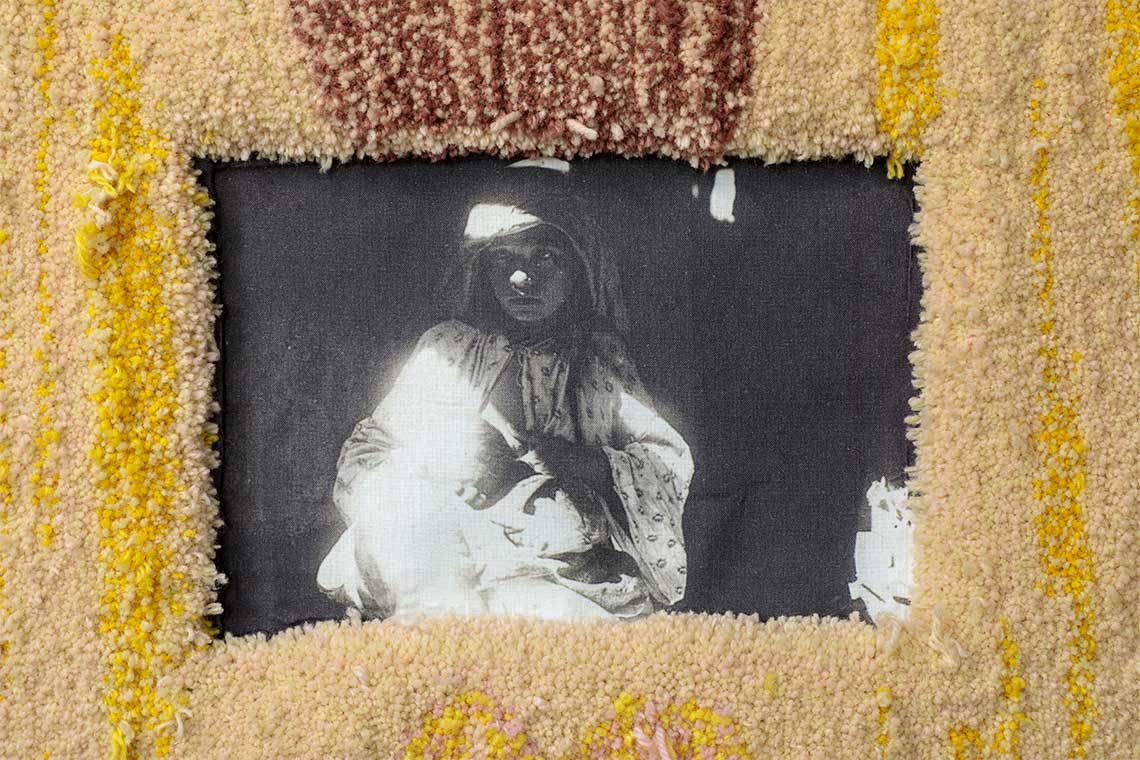
The role of a mother in Madina Joldybek’s Milk Road (2025–26) also links deeply to politics, emotional weight and the formation of cultural identity across generations. The textile carpet installation forefronts flora native to Kazakstan, where histories have been obscured, detached and transplanted. A key example is the tulip, a plant appropriated physically and symbolically from its Central Asian homeland as a consequence of travel and trade to become a Dutch emblem. Joldybek’s textiles also frame photographs from the twentieth century of women breastfeeding that, through the notion of a ‘Milk Road’, shed light on the contribution made by mothers in shaping generations, nations and cultural connections through invisible labour and care, while their own memories and histories are often erased.
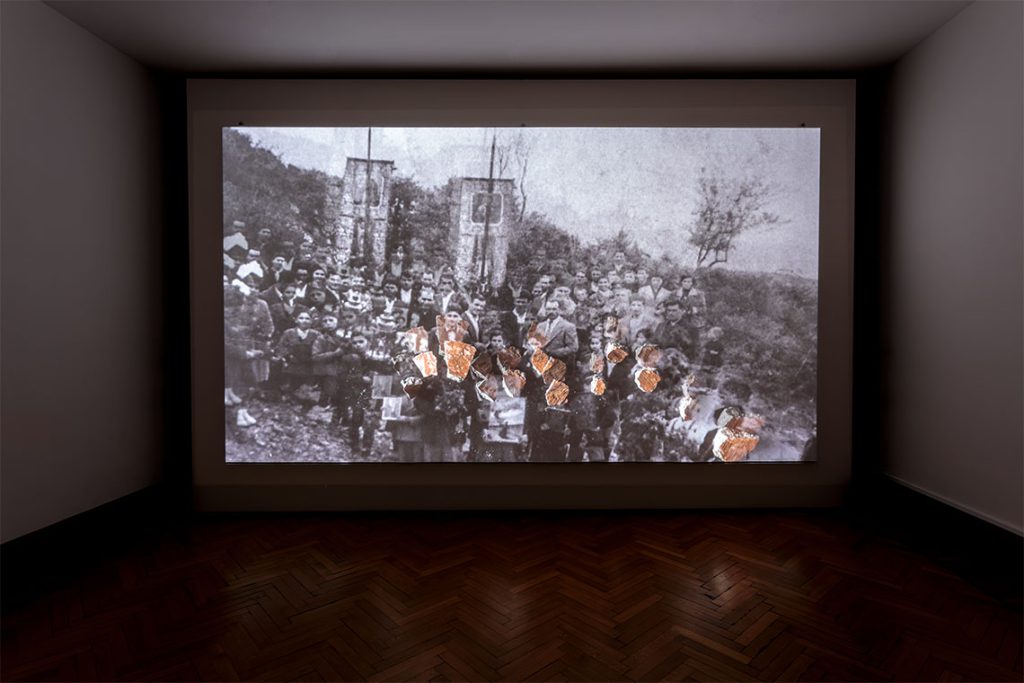
Bodies and resilience in the face of conflict are themes in Lida Abdul’s films, with works such as White House (2005), Dome (2005) and Brick Sellers of Kabul (2006) highlighting the complex relationships between homeland, ruins and memories left behind and the will to rebuild. Hera Büyüktaşcıyan’s The Dream of a Falling Star (2019–23) is a film probing displacement and erasure as memories and histories are fragmented. The work takes place against the backdrop of Livissi (Kayaköy) in southwestern Türkiye, which has remained a ghost town since 1922 when the Asia Minor Catastrophe forced the uprooting of communities and population exchange. Inspired by a dream noted by a former resident of Livissi, Stelios Theodosiadis, which depicted unknown forms falling from the sky onto the village, stop-motion morphing stones inch across the screen and the film moves between dreams and celestial bodies, and back to the village as reality and imaginary are blurred. The cracks in the architecture and fractures in nature, pebbles and pavements are witnesses to time, keepers of memories and a testimony to the fragility of existence.
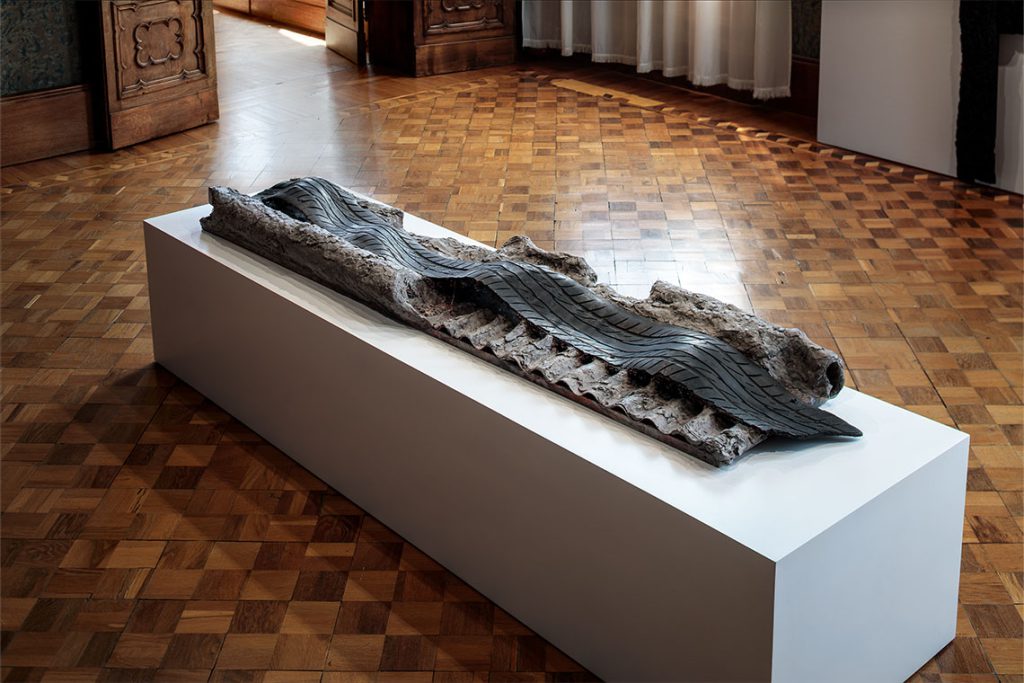
Inspired as a memory to a land that once was, Huma Bhabha’s Road to Balkh (2025) refers to the ancient city of Balkh in northern Afghanistan, once a prominent cultural and trading hub on the Silk Road, known as “The Mother of Cities” and birthplace of the Persian poet, Rumi. Stretched-out salvaged tyre treads serve as a skeleton of the city’s former self, a flattened memory of a place destroyed by conflict and political upheaval and now closed to most visitors. The disturbance of history is also highlighted in Saodat Ismailova’s What Was My Name? (2020), which opens – and closes – the exhibition as it sits at the entrance stairwell. The titular phrase is expressed in Old Uzbek using Arabic script, horsehair and neon lettering, outlining the social and cultural upheaval wrought as languages, regimes and religions have changed over time and underlining also the artist’s own background as an Uzbek artist swept up in these shifts with the 1991 dissolution of the Soviet regime.
In the current context of pervasive war and violence around the world, with ever-expanding political divides and economic shifts, the artists in TURANDOT remind us that migration, colonisation and conflict are not distant events. They are the forces that continue to shape social environments and cultural memories, and the exhibition foregrounds the invisible weight placed on women over time. By reclaiming the earlier depictions of Turandot, it challenges the narratives that have reduced strong women and villainised strength and resilience, also affirming how the act of remembering not only shares often-erased histories but can also be a tool for resistance and survival.
TURANDOT: To the Daughters of the East runs until 31 October
