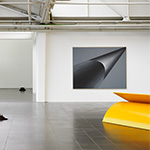

The Busan Biennale Organizing Committee has announced the full list of participating artists and collectives for Busan Biennale 2026. Led by co-artistic directors Evelyn Simons and Amal Khalaf, the biennale will take place from 29 August to 1 November 2026 under the title Dissident Chorus, unfolding across Busan Museum of Contemporary Art and Space OneZ, Former Busan Nam High School in Yeongdo, Busan.
Co-artistic directors Evelyn Simons and Amal Khalaf said: “We hope that this biennale creates space and time for a collective gathering. In a world overwhelmed by extractive images, violent language and surveillance, we turn from the visual toward the sonic, the embodied, and the poetic; toward opacity and that which resists revelation, opening pathways to resistance, comfort, and kinship. We invite visitors to the biennale to slow down and take time with the works, to be generously enveloped and to feel held, heard, and seen together.”
Rooted in the belief that sound, like water, resists containment, Dissident Chorus begins with vibration: sound carried through water, air, and bodies moving together. Set in Busan, a port city shaped by movement, labour, migration, maritime exchange, and histories of civic assembly, the exhibition explores how sonic and embodied practices can become powerful forms of communication, healing, resistance, and relation. From work songs and protest songs to ritual rhythms, club sounds, and collective chants, sound has long organised bodies, carried memory, and opened spaces of solidarity when language is restricted or exhausted. Dissident Chorus listens to these sonic legacies not as fixed archives, but as living practices that continue to move through the city, asking how rhythm, voice, and assembly can sustain forms of resistance, comfort, and kinship. At the same time, the exhibition returns to language’s capacity to hold ambiguity, complexity, and secrecy. Moving beyond grammar and sanctioned speech, Dissident Chorus attends to gesture, breath, rhythm, and the presence of bodies gathered in proximity. Through collective sounding and acts of assembly, the biennale asks how voices and bodies might form alternative political registers, opening space for other ways of being together.
The 2026 edition further articulates the exhibition’s structure as a three-part journeys across the city. The first movement begins at the Busan Museum of Contemporary Art, an ecological threshold where river and sea meet, and where practices of care, regeneration, and world-making come into focus. The second movement takes place at Space OneZ in Yeongdo’s dockside area, drawing on the low frequencies of the sea, the time of the port, and histories of labour, movement, resistance, and underwater imagination. The third movement occupies the former Busan Nam High School, transforming a recently vacated educational site into a space of rehearsal, where learning, pedagogy, and futures still in formation are reconsidered.
46 Artists Reimagine the Biennale Through Sound, Performance, and Collective Rhythm
Following the earlier announcement of the biennale’s venues and selected participating artists, the final line-up brings together 46 artists and collectives from 22 countries, comprising 49 individuals. A defining feature of the 2026 edition is the strong presence of artists whose practices move across sound, music, performance, choreography, club culture, archival research, moving image, installation, and socially engaged practice. Rather than positioning the biennale as a primarily visual encounter, Dissident Chorus invites audiences to enter the exhibition through live performance, shared rhythm, bodily movement, acts of listening, and moments of gathering, expanding the exhibition into a living collective stage.
Among the participating artists are:
Joshua Serafin (Philippines), who featured in the main exhibition of the 2024 Venice Biennale, explores cosmology, identity, migration, queer politics, and modes of embodiment through dance, performance, and choreography. In Busan Biennale 2026, Serafin will present the world premiere of a new work co-produced with KANAL-Centre Pompidou.
Hyunsung Park (South Korea), who studied in Germany and is now based in Busan, works with contrasting materials such as metal and fabric to address the body in states of instability. Revealing both the desire for protection and the vulnerability of exposure, his work will unfold through material tension and theatrical sensibility.
Natasha Tontey (Indonesia), a Minahasan artist based between Jakarta and Yogyakarta, brings together Indigenous mythologies, ancestral rituals, Cold War histories, militarism, and marginalised narratives. Her work for the biennale questions how historical records, myth, state violence, and patriarchal control continue to haunt memory.
Éric Baudelaire (France), an artist, filmmaker, and political scientist based in Paris, works across photography, moving image, installation, and performance through research-based practice. Presented at major festivals and institutions including the Venice International Film Festival, the New York Film Festival, and Centre Pompidou, his work for Busan Biennale 2026 reflects on the plurality of the senses through processes of touch, listening, narration, and perception, and through what he describes as the joy of listening.
Citywide Public Programmes Expand the Reach through Live Performances and Talks
Alongside the exhibition, Busan Biennale 2026 will present a dynamic programme of performances, sound projects, artist talks and public events that extend the audience experience beyond the exhibition. During the opening week, live performances and sound-based programmes by participating artists will unfold across and beyond the biennale venues. Throughout the exhibition period, a series of artist talks and public programmes will offer deeper insight into the participating artists’ practices.
On 30 August, Sojung Jun will present an opera-form performance at Eulsukdo Cultural Center in Saha-gu, Busan. Meanwhile, Minouk Lim is developing a performance project in collaboration with Busan Jagalchi Cruise, inviting audiences to travel by cruise ship through the waters of Busan’s South Port, between Yeongdo and Jagalchi. Further extending the biennale’s international reach, a special programme connected to Frieze Seoul is currently in development, with additional details to be announced in due course.
Full list of participating artists and collectives:
5D (Sammy Lee, Mark Lowe, Sarah Shin) (Canada and United Kingdom), Aliaskar Abarkas (Iran / United Kingdom), Alison Nguyen (United States), Bhenji Ra (Australia), Brahim Tall (Belgium), Dew Kim (South Korea), Drexciya / Gerald Donald (United States), Éric Baudelaire (France), Eunji Cho (South Korea), Fatima Kaleem Khan (Pakistan), Guely Morató Loredo (Bolivia), Heaven Baek (South Korea), Hyunsung Park (South Korea), Jantsankhorol Erdenebayar (Mongolia), Joar Songcuya (Philippines), Joon Yoo (South Korea), Joshua Serafin (Philippines), Jota Mombaça (Brazil), Julian Abraham “Togar” (Indonesia), Julien Creuzet (France), Kamala Ibrahim Ishag (Sudan), Lala Rukh (Pakistan), Lara Ögel (Türkiye), Lee Dong-Keun (South Korea), Luiz Roque (Brazil), Minouk Lim (South Korea), Mira Mann (Germany), Moe Satt (Myanmar), Natasha Tontey (Indonesia), Nkisi (Belgium), R.I.P. Germain (United Kingdom), Shuang Li (China), Sojung Jun (South Korea), Suki Seokyeong Kang (South Korea), Sungeun Kim (South Korea), Sungsil Ryu (South Korea), Tai Shani (United Kingdom), Tanat Teeradakorn (Thailand), The House of Korean Protest Songs (South Korea), Tianzhuo Chen (China), Tom Hallet (Belgium), Ultra-red (Multinational), Umi Ishihara (Japan), Ursula K. Le Guin (United States), Yazan Khalili (Palestine), and Zahra Malkani (Pakistan).
Press release from the Busan Biennale
Image: Nkisi. Nzita Dia Nza. 2022. Mixed-media stone sculptures, infinity cassette tape on loop, soil. Image courtesy of the artist