

Contemporary Istanbul returns to Tersane on a larger scale, bringing Türkiye’s contemporary art scene into a closer conversation with an expanding roster of international galleries.
The first thing that has shifted this year is Contemporary Istanbul’s sense of space. For its 21st edition, the fair moves between two main halls at Tersane, with the new larger Hall B defined by its vast waffle-concrete ceiling. From 52 galleries last year to 70, the fair has grown considerably. Yet the significance of this expansion lies less in the number itself than in what makes it possible.
One of the galleries making a particularly strong impression is Carlier | Gebauer, one of 22 first-time participants and whose presentation showcases a selection of six artists. Among them, Dor Guez and Nida Sinnokrot stand out in particular, probing questions of displacement, memory and the afterlives of history into the fair through markedly different visual languages. Guez’s Khobiza (2024) looks into the plant khobiza, or common mallow, connecting the displacement of his Palestinian family in 1948 with the experience of his relatives in Gaza today, where the plant is gathered as food amid war and hunger.
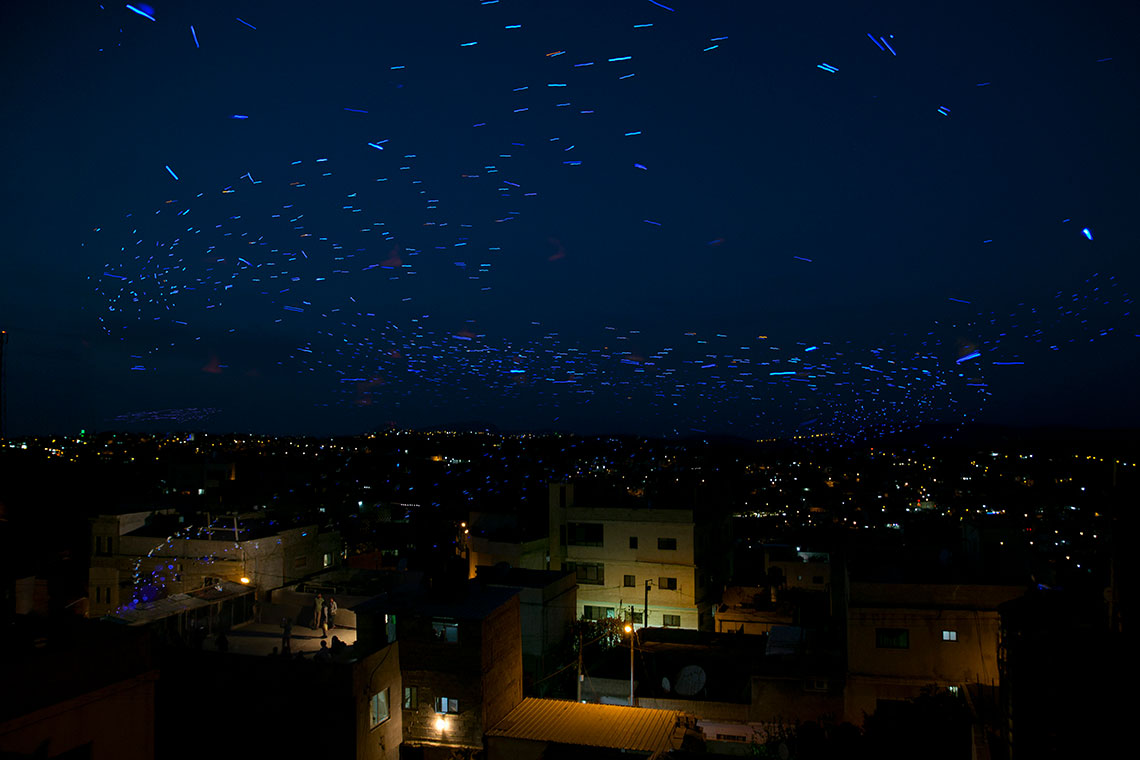
In Flight – Jalazone (2016) documents an intervention by Sinnokrot in which pigeons carrying small LED lights were released above the Jalazone refugee camp at midnight. As the birds flew, the light moved with them, creating bright shifting patterns in the night sky. The American-Palestinian artist captures this temporary spectacle in a photograph, connecting everyday acts of flight with the realities of life in a refugee camp.
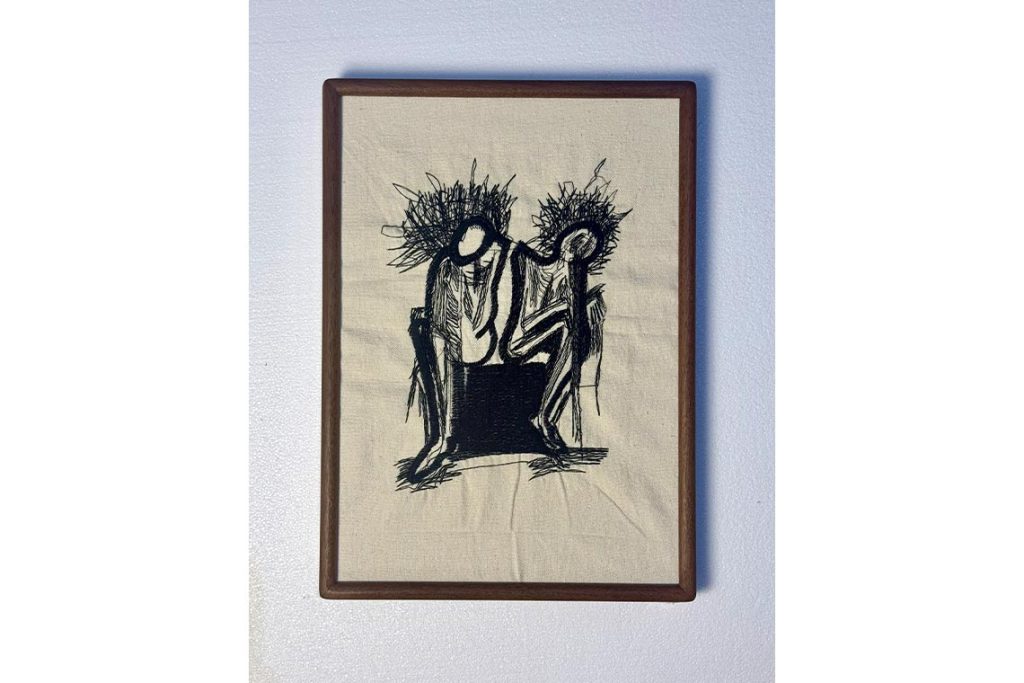
This year, Contemporary Istanbul is placing greater emphasis on Asia, with five of the participating galleries. Pearl Lam Projects from Hong Kong presents a group representation that includes Saudi artist Zahrah Alghamdi. Her 2026 work One Pulse, Many Lives is a series of embroidered works on cotton fabric panels that look into the emotional state of being, constantly shifting between movement and stillness.
Also represented by the gallery is artist Chisato Matsumoto, whose practice draws on shibori, the traditional Japanese technique of binding and dyeing cloth. Matsumoto works through the tiny gathered forms created by binding the fabric, meticulously producing them by hand before repeating and accumulating them into larger structures. The countless knots and movements involved in their making remain embedded within the finished work, transforming a painstaking textile process into an exercise in scale. Her large-scale installation Sail of Light (2026) takes this accumulation further, showcasing the Japanese craft in dialogue with Tersane’s own maritime history site, once devoted to the construction of ships and the making of sails.
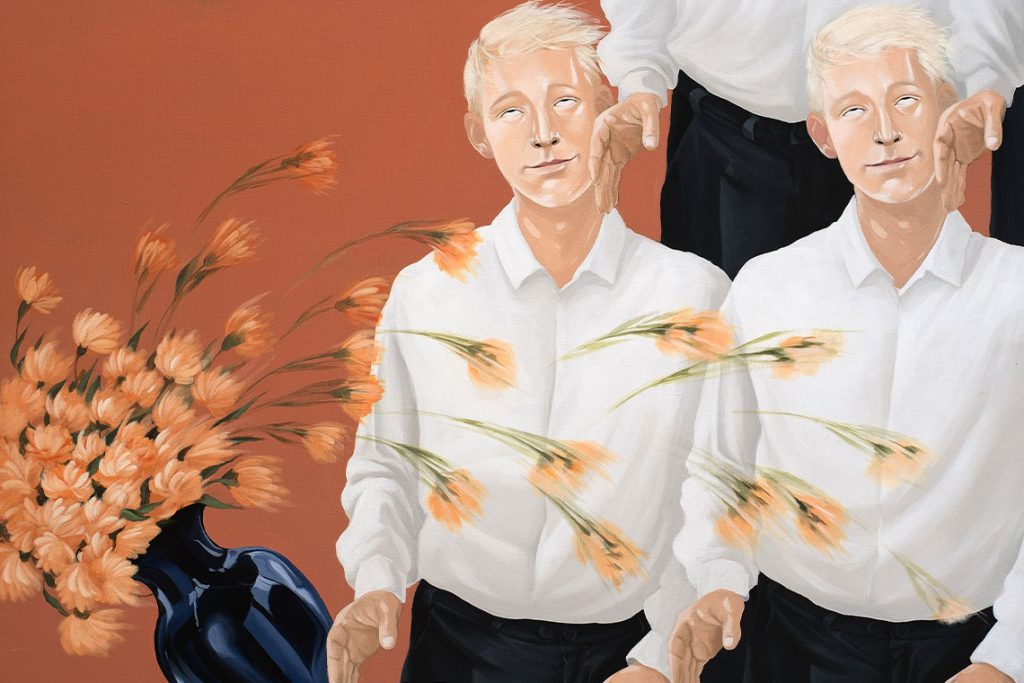
Turkish galleries naturally dominate the fair, with Galeri77 among the presentations offering a thoughtful selection. Mutlu Aksu’s painting Love Me the Most II (2026) freezes a strange choreography in which two identical figures are caressed by an unseen hand, while a vase slips from a table. The precarious composition turns an otherwise ordinary gesture into an unsettling atmosphere of submission and loss of control. At x-ist’s booth, Turkish artist Pamir Yıldıran’s series of nine paintings depicts colourful interior spaces in a state of chaos, turning domestic environments into complex and disorienting scenes.
The fair’s expansion is also reflected in its attention to younger galleries. The section entitled New Grounds, dedicated to nine galleries founded within the last five years, shifts the focus towards emerging spaces and the networks they are building. New Delhi-based Method Gallery spotlights three artists, including Kunel Gaur. His practice draws from the visual vocabulary of the Indian capital, incorporating mechanical components, typography, industrial signage, packaging and other materials associated with systems of mass production. Shiva Zahed Gallery also joins the fair for the first time, following the opening of its Istanbul gallery earlier this year. The booth features three women artists, Maryam Ashkanian, Fereydoun Ave and Mahsa Karimizadeh, whose practices approach femininity, the body and materiality from distinctly different directions.
Another highlight this year is the introduction of Sculpture Parcour, a selection of 13 sculptures installed outdoors across Tersane and the wider fair, extending the experience beyond the exhibition halls and into the surrounding site. Among them is Inhabited Crate – Multicolored (2026) by Bahraini artist Rahshid Al Khalifa. Comprising a colourful gridal metal mesh, the installation – curated by Marc-Olivier Wahler – invites visitors to walk through its structure, where the shifting daylight filters through the grid, casting changing patterns of light and shadow across the work and its surroundings. Two bronze dancing sculptures by Bahadir Baruter, entitled Fatties-Pride and Fatties-Joy (both 2026), add a playful energy to the scene.
The growth visible at this year’s fair is encouraging. At the same time, there is room for a stronger presence from the SWANA region. For a fair situated in Istanbul, where artistic and cultural networks have long crossed these borders, bringing more galleries from the region into the conversation could add another dimension to the fair’s evolving identity.
