

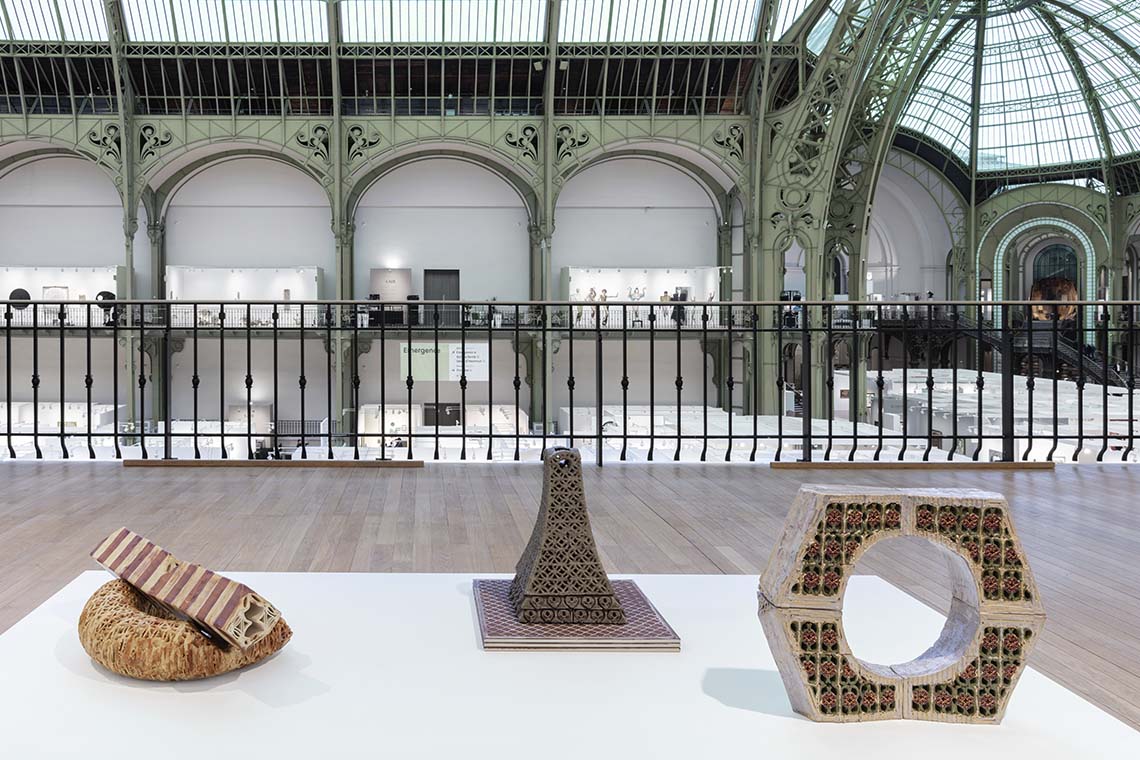
This year’s edition of the fair found itself overtaken by the events encircling it, as the art world struggles to maintain both its relevance and composure in troubled times.
On 22 October, the day before Art Basel Paris was due to open officially to the public at the Grand Palais, organisers announced that Friday 23 October would be the one and only day of its run. With businesses across the city busy boarding up their storefronts in anticipation of mass demonstrations scheduled for the weekend in protest over, among other things, budget cuts to education, poor conditions in schools and a general lack of teaching staff, it was clear that the context for an art show was far from ideal.
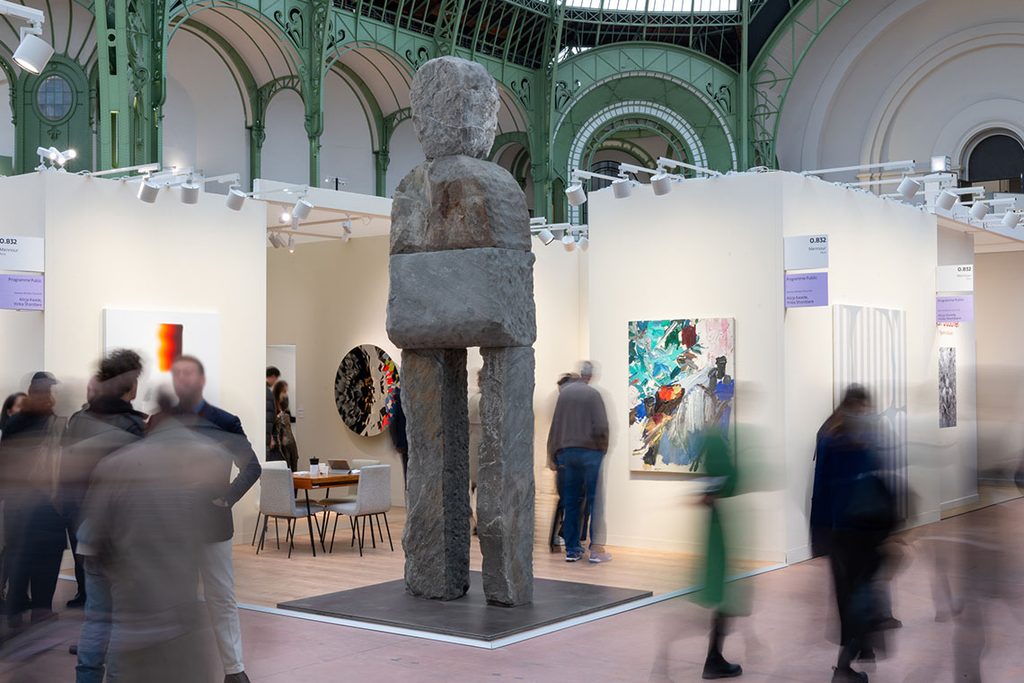
For those attending the fair ahead of the public opening, it had appeared to be very much business as usual, albeit with heightened security. Yet, as many have remarked, Art Basel Paris might well have served as an unwitting symbol of the inequalities facing France, as the haves looked at art and sipped champagne as the have-nots were preparing to take to the streets. Although perhaps an oversimplification, the art world – and especially fairs – can feel disconnected from reality at the best of times.
That said, a number of the galleries and artists presenting work at Art Basel Paris came from parts of the world that are also experiencing unrest and violence, only to be confronted with it in a different shape here in France. Athr gallery from Saudi Arabia, where Riyadh airport has been subject to rocket fire from Yemen as recently as last week, was showing work by Abdulrahman AlSoliman, Ayman Yossri Daydban, Mohammed AlFaraj, Rami Farook and Sarah Abu Abdallah. Green Art Gallery traveled from Dubai to present works by Asma Belhamar, when as recently as this past spring the city was under attack from Iranian missiles. Marfa’ Projects made an appearance from Lebanon, where assaults from Israel are an almost daily occurrence, and showcased Omar Fakhoury, Lamia Joreige, Stéphanie Saadé and Raed Yassin, among others. Then there were two Tunisian galleries: Selma Feriani, with a selection of works by the likes of Nadia Nejma Ayari, Monia Ben Hamouda and Nidhal Chamekh, and Le Violon Bleu, which presented a solo booth of Farid Belkahia. Meanwhile, in Tunis, as in Paris, people continue to take to the streets demanding better from their government.
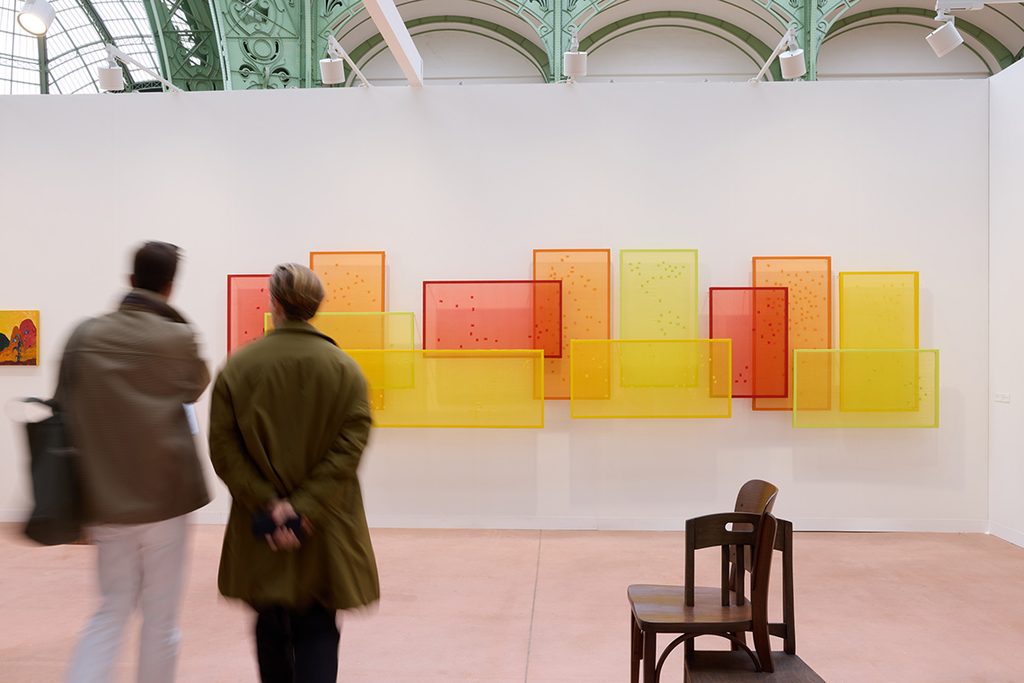
Whatever the political backdrop, there were beautiful pieces to admire at this year’s Art Basel Paris. At Mennour, a still-life by Manoucher Yektai caught the filtered light of the glass dome just so. Not far away, an eye-catching sculpture by Simone Fattal was on display, while at Bortolami a colourful canvas by Vian Sora carried more than its cheerful exterior might suggest. At Sfeir-Semler Gallery’s booth, one found the delicately rendered embroidery of Dana Awartani, sites of repair in an attempt to stitch back together areas around the Arab world damaged by conflict.
Yet the most relevant work in the fair was deceptively simple. Adel Abdessemed’s Ready Rat (2026) lives inside a square glass case. On its back, the tiny taxidermy animal carries what looks to be a small camera, operated by batteries and wires. It seemed out of place in the Grand Palais, vulnerable and fragile – as though plucked from the streets of Paris to be displayed for the amusement of fair attendees, as the art world once again tried to pretend that it could not hear the roar of the world around it. On this occasion, at least, the world crashed in and the doors were slammed shut.
