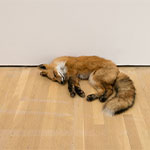

This Fall, the Walker Art Center will open Abbas Akhavan: Variations on a Garden, the artist’s first mid-career survey and his first major exhibition in the United States. Akhavan, who is currently representing Canada at the Venice Biennale, has come to be recognised for his poignant, site-responsive installations, which engage with the histories, architectures, economies, and people of the places he studies. The forthcoming survey features important works from over the past two decades-many to be presented in the U.S. for the first time-providing the first comprehensive view into the arc of his career and the recurring conceptual concerns woven across his distinct projects. Variations on a Garden includes both intimately-scaled sculptural works and ambitious, large-scale installations such as curtain call, variations on a folly (2021), which recreates the colonnade that once led to the ancient Palmyra Arch in Syria. Together, the works invite consideration of how history, culture, and aspects of nature have been shaped and reshaped through human driven events and the dynamics of power across time. The exhibition will be on view November 12, 2026, through April 18, 2027.
Variations on a Garden is curated by Pavel Pyś, the Walker’s curator of visual arts and collections strategy, in close dialogue with the artist and with support from Brandon Eng, Assistant Curator, visual arts at the Walker. It continues the Walker’s longstanding commitments to provide a meaningful public platform for artists at different stages of their careers and to engage American audiences with artists from around the globe. To extend scholarship and awareness of the artist’s significant practice, the exhibition is accompanied by the artist’s first comprehensive monograph. Also titled Variations on a Garden, it includes a conversation with the artist as well as essays by Pyś, David Joselit and Oxana Timofeeva.
“With a great economy of means, Abbas Akhavan creates deeply moving and elegiac works,” says Pyś. “He poignantly draws attention to the human capacity for barbaric destruction and violence, our uncontrollable ravaging of the planet, and the erasure of shared commons. His art stands as an act of heartfelt humility, of bearing witness, of urging us to remember.”
Foundational to the artist’s practice is the concept of a garden. In its many forms, the garden stands as a reflection of the dichotomies universal to existence: nature versus culture; the public versus private, the wild versus domesticated, and the valued versus the discarded. Throughout his work,Akhavan reveals, questions, and meditates on these binaries and their multivalent implications, across history and into the present day. In Study for a Monument (2013-ongoing), rough, bronze casts of flora once native to the region around the Tigris and Euphrates river systems, thought to be the location of the exquisite Hanging Gardens of Babylon, are laid out on cotton sheets on the floor. The plant life decimated by wars and environmental degradation-now frozen as historical artifact-stands as a quiet witness to the imprint of human actions.
In recent years, the artist has also engaged more actively with the effects of contemporary geopolitical conflicts-especially the Syrian and Iraq wars-on the preservation of cultural artifacts and the environment. In cast for a folly (2019/2023), which was acquired by the Walker in 2025, Akhavan uses a single documentary photograph to recreate the ransacked lobby of the Iraq Museum in Baghdad following the U.S. invasion of Iraq in 2003. The image captures both the futile efforts of dedicated museum workers to protect cultural heritage and the events’ aftermath, framed by some political leaders as a justifiable reality of war. At once an ode to what was lost and the significance of museum labor, the layered installation considers ideas of access, value, and how dominant narratives are established and perpetuated.
Variations on a Garden explores Akhavan’s singular practice across more than a dozen works presented in four galleries. To honour the importance of architecture and spatial relationships in the artist’s practice, monumental works are given their own rooms or large dedicated environments, immersing visitors in the experience of the works. The exhibition also draws special attention to the artist’s use of organic and perishable materials, such as soil, water and plants, from large-scale works like spring (2021) to smaller pieces such as A Study for a Garden (2014). These materials serve as conduits that carry ideas and produce meaning through their selection, manipulation, and contextual framing, encouraging both physical and conceptual engagement and connection. Throughout the exhibition, Akhavan encourages visitors to explore more deeply the contexts, meaning, and beauty of art
Press release from Walker Art Center
Image: Abbas Akhavan. Fatigues. 2014. Image courtesy of the artist