

Art Basel Qatar’s inaugural edition recentres the artist while providing a seamless and engaging visitor experience.
At a time when art fairs and biennials seem to crop up incessantly and often leave visitors feeling overwhelmed by the sheer amount of artwork to sift through, Art Basel Qatar – under the artistic direction of the Egyptian artist, Wael Shawky – presents an atypical solution for a commercial fair. In line with the overarching theme of Becoming, selected by Shawky, each of the 87 participating galleries was asked to select a single artist from their roster to present work in an open-plan format.
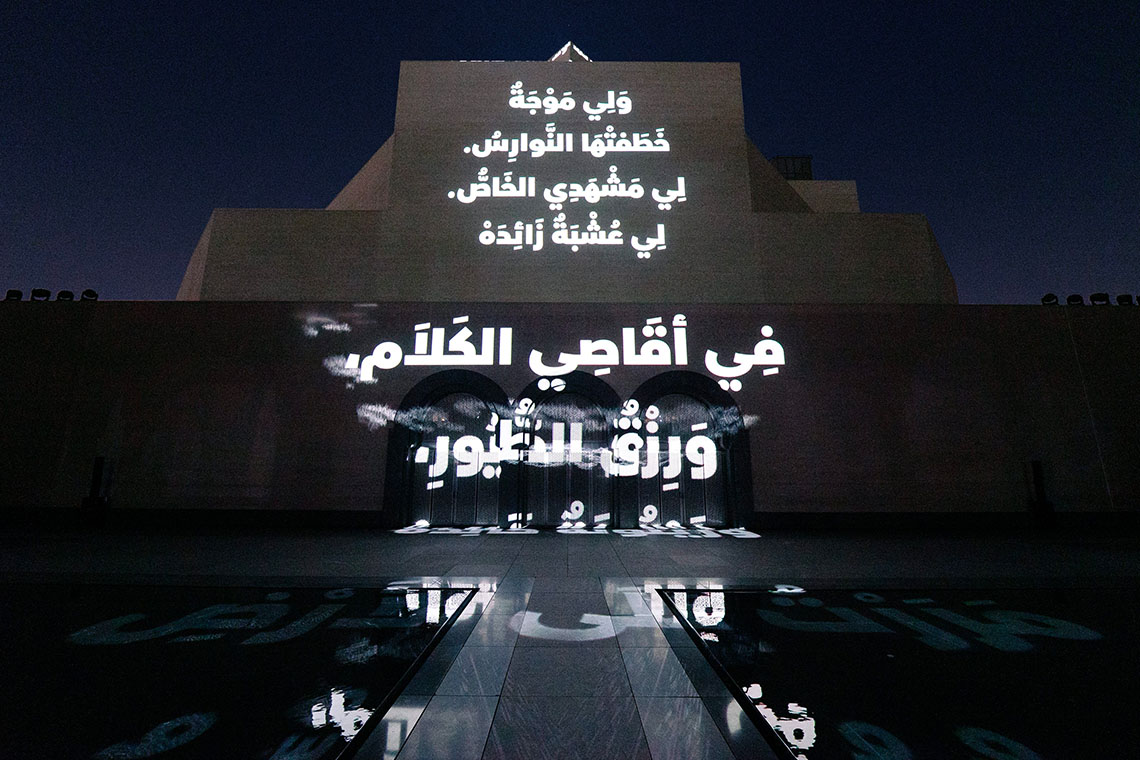
“It was like creating an art piece, with a narration that can trigger an analysis,” Shawky shares with Canvas. The result is more akin to a biennial than an art fair, with galleries scattered across the Doha Design District and at M7 in Msheireb Downtown Doha in the Qatari capital, alongside ten site-specific Special Projects conceived by Shawky and chief artistic officer and global director of Art Basel fairs, Vincenzo de Bellis. These extend across the surrounding area as far as the Museum of Islamic Art, where an unannounced special project entitled SONG (2026) by Jenny Holzer was revealed, a projection on the I M Pei designed-building’s façade featuring the words of the late Palestinian poet Mahmoud Darwish and Emirati poet Nujoom Alghanem.
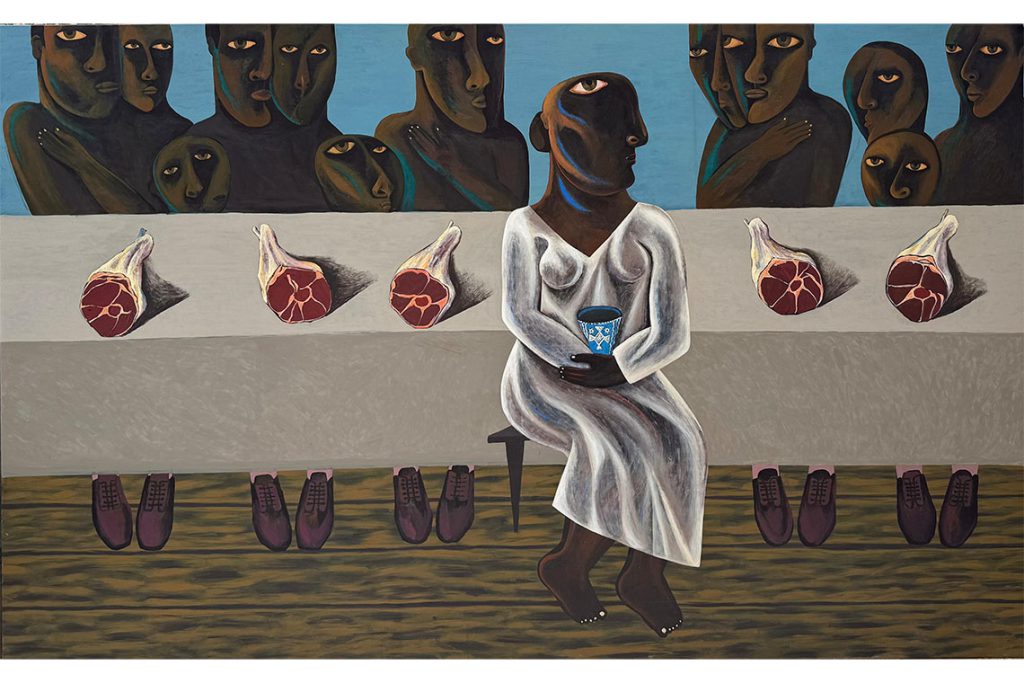
Encouraging a deeper engagement with the artwork on view was central to the concept of the creative direction, which also remained mindful of the ultimate commercial aims of the fair. Shawky acknowledged that keeping the art market in mind was “very important, but it is also about how to see it, how to try to deal with it as an audience and how to try to respect the process of creativity at the same time”, as well as relying on de Bellis’s knowledge of gallery and artist histories while selecting the fair’s participants.
Art Basel Qatar is as generous a visitor experience as an art fair could be. Whether engaging with the large-scale abstract figurism of Souad Abdelrasoul at Gallery Misr or discovering some less well-known works on stretched leather by Huguette Caland, courtesy of the late artist’s estate, there is time and space to take in what is effectively a snapshot of each artist’s practice. Particularly engaging are Mustapha Azeroual’s shimmering golden hour-hued panels at Loft Art Gallery, optical works that alter and shift as one moves around and require sustained attention. “As you are watching them, you are never sure to be able to see again what you have seen before, just like when you watch a sunset,” expresses the artist.
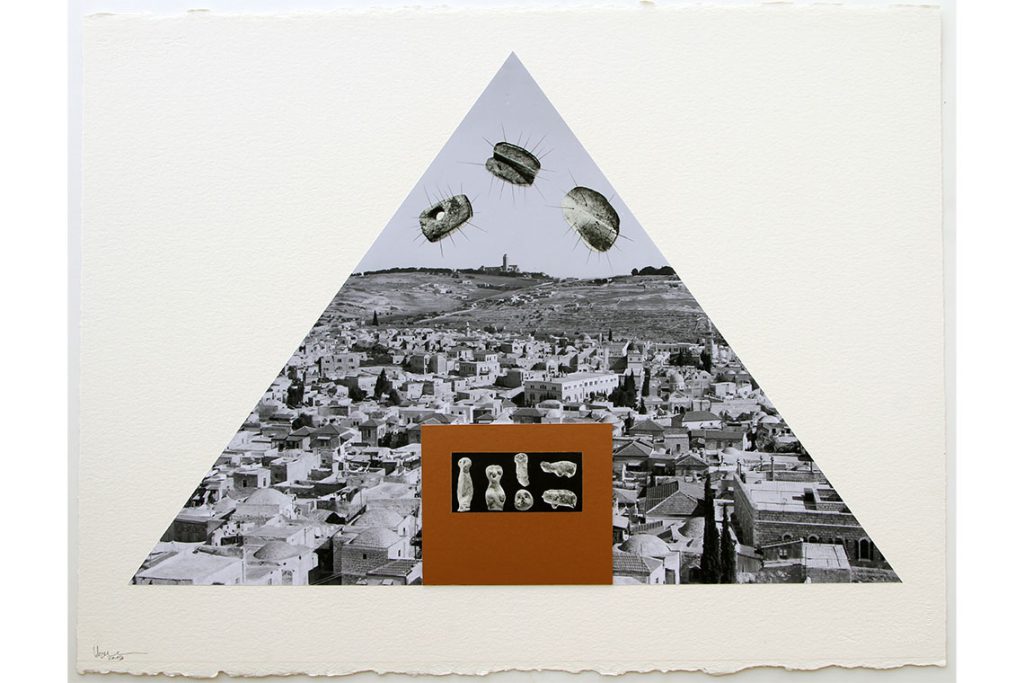
Image courtesy of the artist and Tabari Artspace
Such opportunities to delve into an artist’s practice, especially in a commercial setting, are rare in today’s art fair landscape. Hazem Harb, at Art Basel Qatar with Tabari Artspace, presents a body of work which encourages visitors to reflect on cultural identity and memory in the context of shared histories, particularly looking at archaeology. Harb believes that the solo presentation format “gives me the opportunity to present my work in a more intimate setting, fostering a deeper connection with the audience. It’s a chance to highlight the nuances of my practice and to share my story in a way that resonates more personally.”
Art Basel Qatar is also providing an opportunity for artists from the region to regain control of their own narratives. Nour Jaouda, who is presenting a special project, A House Between Two Houses (2025), believes that both the curation and the surrounding fair events have“brought forth an incredible group of Arab and international artists that connect an international audience to our history, heritage and voice in the way that we speak it, and not the other way around.” This is a sentiment echoed by Shawky, who wanted to convey that “the Gulf is not just what we see today, not just what’s happening and not just the oil. It is extremely rich historically, as well as in terms of religion and mythology. So this interest in the region makes complete sense to me. I am expecting that one day, the centre of the art world will be here.”
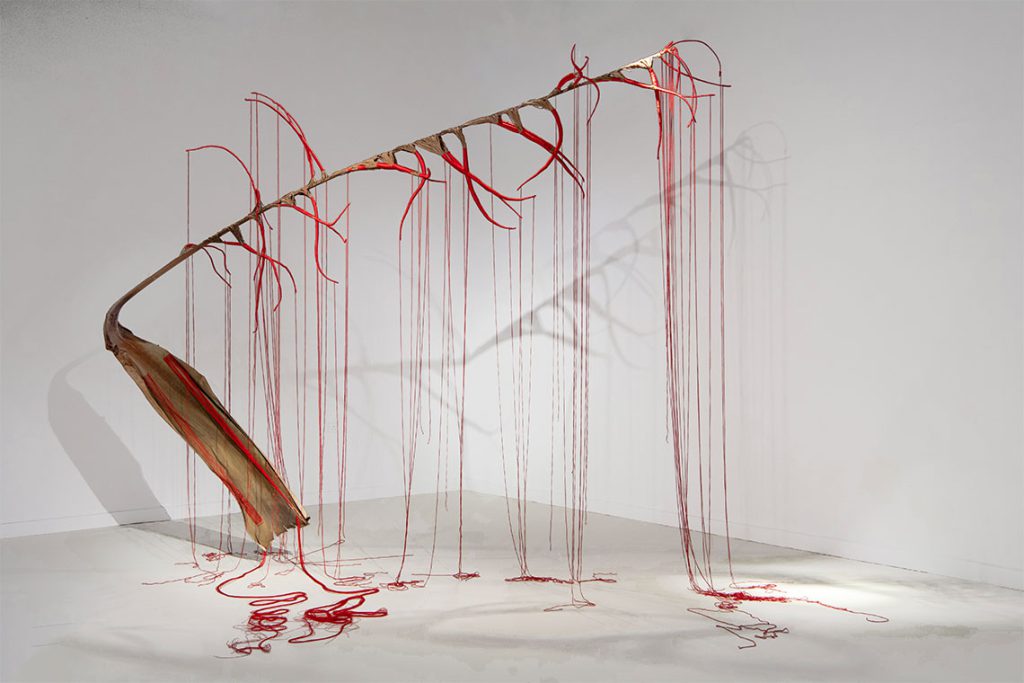
Ultimately though, Art Basel Qatar is an art fair, and as Noah Horowitz, CEO of Art Basel joked at the press conference following Wael Shawky’s explanation of his aims for the fair, everything you see is for sale. With works from established stars such as Etel Adnan and Simone Fattal and Middle Eastern art world darlings Ali Cherri and Sophia Al-Maria to current heavyweights Manal AlDowayan and Ahmed Mater and the likes of Pablo Picasso and Jean-Michel Basquiat, there is no question that the aim of the fair is to sell. Interestingly, numerous larger-scale installation pieces are presented by galleries throughout, unlike the typical selection of work in a traditional fair setting. Aiza Ahmed’s installation of hanging cloth-based paintings at Sargent’s Daughters would certainly look more at home in a museum than an art fair, as would Bouthayna Al Muftah’s Living: Architectures of Memory (2025–26) with Doha-based al markhiya gallery, and even Meriem Bennani’s intriguing and mesmerising spinning contraption, jointly presented by Lodovico Corsini and François Ghebaly. Hafez Gallery’s art liaison director Heba Al Moaz, presenting Lina Gazzaz’s Tracing Lines of Growth (2025), an eye-catching organically shaped branch draped in red strings, confessed that the hope for these artworks is that they are acquired by major institutions.
Whether or not the commercial aims of the fair are fulfilled remains to be seen, but as far as a user-friendly art fair experience goes, Art Basel Qatar seems to have cracked the code. It has succeeded in re-centring the artist and the visitor, allowing both space to breathe and interact in an authentic way, which one can only hope will translate to a more profound engagement with the themes of these bodies of work, and to subsequent acquisitions based on genuine connection with a practice rather than solely commercial value.
