

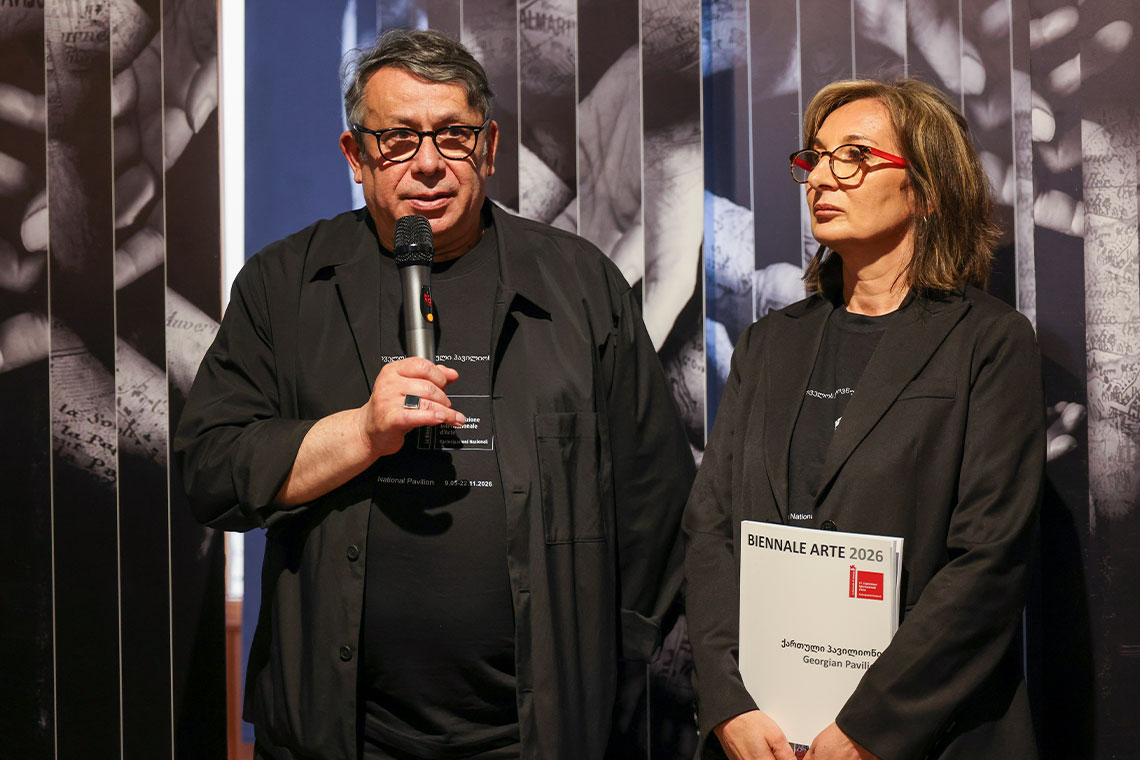
The co-curator for the Pavilion of Georgia discusses how myth is seen through a contemporary light in the exhibition, Modern Argonauts – Georgian Crossroads.
Canvas: Why did the figure of the Argonauts feel relevant for Georgia in 2026? Who would be their equivalent today?
Dr Nino Metreveli: The myth of the Argonauts has long been associated with Georgia through Colchis and the quest for the Golden Fleece. However, for us, the figure of the modern Argonaut is less about conquest and more about movement and transformation. In 2026, Georgia has undergone multiple transitions – political, cultural and geographic. The modern Argonauts are artists, researchers and travellers who navigate unstable realities while carrying memories across borders. They are people searching not for a mythical object, but for forms of belonging, survival and future imagination.
Today’s Argonauts would be people navigating unstable worlds without clear maps, or moving between languages and systems every day. They are individuals searching for new forms of belonging while carrying fragments of memory and history with them. In that sense, the contemporary Argonaut is less a heroic conqueror and more a figure of adaptation, vulnerability and persistence.
I have had a long-standing creative collaboration with 61th Venice Biennale commissioner and co-curator, Shalva Khakhanashvili, with whom I co-founded the program Karavansarai – Cultural Exchanges in 2001. Through this project, we have travelled to many countries in addition to Georgia. The Biennale pavilion is, in a way, a summary of the work we have carried out over the years.
Is the Golden Fleece in this exhibition something to be found?
It appears less as an object and more as a projection. Something different people desire, mythologise, exploit or pursue. Historically the Golden Fleece symbolised wealth, power and conquest, but in this exhibition, it becomes more ambiguous. At times it feels like knowledge, memory or even the illusion of certainty. I don’t think the exhibition offers the Fleece as something that can simply be possessed. Instead, it asks what happens to societies and individuals when they organise themselves around the pursuit of symbolic promises.
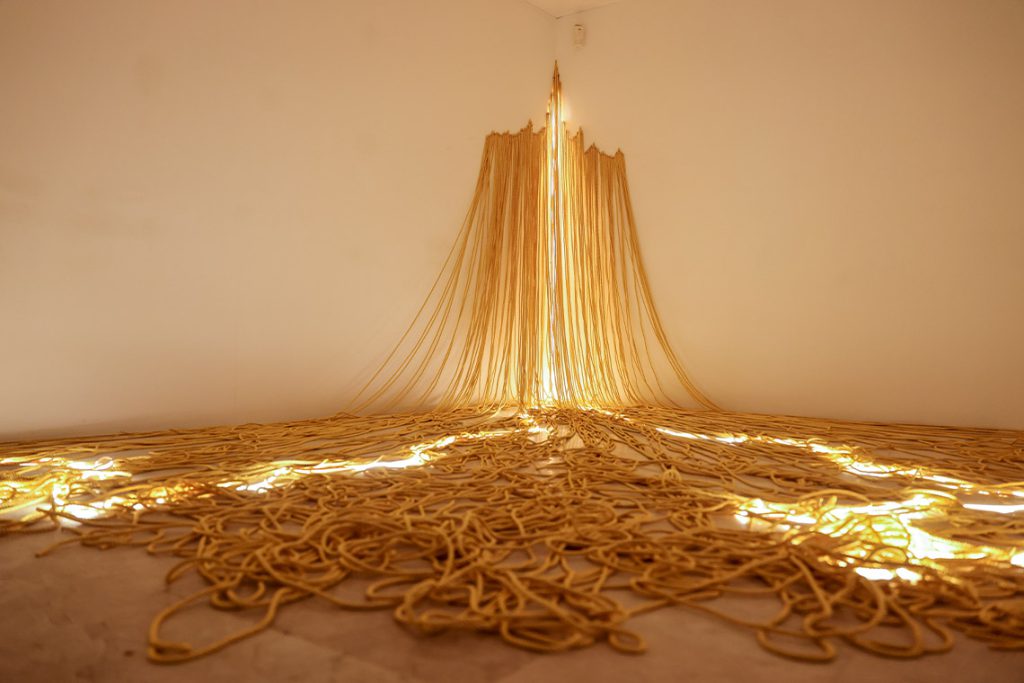
The Argonaut myth is rooted in sailing and the sea. Did water or navigation influence the exhibition design? Do you see links to Venice?
Water became both a physical and symbolic structure within the pavilion. Shalva Khakhanashvili and I thought about tides, drifting, ports, routes and unstable ground. The exhibition design was conceived less as a linear narrative and more as a navigation system where visitors move through fragments, crossings and changing perspectives.
Venice itself deeply informed this thinking. It is a city shaped by water, exchange, vulnerability and historical trade routes. It mirrors many of the ideas within the pavilion, such as movement between worlds, cultural circulation and the fragility of civilisations built on crossings.
How does mythology operate in the exhibition?
Mythology is not treated as nostalgia or folklore. It functions as a living structure through which contemporary realities can be understood. In the pavilion, the Argonaut story is re-read not as a heroic narrative but as a story about encounter, risk and the politics of exchange.
How do you see the pavilion relating to the broader Biennale theme, In Minor Keys?
The pavilion is international and features 17 artists. Our modern Argonauts have come from different countries and corners of the world: Georgia, France, Italy, Poland, America and Japan. Each of them expresses their individual relationship with Georgia, but together we have shown how people from different countries, with different worldviews and different habits, can coexist peacefully, calmly and harmoniously, even in one small space such as the Georgian Pavilion at the Venice Biennale.
The pavilion resonates with the idea of In Minor Keys because it focuses on quieter, often overlooked narratives rather than monumental histories. It privileges peripheral voices, fragmented memories and subtle forms of resistance. Georgia itself occupies a complex position between centres and margins, East and West, visibility and invisibility. The exhibition works through nuance, atmosphere and layered emotional registers, rather than grand declarations.
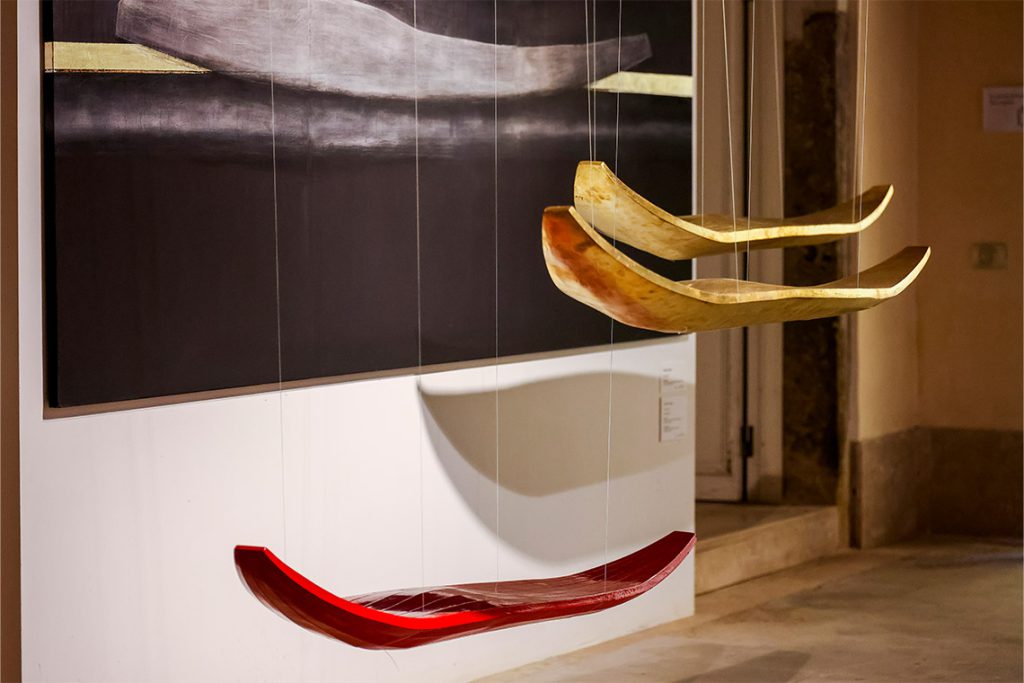
For the second part of the title, Georgian Crossroads, do you see this a crossroads of trade and geography or something internal, or both?
It is absolutely both. Historically Georgia has existed at the intersection of empires, trade routes, religions and political systems. However, the idea of a crossroads is also emotional, psychological and cultural. It reflects questions of identity, orientation and historical direction. The pavilion considers the crossroads not only as a geographic condition but also as a state of continuous negotiation.
Did your understanding of what the concept of a crossroads means change while curating the exhibition?
Initially, the term seemed connected primarily to geography and geopolitics, but during the curatorial process, it became more intimate and unstable. A crossroads is not simply a meeting point. It can also be a place of hesitation, contradiction or rupture. It implies movement, but also uncertainty about where movement leads.
What responsibilities does the role of curator have when putting together a national pavilion? What risks did you feel you needed to take?
First of all, you are representing your country and want to present it at the highest possible level. The responsibility of the curator is not only to do that, but also to create a space where difficult questions can remain open. It is important to allow contradiction, vulnerability and multiplicity to exist within the exhibition.
One important risk was resisting the expectation to present a fixed or easily consumable image of national identity. A national pavilion can easily become symbolic branding, but we wanted to preserve complexity and ambiguity.
The Georgian Pavilion is located at Palazzo Querini
This interview first appeared in Canvas 123: Venice Special Issue
