

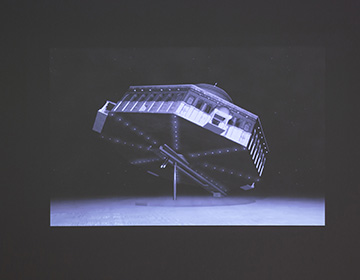
Sfeir-Semler Gallery celebrates a major milestone this year, marking 40 years of fostering artistic dialogue between the Middle East and the international art scene.
First founded by Andrée Sfeir-Semler in 1985 in Kiel, Germany, Sfeir-Semler Gallery later opened its first Beirut space in Karantina in 2005 – amidst a time of great turbulence for Lebanon – as the gallerist sought to reconnect with her roots and bring Middle Eastern artists to the international art scene. In 2023, she opened a second Beirut gallery in Downtown. A chance encounter in Berlin in the early 2000s with the works of Walid Raad – a series of films that included scenes of the Beirut Corniche – ignited Sfeir-Semler’s curiosity about her homeland, as she had grown up in Germany when her parents fled Lebanon’s 1975–90 civil war. She began learning about Lebanese artists and found a scene in need of connection to the artistic capitals of the West. Sfeir-Semler Gallery was perhaps the first white cube style space to open in the region, and began producing exhibitions that were on a par with those mounted by prestigious museums and institutions around the world. At the time, this was a significant step up for Arab artists – who had the talent but not the know-how or connections – to present on an international level.
When the gallery opened in 2005, Lebanon was still reeling from the assassination of former Prime Minister Rafic Hariri, but despite the instability, it welcomed a staggering 1800 visitors on its opening day. Over the years, the gallery has played a crucial role in bringing global recognition to some of the now most influential voices in Arab contemporary art, such as Akram Zaatari, Marwan Rechmaoui, Mounira Al Solh, Etel Adnan, Wael Shawky, Rayyane Tabet and Yto Barrada.
A major milestone was when the gallery represented the largest number of Arab artists participating in documenta in 2011, evidence of not only a keen interest in the region but also Sfeir-Semler’s growing role as a reference point for the region’s top creatives. In 2013, the gallery brought Akram Zaatari to the Lebanese Pavilion at the Venice Art Biennale, and last year the gallery represented Wael Shawky at the Egyptian Pavilion and Mounira Al Solh at the Lebanese Pavilion – both delivered powerful shows that drew both crowds and critical acclaim.
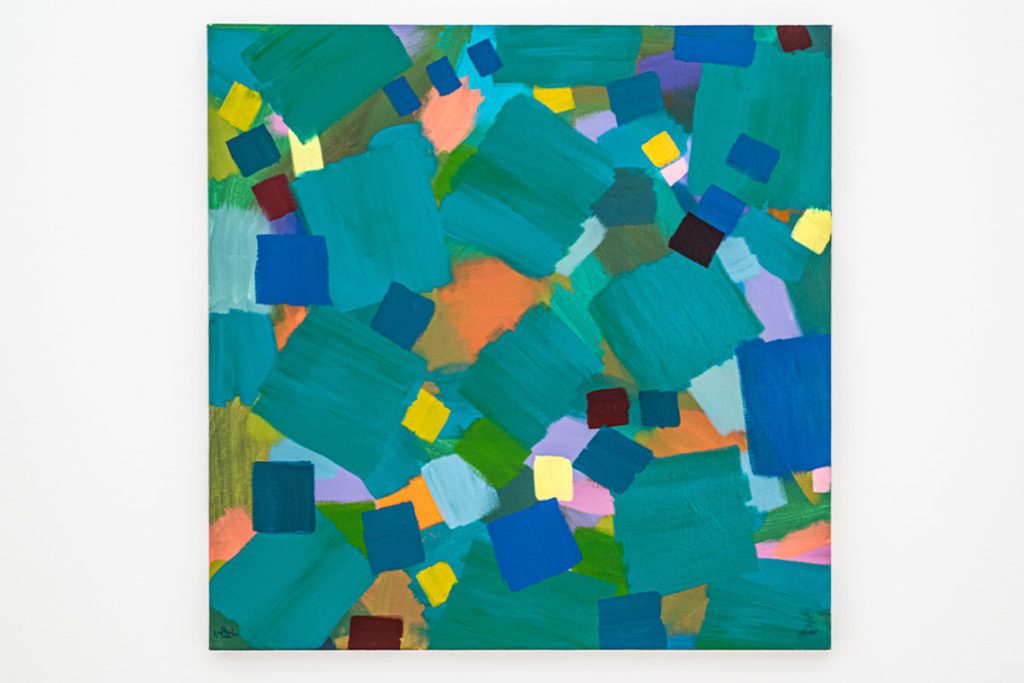
Samia Halaby. Green Hamra. 2025. Installation view from Samia Halaby, Abstract in Motion at Sfeir-Semler Downtown, Beirut, Lebanon, 2025. Acrylic on canvas. 91.4 x 91.4 cm. Image courtesy of the artist and Sfeir-Semler Gallery Beirut / Hamburg
As part of its 40th anniversary festivities, the gallery is showing Abstract in Motion, a solo show by Samia Halaby at its Downtown space, and The Shade, a group show curated by Jean-Marc Prevost at its Karantina location, and which presents works by all of the gallery’s artists. The title of the latter exhibition brings together themes of mystery and symbolism, especially focused on moments of shifting from one historical moment to another, or from one culture to the next. “Because it’s an anniversary show, the idea is to present all the artists the gallery has worked with over the years,” Prévost tells Canvas. “Every one of them is in this show for a reason, because each speaks a unique artistic language. It’s only when you put them all together that you get a full story.”
The current political context is also crucial. “The Shade unfolds at a particularly charged moment, when the tumult of global events is impossible to ignore,” he adds. “Traces of these realities resonate throughout the works on view, with most of the participating artists choosing to present recent works, never before shown in Beirut, that hold particular meaning for them today.”
The show’s artists all peer into transitional grey areas, attempting to uncover and investigate hidden meaning through their works. The exhibition also bears reference to Carl Jung’s notion of the ‘shadow’ as a space of untapped potential – an opportunity for transformation, where what has long been suppressed might finally emerge – as there is no light without darkness.
For example, Tiptoe Through The Tulips (Homage to Tiny Tim) (2024) is a new work by Yto Barrada, inspired by the popular 1968 song of the same time. Tiny Tim was a stage name of the American singer of Lebanese descent, Herbert Butros Khaury, and sings of lovers secretly meeting in an abandoned tulip field. Formed from a miniature landscape of flowers, made from playful metal and wood sculptures reminiscent of children’s building blocks, the work also highlights the tulip as a repressive symbol of the Ottoman Empire, which colonised Lebanon for centuries.
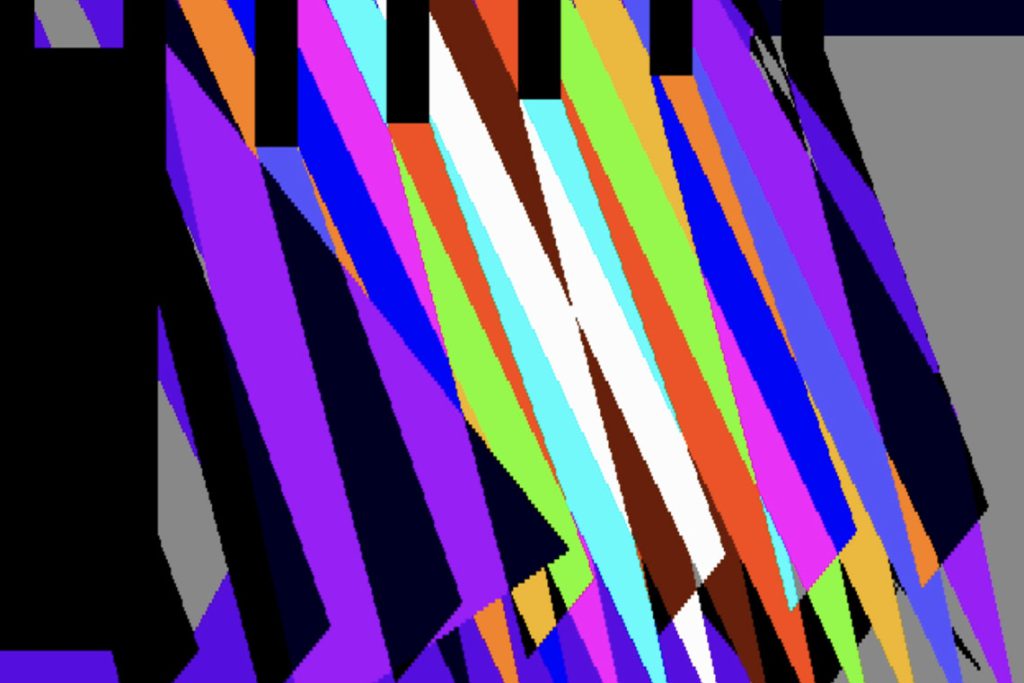
Older works are also given new relevance in today’s political landscape. Among them is Wael Shawky’s Al Aqsa Park (2006), an animated video that focuses on the Dome of the Rock, an important symbol of the Israeli-Palestinian conflict and all the more powerful in light of Gaza’s recent destruction. It shows the monument as a fairground carousel, on the surface representing joy and freedom but on the flipside a tightly controlled mechanism that simulates true entertainment and merriment through disorientation. Many of the works on show give this sense of dual narrative, or contrasting meaning, to poignant effect.
Other highlights include Rabih Mroué’s installation Again, we are defeated (2018), which grapples with the persistent violence across the region, and Walid Raad’s Festival of Gratitude (2020–25), a series of birthday cakes dedicated to regional dictators and tyrants, rendered as gaudy confections smothered in frosting and sprinkles. Meanwhile, a large-scale installation in reds, yellows and oranges by Dana Awartani, from the series Come, let me heal your wounds. Let me mend your broken bones (2024), reflects on the destruction of heritage sites through a poetic act of repair. Made from darned silk, dyed using around 50 medicinal herbs, she repairs tears in the fabric as acts of healing and the preservation of fading artisanal skill.
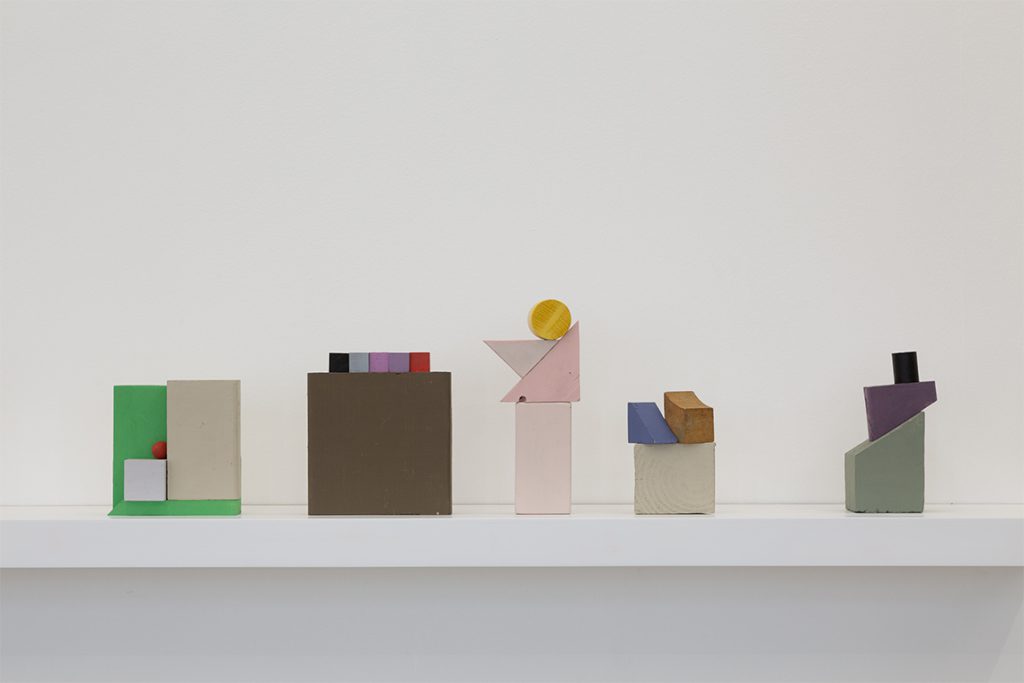
Image courtesy of the artist and Sfeir-Semler Gallery Beirut / Hamburg
At the Downtown space, Samia Halaby’s exhibition is a more light-hearted affair. Showing a mix of old and new paintings, alongside her signature kinetic artworks, the show spans from the 1980s to 2025 in a celebration of the artist’s career. Known especially for her work in abstract expressionism, she produces canvases that are a riot of shapes and colours and which sometimes soothe and at other times provoke. “I’ve been trying to push myself to be freer in my brushmarks in the paintings and I’m trying to develop a relationship with my intuitive self,” Halaby tells Canvas. “It’s like a dialogue between the consciousness and the unconscious, the intuitive. I’ve also been working on the idea of the line and to see what I can achieve with that.”
The artist is uncompromising when it comes to certain elements, however. “To me, abstraction means no shading, no perspective,” she adds. “When anyone tells me they see two eyes and a nose after they leave, I forthwith destroy the image because, once you see an image in an abstract painting, it destroys the abstract painting. The works on show are all within rectangles. At one point I did cut-up shapes, because I used to think the rectangular canvas is from the Renaissance, a window through which you look. Then with time, after I went all the way around the block and came back to the same spot, I thought about mankind first using a tablet of clay to put letters in. Our walls and floors are rectangular, as is the tray we offer food on, our paper etc. So I thought, forget it, it’s not a window and I went back to the rectangle.”
While both shows are quite different, the anniversary exhibitions encapsulate the dual nature of the gallery’s mission: honouring established masters while continuing to ignite crucial dialogues for the future and bringing new Arab talents to the global stage.
