

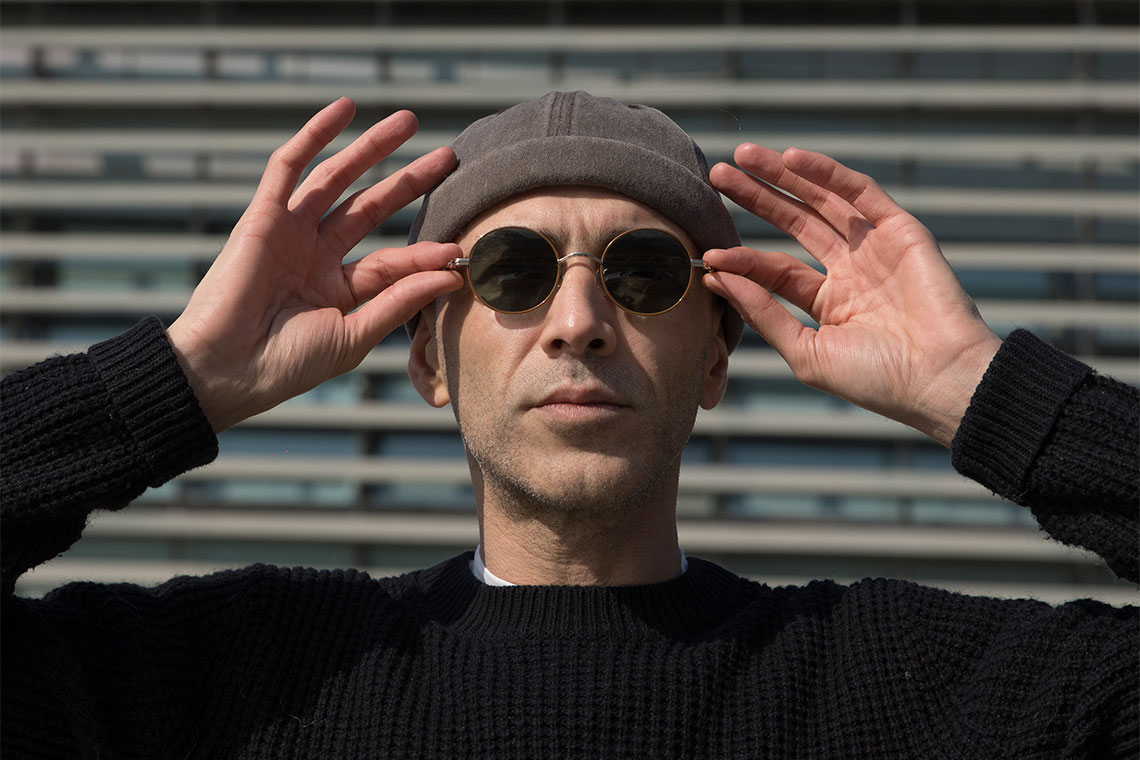
For the Azerbaijan Pavilion the artist presents The Attention, an exhibition featuring seven works across seven rooms and which transforms traditional Azerbaijani carpet-making into contemporary works that reinterpret heritage.
Canvas: How did you approach shaping the pavilion, and what kind of experience do you hope visitors will have?
Faig Ahmed: I have created a space where one does not encounter art as an object but rather as a reflection of oneself. Each visitor has the opportunity to look inward and hear the fundamental questions that exist within every person.
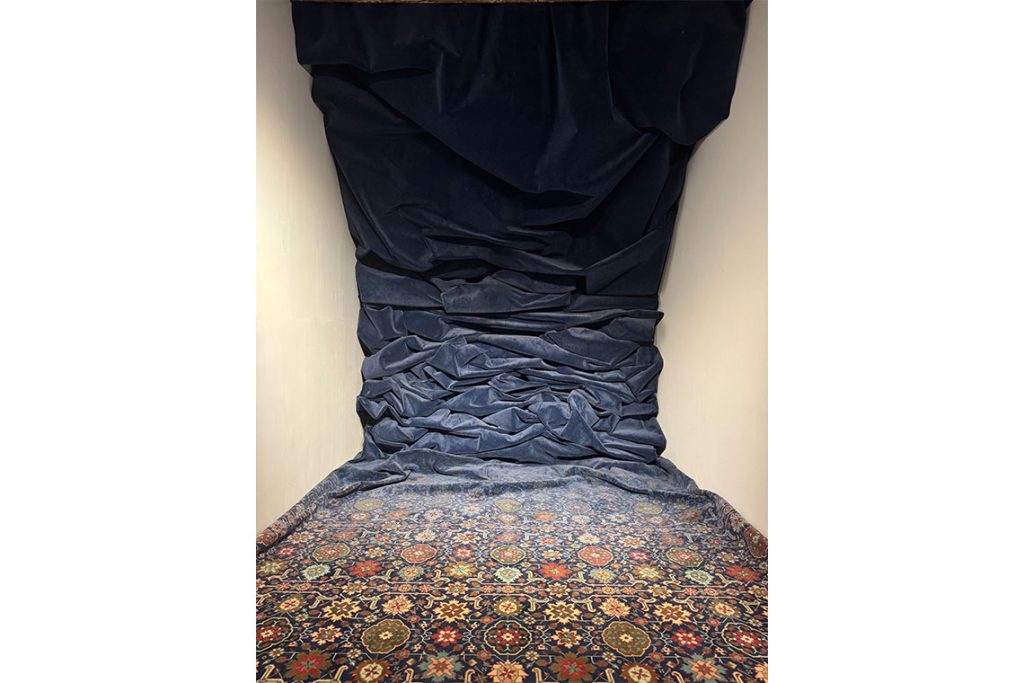
I Can Contain Both Worlds but I Do Not Fit Into This One (2026) spans the entire pavilion. How does this continuous form shape the way in which the work is navigated?
From the very entrance, the viewer finds themselves already within the work itself. As they move through the space, their attention gradually shifts – from the floor to the walls, to the ceiling and to the objects formed from this same continuous, uninterrupted carpet. It is a single, unified entity – one that can be walked on, observed and even momentarily fall out of awareness, yet it remains continuously present, existing somewhere within the viewer’s perception.
What inspired I Can Contain Both Worlds, and how does it help shape the experience of the pavilion?
The title is a line from the poetry of Imadaddin Nasimi (c.1369–1417), where he declares the ‘self’ as the foundation of the universe. If the self can contain the universe, then the self cannot be contained within anything. It is a beautiful idea, not least because if the universe is infinite, how can something exist that does not fit within infinity?
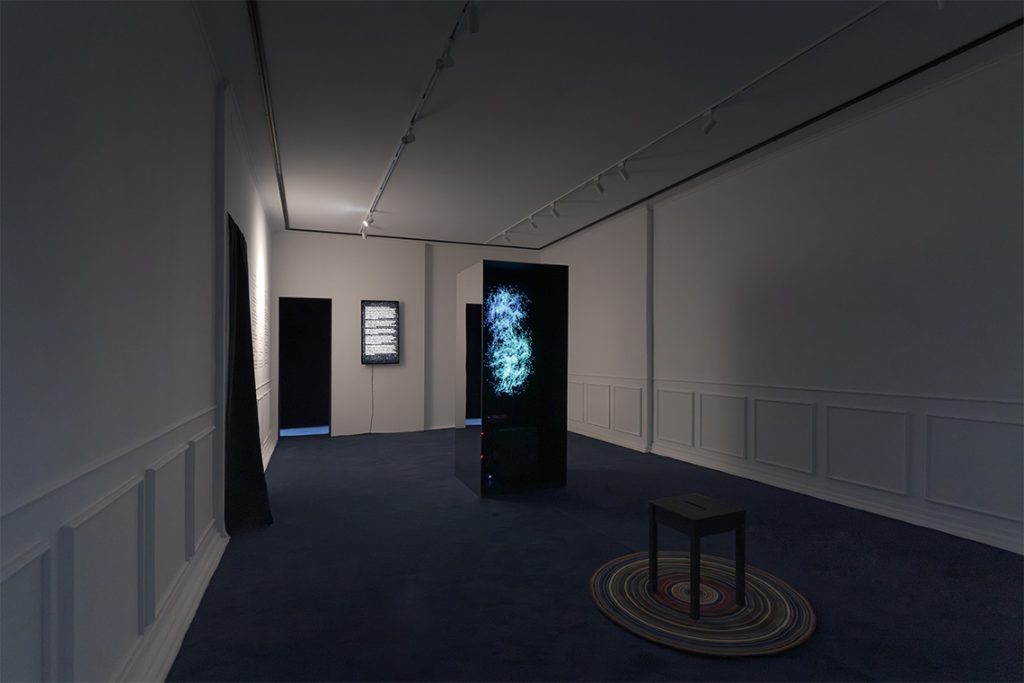
Entropy Altar (2026) incorporates a quantum random number generator, developed with guidance from Stephon H Alexander, to create streams of language and visual patterns. Can you tell us more about how this technology works within the piece, and what it reveals about chaos, creation and meaning?
This altar, like the altars of our ancestors, connects the human being with parallel universes. It is both an art and a science experiment, exploring the possible connection between consciousness and quantum events. There are various hypotheses about such connections, including those proposed by respected physicists. I cannot describe the full process from a strictly scientific perspective, but in essence the work is based on a chip that generates random numbers derived from quantum events. These events occur within the field that surrounds and contains all matter – even time itself.
Based on this randomness, seven words are selected from a set of words used by Nasimi. This process is activated when a person stands before the altar and focuses on the chip. In this way, we create the possibility of such a connection, along with an immediate measurement of its randomness or order. Entropy Altar is essentially a portal and what is most mystical about it is that this altar, from the depths of the universe’s fundamental entropy, can generate individual messages in the form of poetry – messages that can never be repeated. The deeper the meditation, the more precise the message.
What does it mean to make attention the subject of an entire pavilion?
Attention is the most valuable resource a person has. By making it both the theme and the substance of the works, I have created a kind of psychophysical mirror – one in which attention itself can be reflected and experienced directly by the viewer.
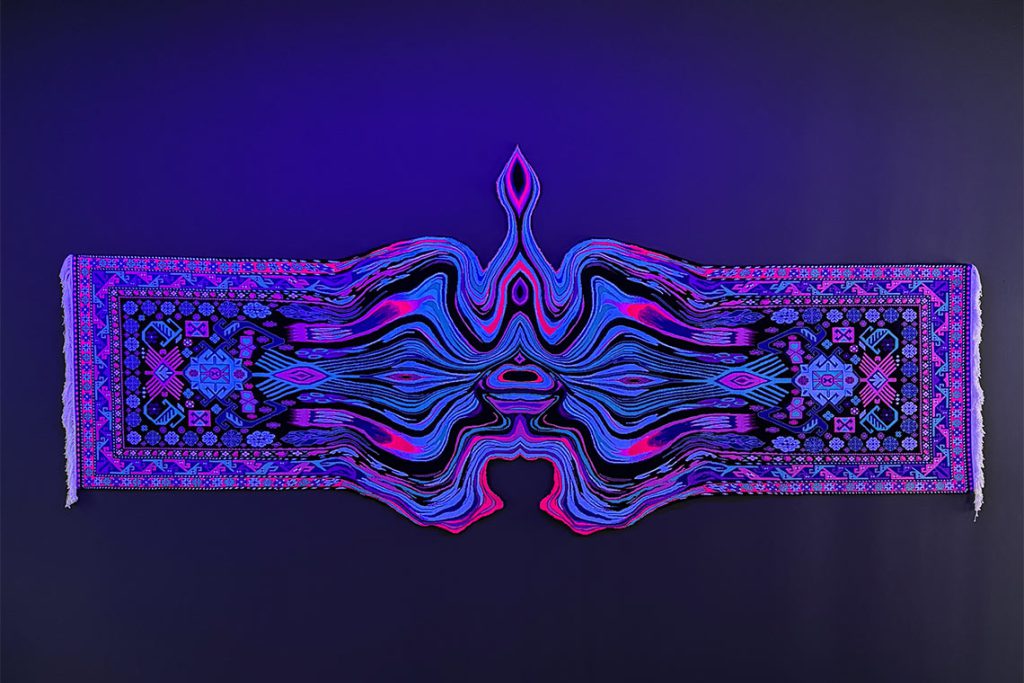
Carpet-making is historically rooted in precision and repetition. What interests you in pushing it toward unpredictability and transformation?
As cultural objects, carpets carry deep historical, geographical and spiritual meanings and values. Their strength has accumulated over many centuries, yet the potential offered by contemporary art can shift, expand and completely transform even such powerful symbolic forms. I have always been interested in testing how far both my own and external boundaries can be pushed and changed – creating more possibilities and freedom in the process. I see my role as exploring how a local, ancient visual language can be translated into a global, contemporary discourse.
Your practice spans textile, sculpture, video and performance. How does your conceptual approach shift when working across these different media?
The fundamental principle that I follow – rooted in the philosophy of non-duality – does not change, only the form of expression does. This is a unique quality of art. You can speak about the same idea through different languages, yet none of them can fully capture its essence. It is a kind of emergence within artistic practice. I also see it as a gestalt of different languages coming together to form a single essence, a unified meaning.
How does it feel to return to the Biennale after almost two decades, having represented Azerbaijan at its inaugural pavilion in 2007?
It has been an interesting journey, and in many ways, a symbolic one. I can now see how much my knowledge and interests have evolved – it feels like a full life cycle. An important change is that I am now surrounded by a large and professional team, and that the Azerbaijan Pavilion has, for many years, been supported by major institutions and foundations, such as the Heydar Aliyev Foundation and the Ministry of Culture of the Republic of Azerbaijan.
Do you see your work as preserving Azerbaijani heritage, reinterpreting it or creating a dialogue between tradition and modernity?
I think it is a dialogue. It can be seen as a conversation between Azerbaijan and the world, but also as a discourse within Azerbaijani society itself. For example, while there are those who support visual transformations of such an ancient and culturally significant object as a carpet, there are also people with more conservative views, as in any society.
The Azerbaijan Pavilion is located in the Campo de la Tana
This interview first appeared in Canvas 123: Venice Special Issue
