

Hrair Sarkissian’s current show in London is a stark reminder of the ephemerality of history and the fragilities of its physical evidence.
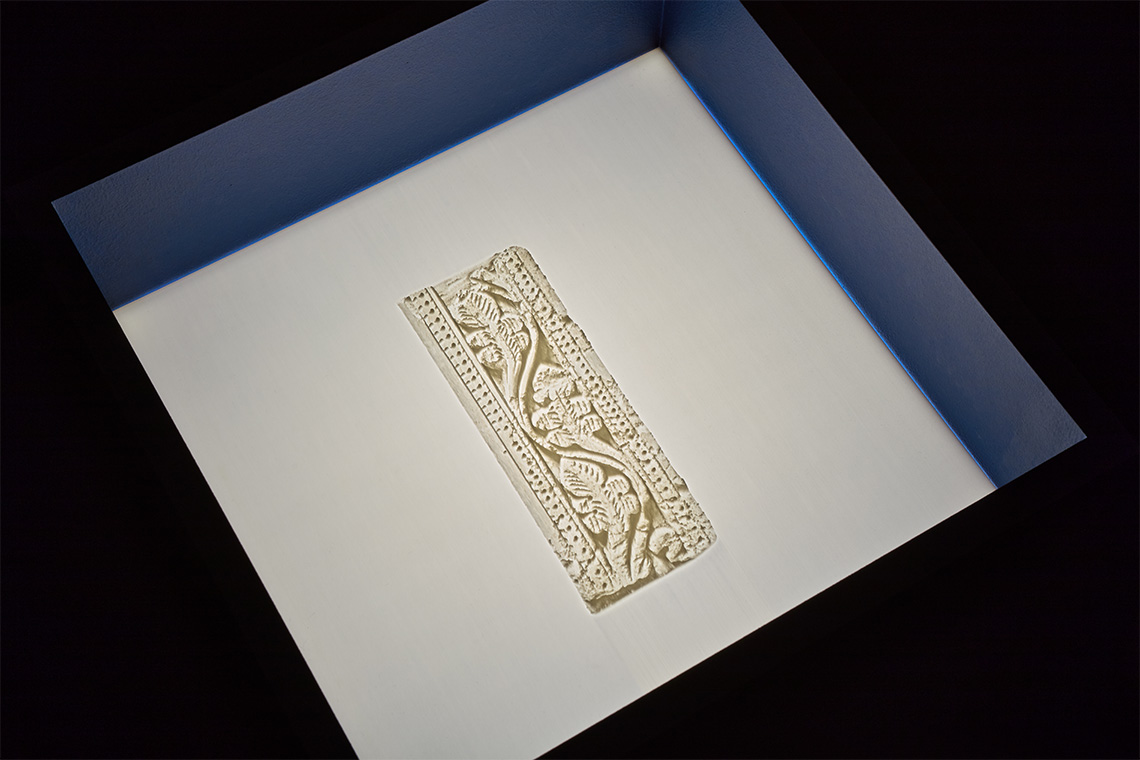
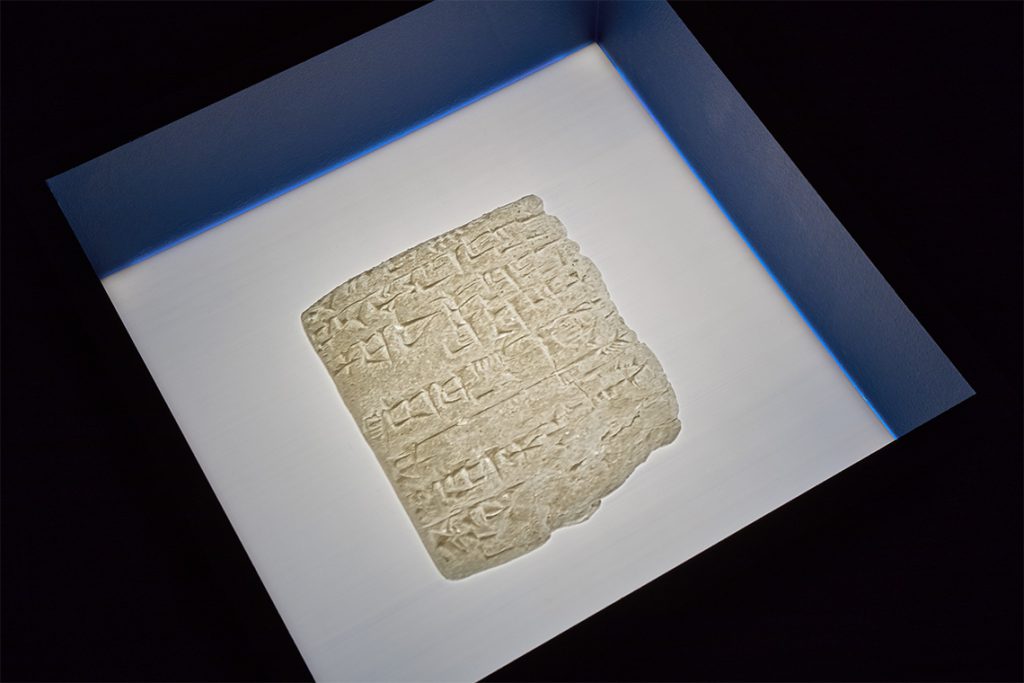
Conceptual photographer Hrair Sarkissian’s latest exhibition, Stolen Past at Ibraaz London, unpicks subject matter that is both absorbing and disturbing in equal measure. It occupies the elaborate ground-floor exhibition space, where a highly decorative, white moulded ceiling rises up around four long rows of dark waist-height plinths. Each plinth is lit from below and the view across the room is of open celestial blue ‘lids’, like a sombre graveyard of sorts. Walking among the plinths reveals hidden, ghost-like lithophanes resting inside each blue hidden space. These are 3D-printed artefacts that seem to be shallowly carved out of deathly white material or biscuit fired (unglazed) porcelain, with each representing a looted or destroyed artefact that was once housed in the Raqqa Museum in northern Syria.
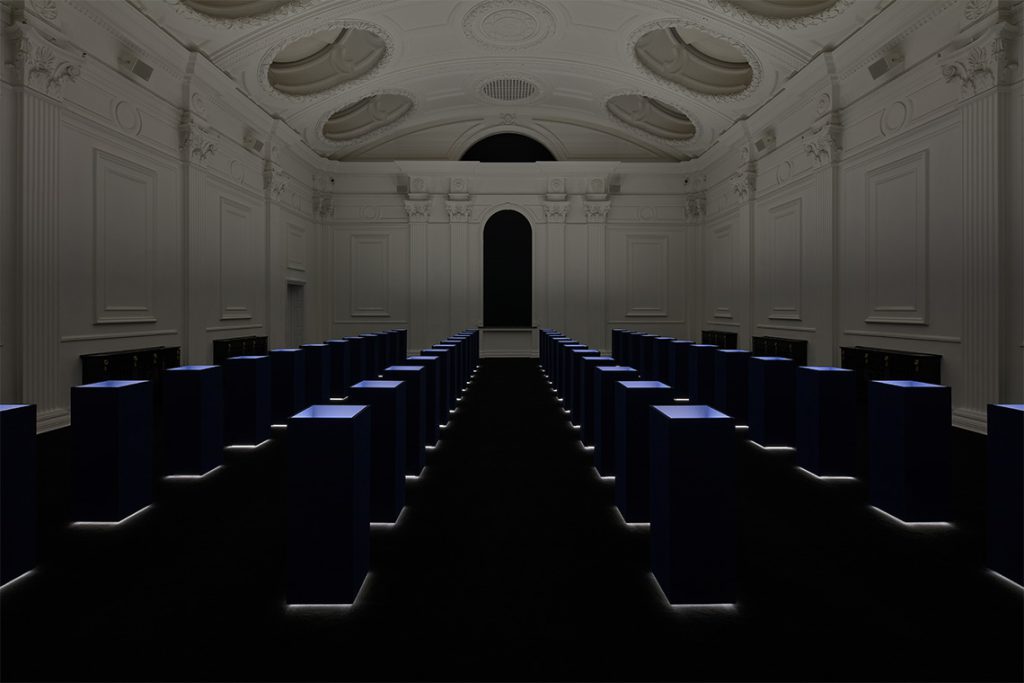
As visitors walk between the plinths, taking in one or several small objects at a time, a frail image is revealed of what the museum’s 8000-piece historic collection once looked like, before Raqqa was taken over by the Islamic State (IS) in 2013. The objects range from tools to tablets and figurines to vases, and they serve as sleeping witnesses of the heritage of that part of Syria, artefacts that had been collated and cared for in the museum since it opened in 1981. The entire contents of the museum and its storehouse were either displaced or destroyed following the arrival of IS, and centuries of human heritage and creative expression were lost. This tragedy is only one of many that have happened around the world in the last few decades and, as an installation, Stolen Past is purposefully universal.
Using photographs taken hastily by Raqqa’s archaeological team of parts of the museum collection during the IS insurgence, Sarkissian employs a lithophane technique that was developed in France in the early nineteenth century. The name of the technique derives from the Greek lithos meaning stone and phaneine meaning to appear. Part-photography and part-image-making, it involves the carving of images, either freehand or using a photographic projection, into warm wax or plaster and then the making of a porcelain negative shape that is fired to set the fragile image. The result is ethereal and shadow-like, and in the exhibition each object or collection of pieces is offset by the bright lighting of the square plinth lid, like individual spotlights. It is both a burial of sorts for Raqqa Museum’s historic display and a memorial to the various civilisations that its collection once represented.
The installation has been described as a ‘deathscape’, testament to Sarkissian’s mastery of photography and to his sensitive treatment of this loss of history and destruction of the past. Trained by his photographer father, Sarkissian is involved in the Arab Image Foundation in Beirut, a collection dedicated to the preservation of vernacular photography from the SWANA region and its diaspora, as a way of remembering the individual amongst the collective.
Stolen Past identifies significant objects and also comments on their legacy and the erasure (or perhaps the selection by erasure) of history and culture. It also echoes themes related to cultural memory and the importance of safeguarding history. Staring at the delicate, monochrome and ghost-like images, the visitor is left to wonder whether this exhibition is about documenting the violent erasure or displacement of historic objects or whether it offers a faint glimmer of hope that all might not be lost. Thanks to Sarkissian and those who photographed the original museum artefacts in what must have been highly stressful circumstances, these objects at least ‘survive’, albeit in a hologram-like state. They now find a temporary resting-place in Sarkissian’s haunting and thought-provoking installation.
