

Istanbul’s Abdülmecid Efendi Mansion, the former home and artist’s salon of the Ottoman empire’s last caliph, has been transformed into an enchanted garden for Folia, an exhibition that delves into humanity’s interventions in the natural world.
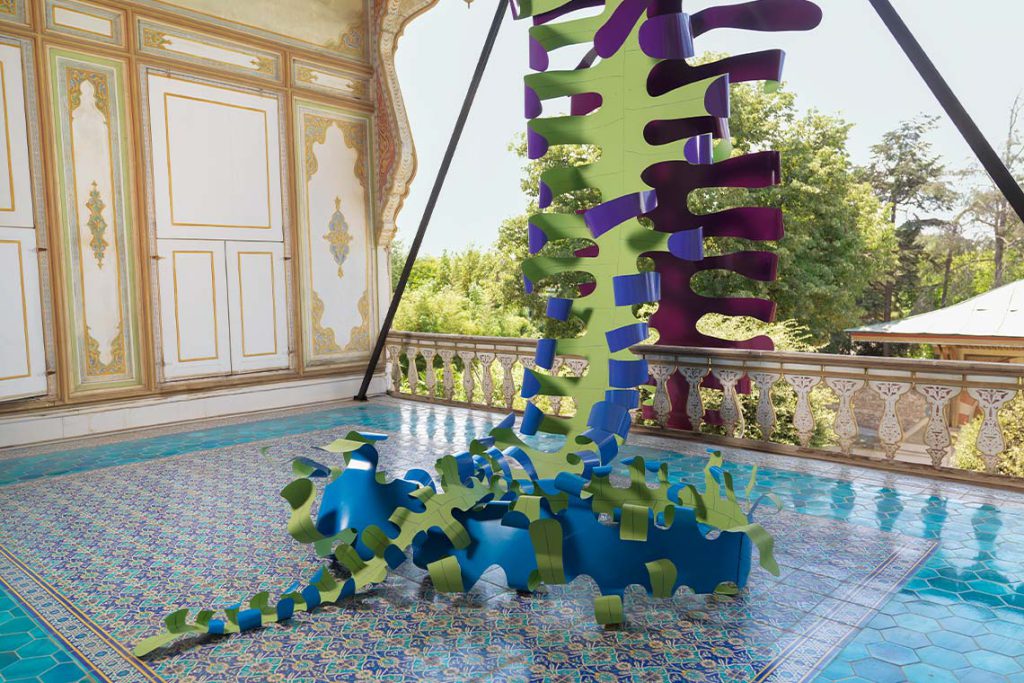
“The garden is not strictly nature, but a cultural product that merges the two. It transgresses boundaries,” says Selen Ansen, who curated the exhibition Folia with Eda Berkmen. “I liken it to invasive species that disrupt systems. It is about rethinking the way we inhabit the world collectively.” Strange creatures prowl the grounds of the nineteenth-century Abdülmecid Efendi Mansion, a former hunting lodge that was later the summer residence of the art-loving Prince Abdülmecid Efendi. They include Turkish artist Canan’s stacked stones in Bird Woman (2017) and Wilfred Pritchard’s bronze skeleton in The Vault. The 28-metre-long metal Suspended Fern II (2025), by Brazilian artist Camilla Rocha, is draped from a balcony along the exterior of the building, spreading unchecked in its new ecosystem.
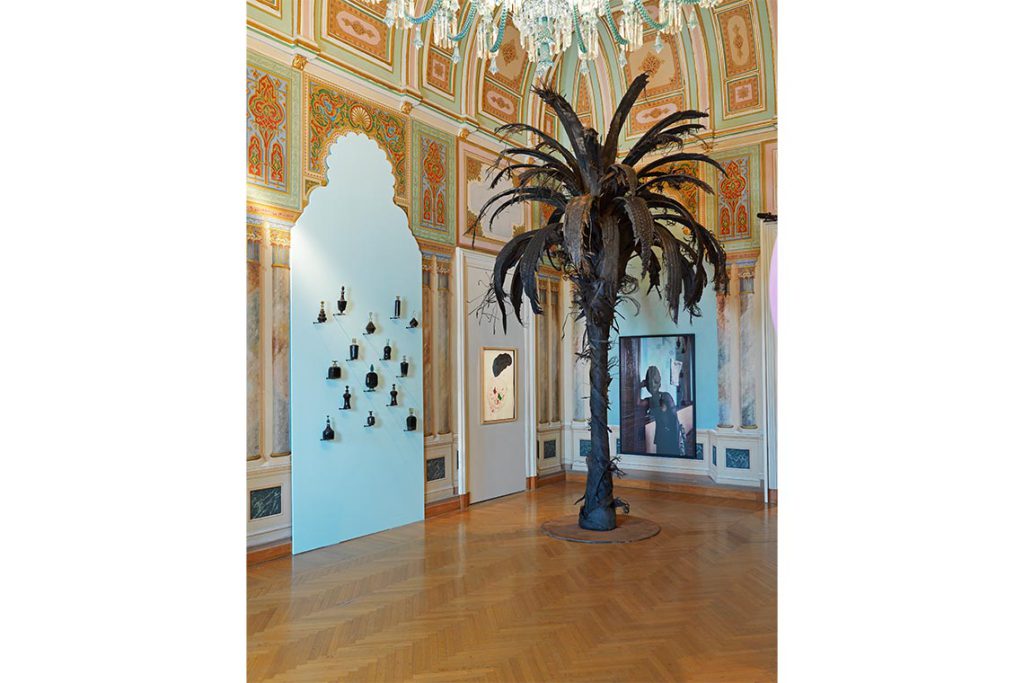
One might walk straight past Black Palm I (2025), mistaking it for a towering tree, were it not for the tyre treads on its leaves and a faint whiff of rubber. Australian artist Douglas White fashioned his lookalike on site from blown-out tyres to show the possibility of “new life and regeneration”, he says. “But visually it can be seen as apocalyptic. Hope and fear are twins when we think of the future and the planet.” It strikes a tone for the exhibition, which balances nature’s promise of renewal with the threat of ruin. Uniting more than 300 works of art and other curios from across the centuries, Folia borrows heavily from the collection of Ömer Koç, among Türkiye’s most energetic art collectors and whose family’s conglomerate owns the estate.
Abdülmecid resided here until the defeat of the Ottoman empire at the end of the First World War, when he briefly became crown prince and then caliph before his exile in the early days of the secular Turkish Republic. A prolific artist, he made dozens of paintings in the European figurative tradition, working at the mansion and surrounding himself with fellow artists. The building’s interior retains its original garden motifs, from floral wall tiles to a fresco of women gathered at a fountain that was designed by Abdülmecid. Ansen and Berkmen begin the exhibition with a Day Room and Night Room, which resemble curiosity cabinets overstuffed with paintings, ephemera, animal skeletons and sculpture, including delicate flowerscapes by Nathalie Latour, who revives the eighteenth-century wax modelling technique of ceroplasty.
About half of the work in Folia are by women – which, Berkmen said, was not a conscious choice – and many of them explore masculine values. Anne Wenzel’s monumental Still Life – Metamorphosis (Large Deer) (2022) depicts the slaughter of innocence in a ceramic stag in recumbent pose, its vividly painted guts spilling out from a gaping wound. Necla Rüzgar’s oil-on-canvas Survival Skills series (2014) inverts hunters’ trophy photos, placing the prey at the top to obscure the faces of the predators. These scenes are a nod to the building’s first use as a hunting pavilion in the 1880s, when it was surrounded by forests inhabited by wild boar, hares and pheasants. What is left of the city’s forests amid Istanbul’s ceaseless sprawl is the setting for the video Dreamer (2012) by Kurdish artist Fatoş İrwen, who appears unclothed in the woods, an Eve without Adam who claims autonomy over her own narrative.
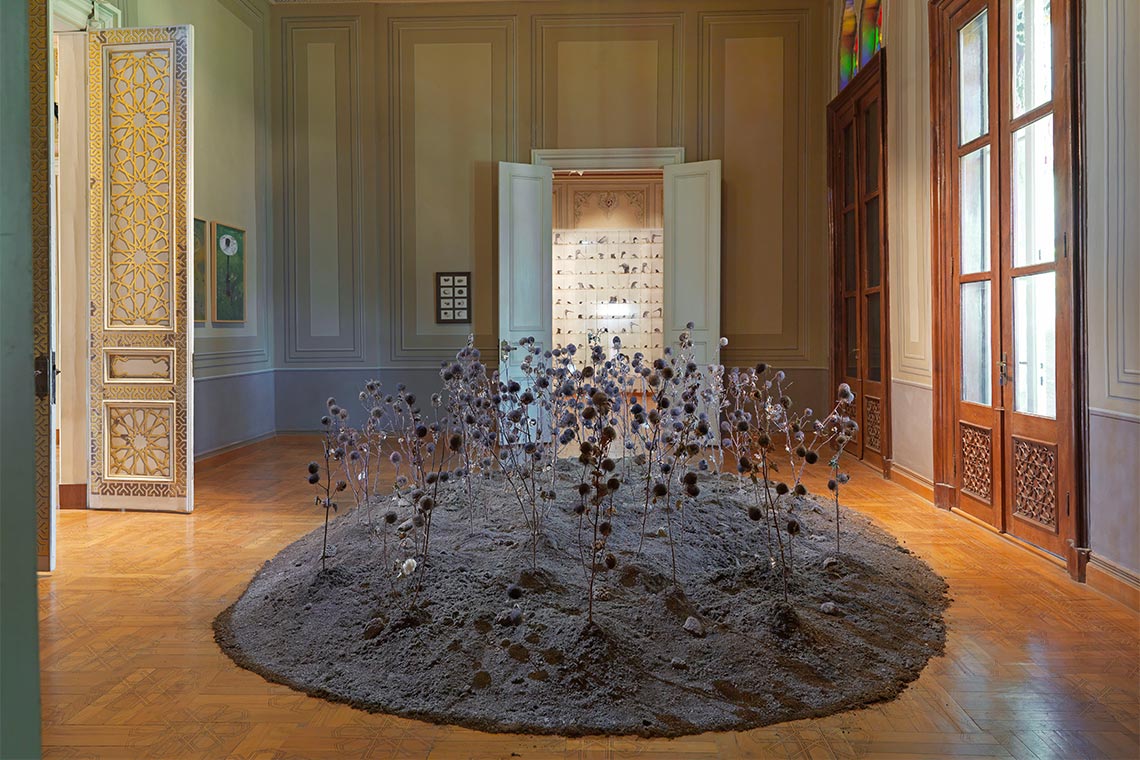
İrwen’s starkly emotional works are among Folia’s most stirring. She used her hair and that of fellow inmates to craft the plush spheres in Cannonballs (2019) while she was serving a three-year prison term for attending a political protest. Birdsong can be heard in Harvest of Time (2023) as darkness descends during a solar eclipse over a drought-stricken cottonfield that İrwen recreates with natural elements like husks and soil, as well as traces of the human body, including hair, nails and imprints of skin. The scarred terrain is not just the earth, but İrwen’s own memory.
Amid Folia’s frenetic fervour are quieter moments to contemplate. A sleeping boy appears in Virgin Forest – Narcotic (2005) by Christopher Winter, a painter working in Berlin and Hastings in the UK. A closer consideration of the acrylic on canvas suggests that the boy may have been tempted by the mushrooms sprouting beside him and that the glow worms illuminating the dark forest are a hallucinatory effect. “A lot of my work has an aspect of innocence that may be tipping over into experience,” Winter says. “My paintings are open questions that don’t necessarily give a definitive answer. I myself don’t know.”
A walk in the garden may steer us towards unexpected answers amid the world’s current malaise. “Gardens are therapeutic,” Berkmen affirms. “The cyclicality of nature since time immemorial can offer a different perspective on the environment, conflict or other global issues.”
