

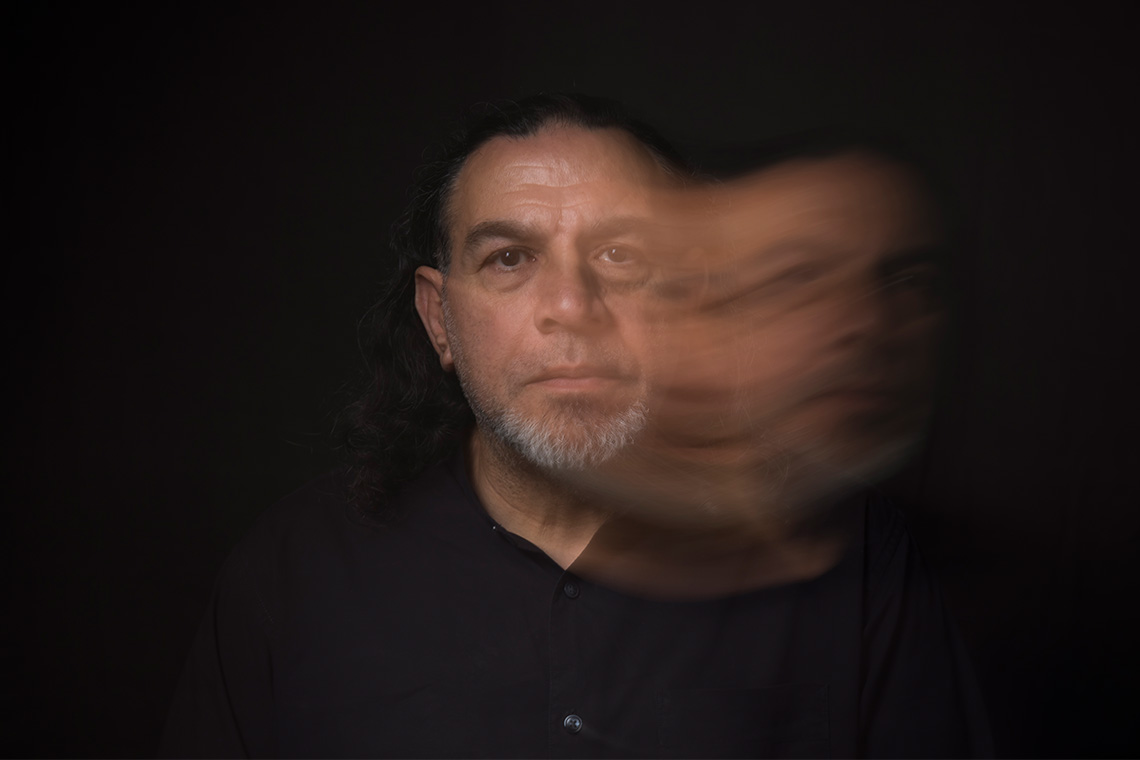
The Lebanese-Australian artist represents the Australia Pavilion with a solo show, conference of one’s self, while also featuring in the main exhibition.
Khaled Sabsabi believes in the power within the self. Only from there, he thinks, can a wealth of multitudes burgeon and prompt transformation. Like individual drops combining into a waterfall or particles of sand coalescing into a desert dune, the singularities that define a mass inform the artist’s outlook towards a world in constant flux. Sabsabi’s solo presentation at the Australia Pavilion, as well as his participation in the Biennale’s main exhibition, In Minor Keys, with a work entitled khalil (2026), have stemmed from this trust in “individual internal awakening”.
Sabsabi tells Canvas that only when anchored in the individual “can any collective movement toward unity be genuine”. The Lebanese-born artist’s pavilion exhibition, entitled conference of one’s self and organised by the artist’s long-term collaborator, curator Michael Dagostino, ushers visitors into slowly oscillating abstract images which both hypnotise and alarm. Projections of faces also appear in various likenesses that may or may not resemble the visitors themselves. Their slight movements prompt careful inspection and, in the artist’s intention, “a moment of radical proximity where the viewer must acknowledge the other as a reflection and possibly an extension of themselves.”
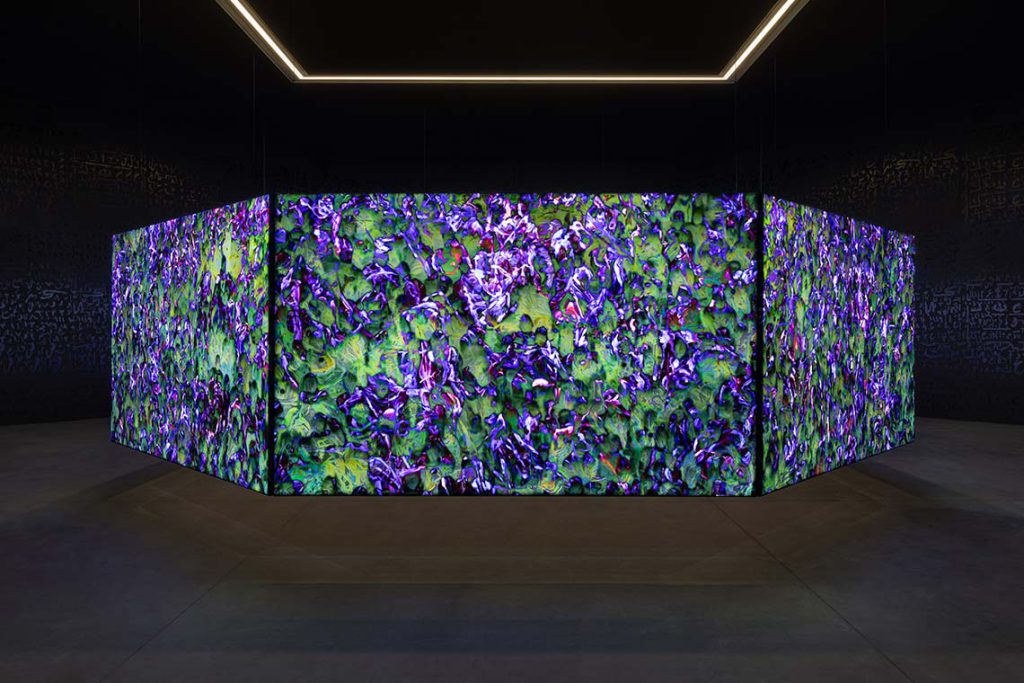
The paced-down rhythm is a part of a strategy to prompt an ease and slowness that eventually crescendo to what the artist hopes is each viewer’s “connection with the work in a highly personal way”. He sees a parallel between the satisfaction gleaned by every pair of eyes from encountering art and the level of their investment in the moment: “I feel that the more you engage with the work, the more you are content”. This dynamic results from the overall orchestration, which allows visitors to craft their own “emotive” speed in manoeuvring their way through and around the space. Autonomous yet willing to sync, each guest – the artist hopes – will find themselves in a space “where the gap between the self and the other can begin to be bridged, both physically and metaphysically.”
A strong chord between the physical and the cerebral is perhaps the burning desire of any artist seeking to establish an immersive output. For Sabsabi, the entanglement of the two dimensions goes beyond providing a tool for his end goal – rather, this alchemy is inviolable throughout the journey across the pavilion. Furthermore, what medium could convey this essence more innately than poetry? Farid al-Din Attar’s twelfth-century Sufi poem, The Conference of the Birds, sets the framework for the viewers to linger across feelings and realisations. Sabsabi has configured his installation to “emulate the poem’s narrative journey and sense of discovery”, adopting the ancient text’s cathartic tale of search and awakening as his template.
The original manuscript, which totals around 4500 lines in its original Persian, depicts the quest of the world’s birds to choose a leader and find their way to the mythical Simorgh, who can potentially govern them. They have to cross seven deadly valleys to reach Simorgh, with many perishing along the way; 30 survivors eventually come face-to-face with acceptance – both within themselves and for one another – and gather to form the divine being that they were in search of. The text’s constant unfolding of revelatory epiphanies is a rhythm from which Sabsabi takes his cues. “With this constant momentum,” he says, “the intent is that the viewer will enter an altered sense of consciousness and engage with the magic of experiencing the outer and inner self.”
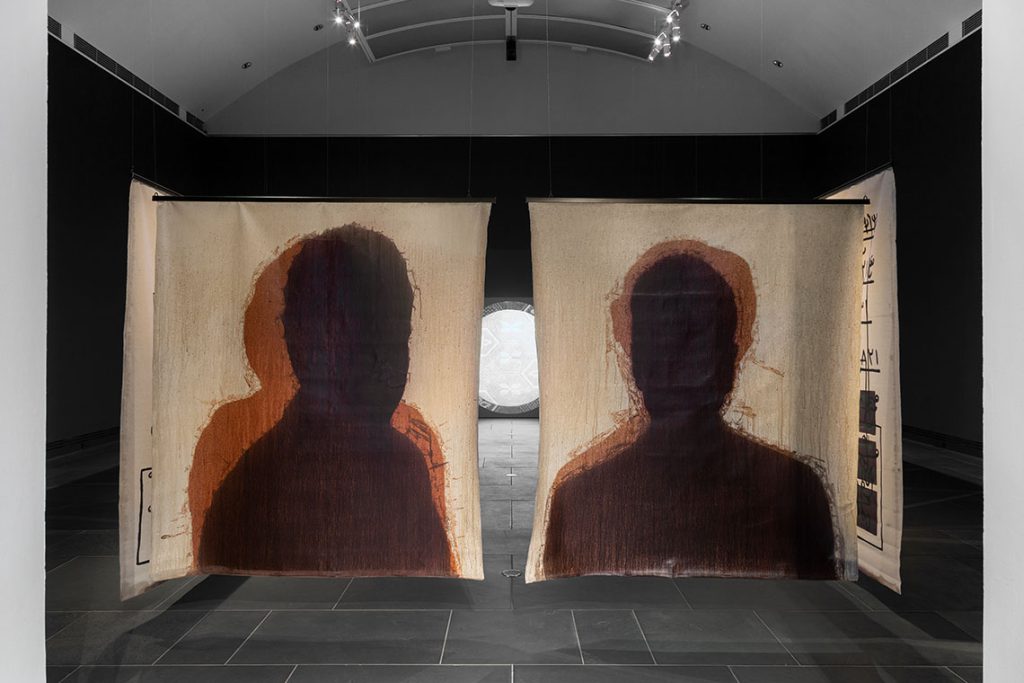
Searching guidance from a canonised poem was a clear path for the artist, who has long produced music, especially in hip-hop. “Poetry enlarges the space for connections to both the mundane and the spiritual,” he says. Indeed, the layering of multiple images pays homage to his experience with music. Not unlike sampling in a beat, he treats images like rhythms waiting to be layered and mashed together to convey movement, a process in which he sees a “static transformation into a layering of images”. Hip-hop continues to imbue his approach to spatiality and experience-building with a sense of rhythmic awareness: “I do see hip-hop and music as a great tool for communication and awareness on higher planes, something that cannot be explained but which can be felt.”
To craft a lingering effect after leaving the pavilion, Sabsabi studies the shared consciousness that Attar’s poem has fostered across the centuries and numerous translations. “I hope the work will bring people together in the stillness of collective humanity in a similar way that the poem has for centuries,” he explains. Collectivity invigorates both his statements in La Serenissima, as much as it is fused through his overall practice. In a career spanning more than three decades, he has embodied Sufism’s fundamental teachings on the need for closeness with a spiritual dimension and openness to find the divine within. The holy, however, blends with the immediacy of lived experience, expressed most importantly in his own story through the turbulence of escaping the Lebanese Civil War at the age of 12 and settling in Australia. Drift anchors the journey of the birds across seven valleys, which stand for spiritual progression. The pavilion suggests an eighth valley, which the artist imagines as a place of “contemplation and enlightenment, connecting the self more closely to a higher spiritual plane”.
The artist is aware that he is daring to make his proposal in a world racked by the undeniable realities of war, destruction and chaos, but forges ahead because he believes that “we do not find the divine by retreating from the world, but by moving through it with intention”. The migrant experience – whether his own or that of countless others, past and present – echoes this sentiment of drift and displacement, regardless of whether movement is desired or enforced. Sabsabi’s proposal suggests reflection, not only within but also in terms of all those visiting the Denton Corker Marshall-designed pavilion in the Giardini, where tens of other nations have set out their stalls to coexist through the binding urge of storytelling. While conflicts dominate the world outside, the artist finds none in “seeking associations with others”, adding that it is only through this “act of living, our struggles, our migrations, our connections with others, that we refine the soul”.
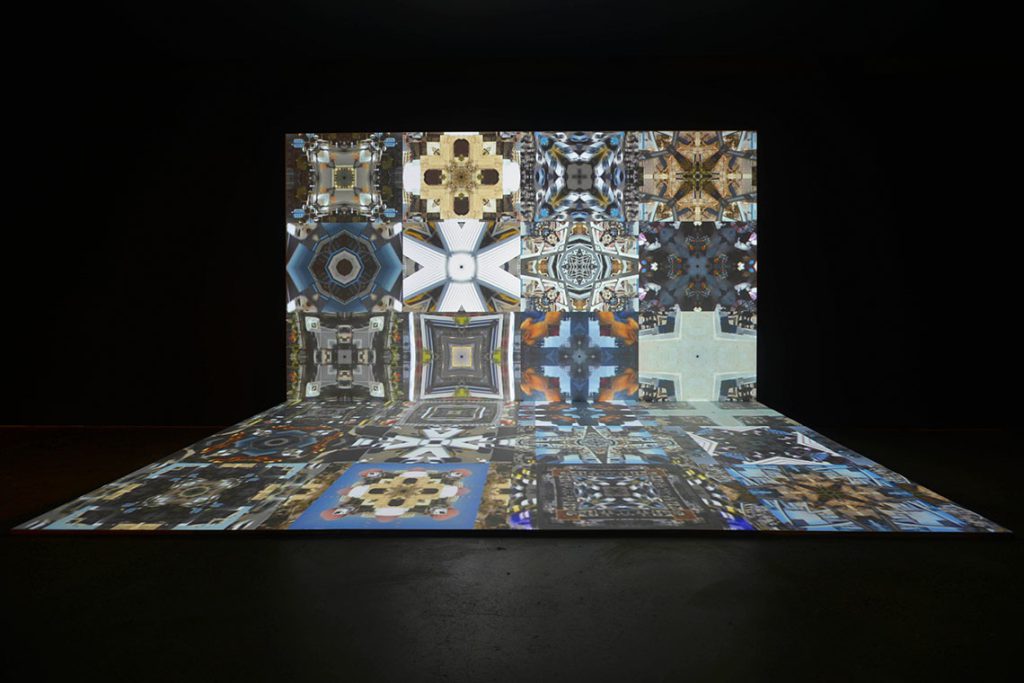
Dagostino’s relationship with Sabsabi, which started in the 1990s in the Casula Powerhouse Arts Centre (now the Liverpool Powerhouse) in Sydney, bore particularly significant fruit in the artist’s two-chapter, three-decade survey, A Promise (2020) and A Hope (2022), shown at the Art Gallery of New South Wales and Campbelltown Arts Centre. The multi-channel installations of moving image and multi-sensory atmospheres – including scent – signalled a similar lane for the pavilion, which the artist says reflects the duo’s shared experiences and histories of living and working in western Sydney. “We’re both migrants and children of migrants,” he explains.
Beyond the Australia Pavilion, Sabsabi’s mark in Venice is further imprinted with khalil, which he presents in the main show – the first Australian artist in the biennale’s history to enjoy a double bill. The scent of oud and a musical score initiate the three-part installation, preceding a layout of a 40-metre-long canvas onto which the artist projects images of his paintings. Visitors are encouraged to move in an anti-clockwise procession in an homage to whirling dervishes. The artist and Dagostino had envisioned this work for the pavilion before the commissioning body, Creative Australia, dropped them both in early 2025 due to a previous video work. The Biennale’s late curator, Koyo Kouoh, then invited them to participate in the main show; however, when they were reinstated for the pavilion soon thereafter, they kept the original work in the group exhibition. Sabsabi considers the two pieces as companions and says they are “embedded with the same spiritual scaffolding, although they explore two different parts of it”. While he explores the outer self at the pavilion, he believes the other work delves into the inner sphere. The extent of this intention, however, may vary for each visitor, just like the experiences promised in most of his works offer open-ended discoveries of the self. Sabsabi notes how some people may have different reactions from his own. but trusts their intertwined devotion to “emphasise the vastness of humanity and the self, and encourage the viewer to experience that vastness in their own way.”
The Australia Pavilion is located in the Giardini
This article first appeared in Canvas 123: Venice Special Issue
