

The artist shares how his creative career has come full circle in The Studio, his large-scale interactive installation at the Armenian Pavilion.
Canvas: You were born in Armenia and are now based in the United States. What led you to settle there?
Zadik Zadikian: I left Armenia under the Soviet Union in 1965, a time of very strict communist rule. I was with four other guys trying to get to Türkiye by crossing the Aras River in the middle of winter. Everything was covered in snow and the icy water was horrible and so cold. Of the five of us, two were shot, one was caught and two of us made it. The Russians tried to get us back from Türkiye, but after months of questioning, the Turks allowed us to stay. After seven months in Istanbul, we were able to go to Beirut. From there, I went on to America.
Was art always an important factor in your life?
I was 19 years old when I left. It was a very heavy thing to lose my country, to not be able to go back to my parents, who I was very close to. After this, every step that I took was very serious. I would draw to try and get my mind away from the reality of what had happened to us. Through my art, I was able to survive, to not lose my mind.
I think I was born an artist. From an early age, I would draw and copy pieces of Greek sculpture. I was the youngest student at the Arts Academy in Armenia at the time. Nobody led me to art. My mother was a seamstress and my father was a builder, who would take me to building sites when I was a boy. I think the sculptural forms in my work come from these experiences, which have also influenced me when making moulds and casting blocks.
When were you drawn to sculpture as a medium?
When I was first in the United States, I assisted several artists. One of them was Beniamino Bufano, a well-known Italian American sculptor in San Francisco. Later, I became one of Richard Serra’s assistants through my friendship with his brother, Rudolph. After some experimentation with various media, including yellow spray paint during an exhibition in New York, I came to the understanding that I was a sculptor, not a painter.
I was searching for my material, and happened upon some gold foil thrown in the street. I realised this was whatI had been looking for. I covered every inch of my new studio space and apartment in it. The space became very meditative and serene. People heard about it, and in 1974 the director of what would later be known as MoMA PS1 commissioned me to gild the stairways of the building. My gilding remained there for five years.
How did you go from gilding existing items to making your own pieces, and when did bricks begin to appear in your work?
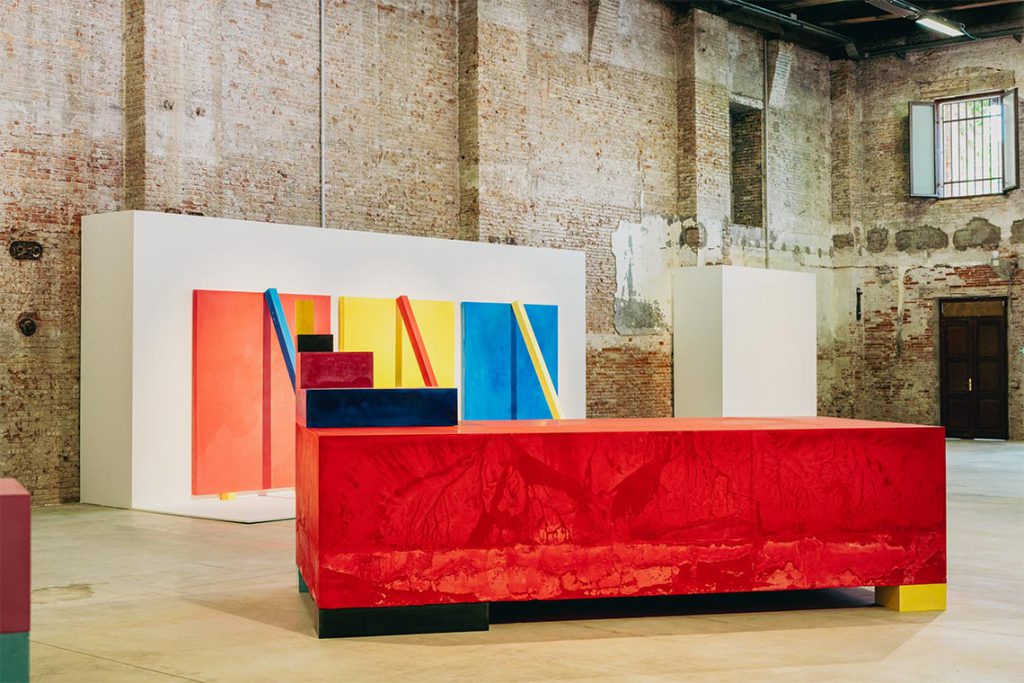
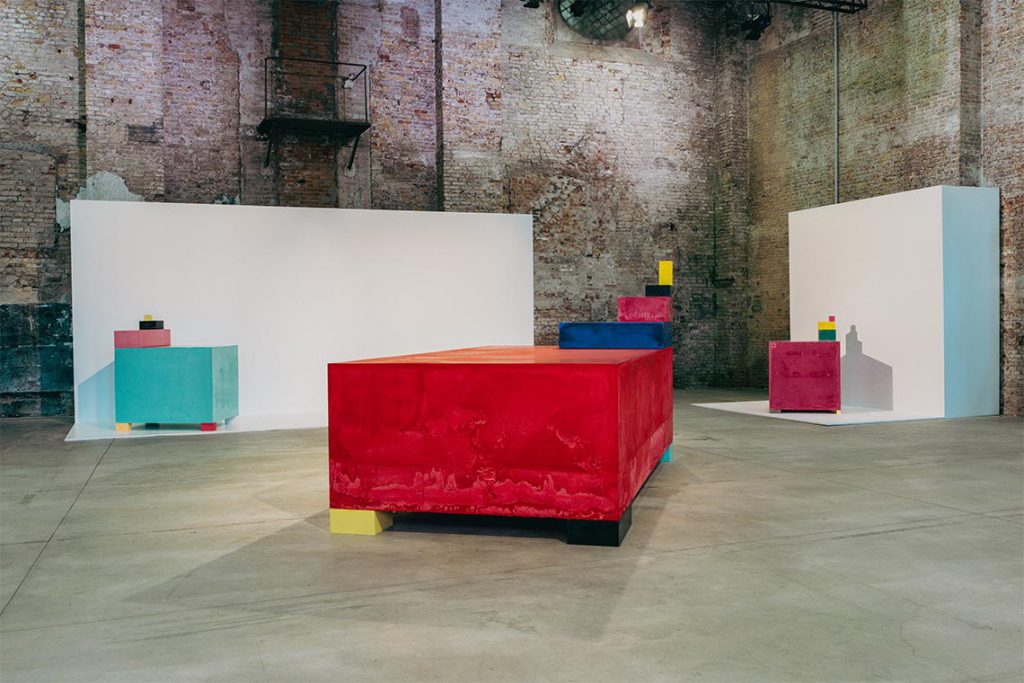
I realised that I didn’t want to wait for spaces to occur. I wanted to liberate myself from depending on the outside world for sculpting. The art dealer Tony Shafrazi invited me to go to Tehran to make 1000 bricks for an exhibition. This was right before the Shah fell. I got stuck in Iran, and the bricks were stolen during the revolution. In a way, the bricks I have made since then, including the ones which make up The Studio at the Armenia Pavilion and the outdoor installation right next to one of the Arsenale’s exterior crossings, are a way to bring back what was lost then. In Venice, the bricks are larger and colourful, not gold. There is a sense of play in The Studio, although ideas around material presence and process ground the work.
What led you to represent Armenia at the Biennale?
A little over a year ago, I participated in Solid Gold, a Brooklyn Museum show in which I showcased more than 1000 gold leaf-covered ingots in a work called Path to Nine (2024). After that, Tony Shafrazi commissioned another piece from me, structured a little differently from the Brooklyn pieces and much bigger, for the art fair, Independent 20th Century, in New York last year. The piece was called Made in USA (2025) and comprised a nine-foot column of gilded bricks, which were reminiscent of the ones that were stolen in Tehran in the late 1970s. After that exhibition, I flew to Armenia and applied to represent the country at the Venice Biennale. It was an open application and they ended up selecting me, with Tony as curator of the pavilion with assistant curator Tina Chakarian.
How did The Studio come to be a non-fixed, evolving structure where bricks are moved around over the six-month duration of the event?
It was actually Tony’s idea. He had fallen in love with the process of putting together the sculpture pieces when lots of people are around to help. That’s where the real energy is, when things are being built. All these people, the human touch, the dynamics. I’ve had seven or eight people helping me with the project, including my son Aram. Sculpture is all about touching. I’m touching when I’m making. Why should you not touch when you visit? I didn’t want The Studio to be static, as bricks are all about physical labour and experimentation with form. I wanted to encourage this dimension with these oversized, movable pieces.
Why is this interactive element so important to you?
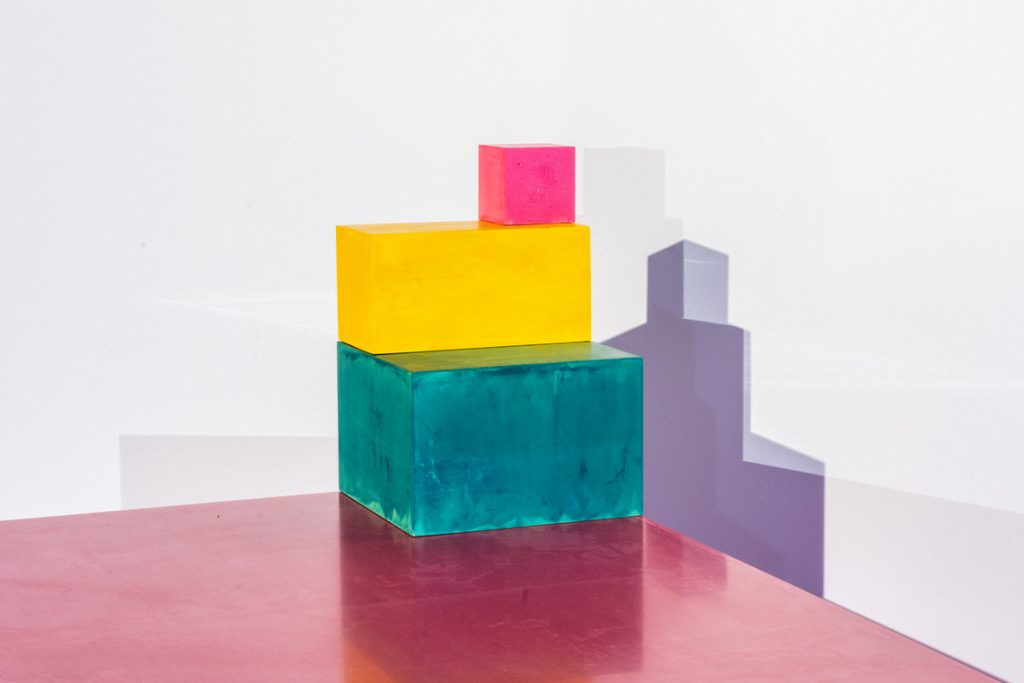
In the workshop, people can come and play with the units and build with smaller-scale pieces. Everybody has a completely individual character, so they will put pieces together differently. Maybe I can learn something by watching how people do this in a way that I never would. Maybe that interaction will give them the freedom to get in touch with their creative energy. I mean, we are children. All children play with blocks. These are building blocks, allowing for play at any age.
The Studio is very democratic. It doesn’t matter what your skin colour, country or background are, all human beings can come in and touch the pieces. Even if they drop something and break it, we’ll make another one. I want them to get involved. I think art should be fun, because when we were children, that’s how I fell in love with it.
The Armenian Pavilion is located in the Arsenale
This interview first appeared in Canvas 123: Venice Special Issue
