

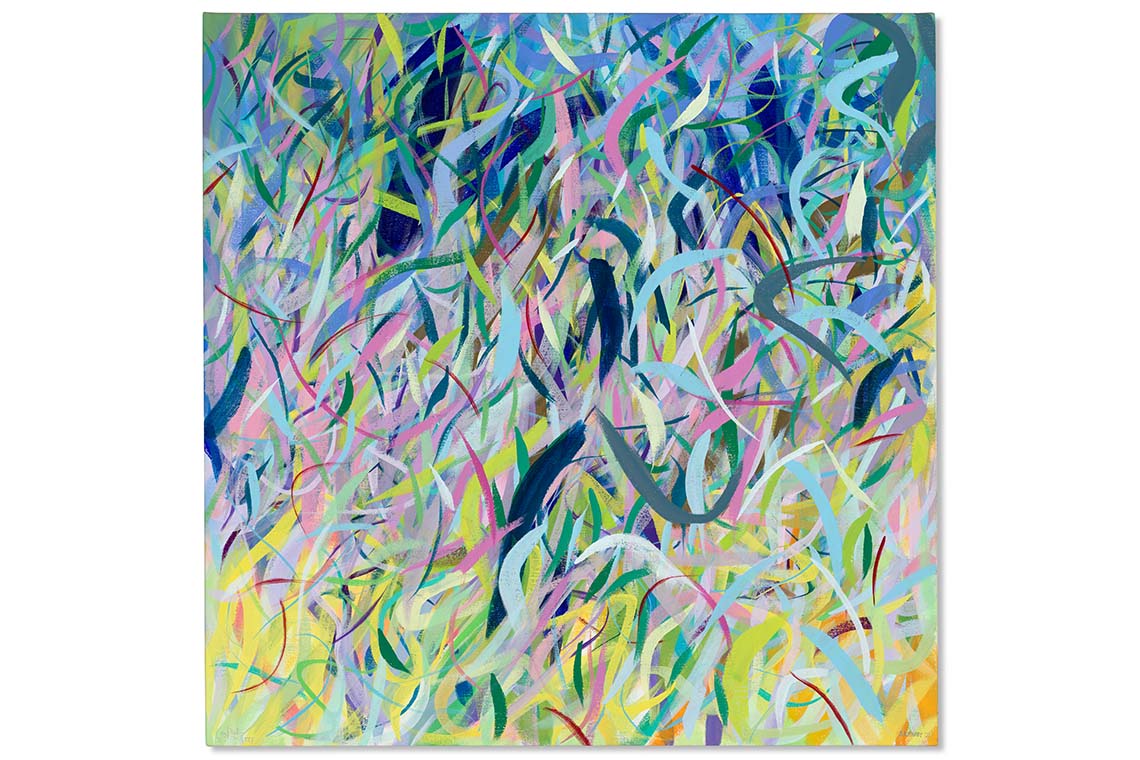
Christie’s Modern and Contemporary Middle Eastern Art Online sale, which concluded 16 June has achieved a total of 2,631,694 GBP (USD 3,036,198.53) with 98% sold by lot and 100% sold by value.
These results highlight the continued collector interest in artists from across the Middle East and North Africa. Competitive bidding drove several works beyond their estimates, led by Saliba Douaihy’s Untitled (Wadi Qannoubine series) (c.1980s), which realised 165,100 GBP (USD 190,361.32), more than double its high estimate of 70,000 GBP (USD 80,759.35). This was followed by Mohamed Melehi’s 64 Quadrattini (64 Little Squares) (c.1960s), which achieved 152,400 GBP (USD 175,824.64) compared to a high estimate of 100,000 GBP (USD 115,370.50).
Head of Sale for Modern & Contemporary Middle Eastern Art at Christie’s, Marie-Claire Thijsen, commented, “This sale reflects the continued resilience of the market for Modern and Contemporary Middle Eastern art and the growing international appreciation and demand for artists and artworks from this region. While the region has faced significant challenges, collectors remain deeply committed to supporting the category, and demand for high-quality modern and contemporary works remains strong.”
Other notable results include Abdul Halim Radwi’s Untitled (2002), which sold for 120,650 GBP (USD 139,194.51), Inji Efflatoun’s Untitled (1970) marked at 30,000 GBP (USD 34,611.15) at its highest estimate and sold for 69,850 GBP (USD 80,586.29), Illumination XIX & XX (2010) by Ahmed Mater which realised 127,000 GBP (USD 146,520.54) and Vera Tamari’s Togetherness (c.1970s) which went for 53,340 GBP (USD 61,538.62), over ten times its highest estimate of 5,000 GBP (USD 5,768.52), alongside works by Samia Halaby, Ayman Baalbaki, Samia Taktak Zaru and more.
A dedicated section entitled Gulf Now spotlighted contemporary artists from the UAE, Saudi Arabia and Qatar, underscoring the vitality of the Gulf’s art scene and the growing international appeal of artistic practices from the region.
“Art continues to provide a meaningful connection to the region’s heritage, culture, and creativity, particularly during periods of uncertainty. Rather than diminishing interest, such moments often reinforce the importance of artists as custodians of cultural memory and identity,” continued Thijsen. “At the same time, the market is increasingly global. Growing institutional recognition, major museum exhibitions, biennials, and international gallery representation have brought artists from the Middle East to a much broader audience, positioning them within a wider international art-historical context. The strong results of this sale reflect both the enduring commitment of regional collectors and the expanding international appreciation for artists from the region.”
