

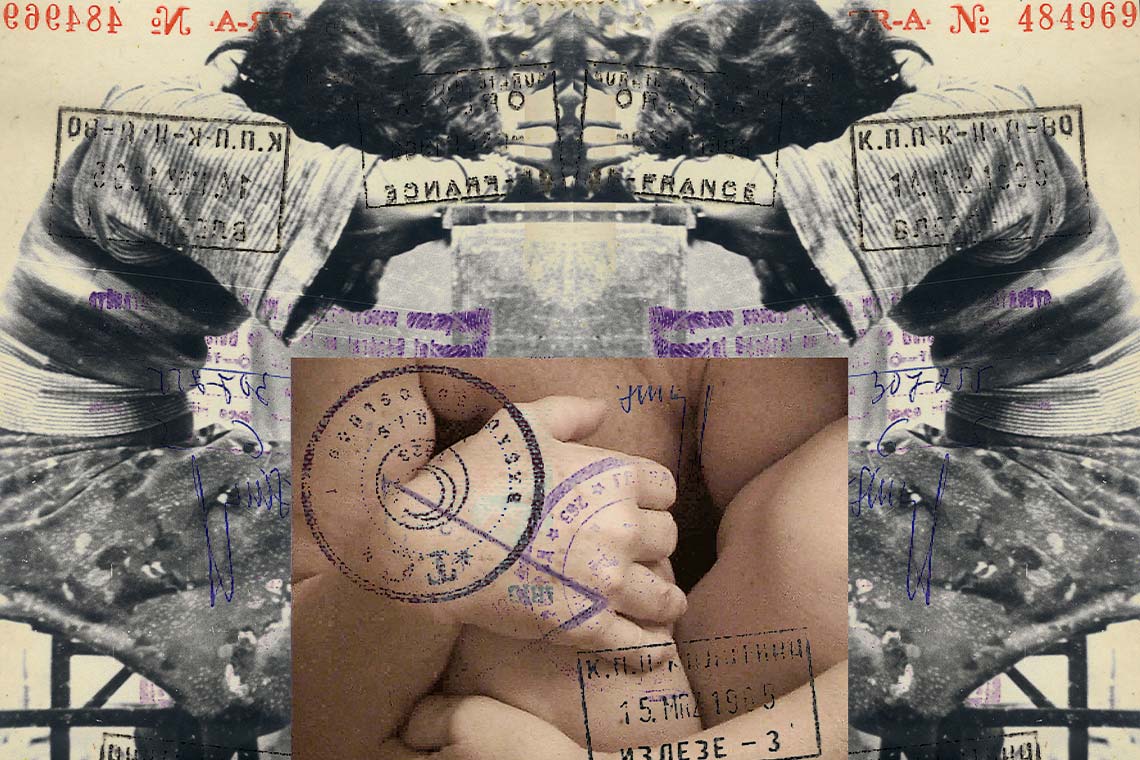
Galerist marks 25 years with Labour of Love, as the Istanbul-based gallery looks back on quarter of a century of achievement in a changing social and economic landscape.
2001 was a watershed year for Türkiye. An overnight collapse in the stock market sparked the most severe financial crisis in the country’s history and the decimation of the lira. A USD 15 billion bailout from the International Monetary Fund led to major economic restructuring, and the first constitutional amendments for Türkiye’s since-stalled EU accession bid in the same year would in turn usher in comprehensive social and political reforms. In the trust vacuum following the crash and widespread voter disenfranchisement, Recep Tayyip Erdoğan established the AK Party. It would sweep the board in the 2002 elections, heralding what it would later rebrand as a ‘New Türkiye’.
2001 was also a defining moment for the Turkish art scene. While historically the state had been a great supporter of the arts, the IMF’s austerity measures saw cultural support slashed. Individual collectors and, later, the corporate conglomerates that now dominate Turkish arts funding, stepped in to fill this gap. This shift led to the 2001 opening of Istanbul’s first contemporary art museum, Proj 4L (now the Elgiz Museum), with others like Istanbul Modern, Arter and the Pera Museum soon following. In recent years, this boom in private museums – 23 opened last year alone – has expanded away from neoliberal-friendly Istanbul into the AKP stronghold of the Anatolian heartland.
Put another way, the Turkish art scene is unique globally in that it is overwhelmingly not only bankrolled by banks but its entire noncommercial infrastructure – from museums and biennales to cultural institutions like SALT – also relies on corporate philanthropy. Compared with the Gulf art scenes, which enjoy significant governmental support, the situation in Türkiye presents an alternative trajectory of development in terms of what happens to an ecosystem when the state logs off and it is forced to sustain itself?
While Türkiye’s earliest commercial galleries date back to the mid-1970s, it was this post-2001 recovery period that arguably birthed the contemporary art scene as we know it today. Blue chips like Galerist – which opened in 2001, with Dirimart following the next year – revolutionised the market, not just in the kinds of art they showed but also where they showed it. With a weak domestic market, they began to take Turkish artists to international art fairs, introducing them to the world stage. Whereas historically galleries had operated on a somewhat ad-hoc consignment model, Galerist pioneered an international-style representation and roster approach, signing artists for exclusive multi-year contracts and working to develop their careers.
Galerist’s 25th anniversary show marks this quarter-century, which saw it mounting nearly 200 shows and launching a publishing programme as well as the now independent Art Unlimited magazine. At the risk of rehearsing bromides about resilience, it is first and foremost a testament to a gallery’s ability to not just survive but also maintain the rigour of its programme in a period characterised by yodelling macroeconomic turbulence and an increasingly restrictive political climate. Fittingly entitled Labour of Love, the exhibition brings together 49 multi-generational, mostly Turkish artists: some current, some formerly represented, some who just passed by for a group show or two. We can understand it then, as a reunion: a ledger, above all, of long-term relationships, trust and the community that has been built.
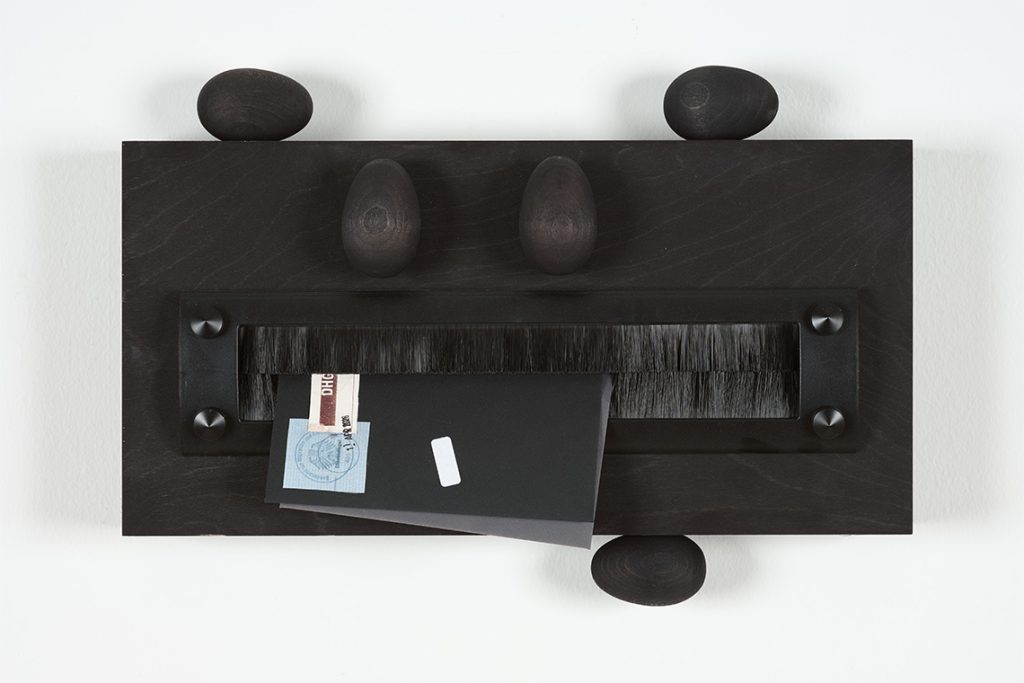
So far, so celebration. But does it cohere? In the main, no. The works, which include 14 new commissions, are very loosely organised around the theme of self-portraiture, however abstract. Some of the most compelling pieces index a kind of pervasive collective anxiety. Hung on a maroon wall, Güçlü Öztekin’s Nameless 106 (2012) on wrinkled craft paper suggests a disassociating insomniac Humpty Dumpty. Next to it, Yeşim Akdeniz invokes the psychosocial barometric pressure of living in a volatile state with Walking on Eggshells (2025), with eggs balanced precariously on a pair of mailboxes, all painted black and stuffed with letters. Nearby, a 2025 video by Merve Morkoç, Humiliation has a number now, plays on a screen angled against a corridor wall, with a jacket insouciantly draped over one corner. Clad in a greige shorts suit, the artist lies on the floor, doomscrolling while balancing a tower of wine glasses on her raised legs. She visibly shakes with the tension of being reduced to digits and interpellated by unemployment statistics; of course, it all comes crashing down.
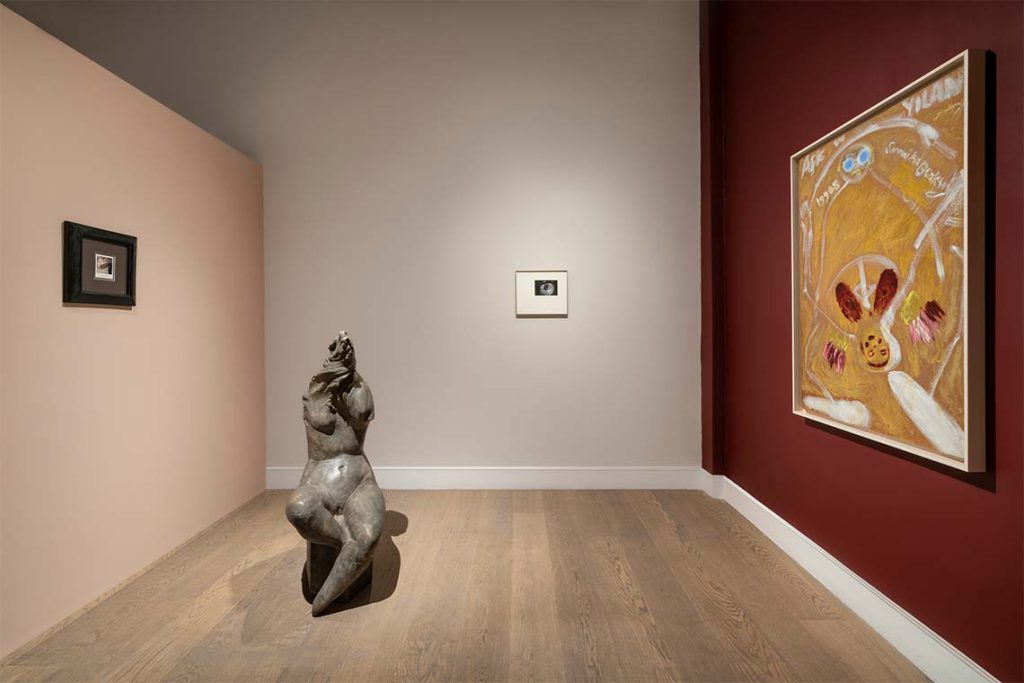
The show also includes iconic pieces which gesture at intergenerational kinship, including Nil Yalter’s video Skin Story(2003), an important touchpoint not just for artists like Morkoç but also Türkiye’s whole generation of radical feminist performance art. Personal artistic relationships are woven in, too: on view here are both a lucid dream of a painting from Haluk Akakçe and a figurative sculpture in burnished concrete from his former studio assistant, Ayça Telgeren.
As a whole, the show suggests some interesting questions. What does it mean for a Turkish artist to make a self-portrait at a time when Turkishness itself is so contingent, so loaded, so linked to a particular articulation of national allegiance? Does any kind of discernible supra-portrait emerge? How does a gallery structure and participate in its own mythmaking? These questions go unanswered or, more fairly, are perhaps illegible to someone lacking a solid grounding in Turkish art history. But listen – it is a reunion show that gets the gang together and celebrates a legacy hard-won, and sometimes that is enough.
Labour of Love runs until 7 November
