

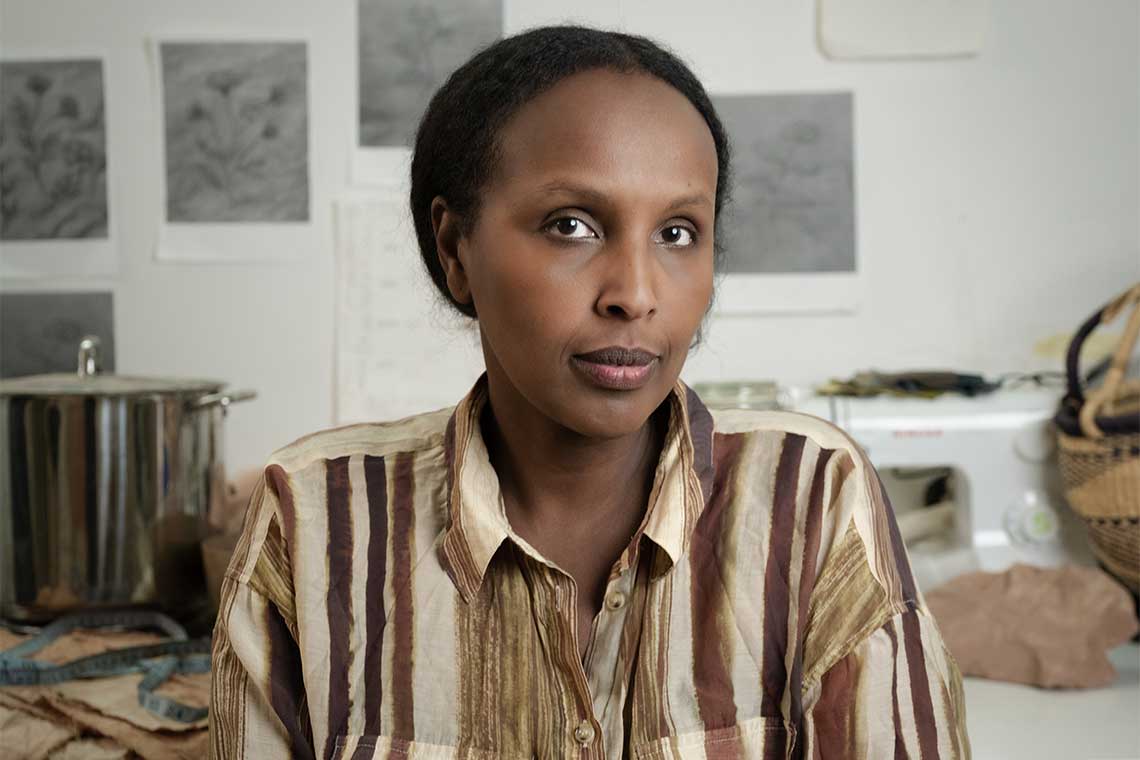
As part of the inaugural National Pavilion of the Federal Republic of Somalia, the artist presents a body of work that weaves together natural materials, embroidery and spatial intervention to explore migration and the emotional resonance of place.
Canvas: What does it mean to you personally to represent Somalia in its first-ever national pavilion in Venice?
Ayan Farah: It came both as a surprise and, in a way, something I had also anticipated. Over time, I had sensed a growing momentum within the Somali art scene and among Somali artists more broadly. When I moved from London to Stockholm, I found myself in a more concentrated and quieter environment, which shifted my relationship to the international art world. I became more closely connected to a wider range of artistic practices, including performance and the visual arts, and over the past five years I have gradually discovered many Somali artists whose work I had not encountered before. In that sense, this development felt like an inevitable progression, although I did not expect to be part of it myself. To represent Somalia in this context is deeply meaningful, particularly given the country’s history and the loss of archives and cultural infrastructure during the civil war.
The pavilion presentation brings together you, Warsan Shire and Asmaa Jama. How did you respond to the idea of entering into dialogue with their practices in this context?
What was particularly interesting was how the exhibition was structured spatially within the building. Each artist was given a distinct space, rather than a linear progression, which allowed the works to exist in parallel dialogue. Asmaa Jama’s practice, which spans video and poetry, and Warsan Shire’s poetic work, both complemented my own installation-based practice very well. Although the media differed – spanning sound, video text and spatial installation – the thematic connections between the works created a strong sense of coherence.
The title of the exhibition, SADDEXLEEY, is based on a three-part poetic structure in Somali tradition. How does this idea of triads – of echoes, shifts and relations – shape the way in which the exhibition is constructed?
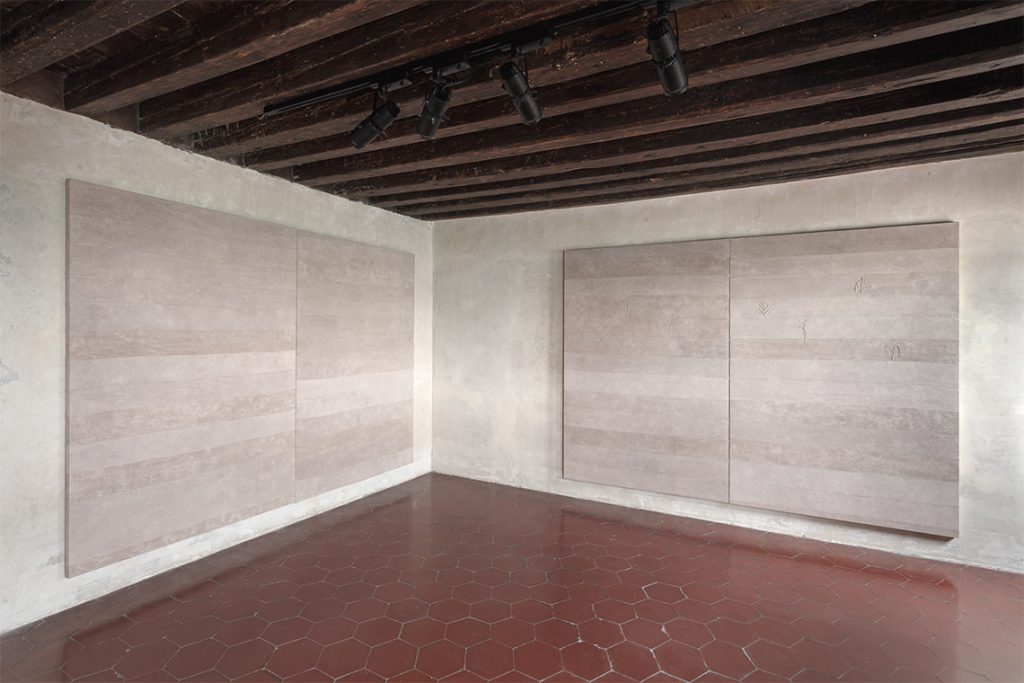
The concept of SADDEXLEEY is deeply embedded in the structure of the exhibition itself. The title refers to a Somali poetic form built around a three-part structure, repetition and relational movement, and this idea became central to how the exhibition unfolds spatially and conceptually. The architecture of the pavilion reinforces the triadic structure. The building contains interconnected rooms, and visitors move through a sequence of spaces where the works echo one another continuously. In some cases, doors were removed intentionally so that visitors could flow naturally between works and experience these transitions more fluidly.
SADDEXLEEY is particularly fascinating because it exists within Somali culture first and foremost as a form of oral poetry and social philosophy. Traditionally, this poetic structure can carry advice, memory, humour, social value or reflections on everyday life. The exhibition draws from these origins and translates them into an artistic context. As a result, the exhibition becomes not simply a presentation of artworks but also an embodiment of a broader cultural rhythm and sensibility.
Your practice engages textiles, pigments, soil and other natural materials. How does working with these substances shape your contribution to the presentation?
My work is strongly shaped by the spaces in which it is installed. Architecture and site are central to how I develop and locate each piece, and I therefore respond directly to the conditions of the building. The pavilion’s relationship to water, light and texture strongly influenced how I positioned the works. One installation, with works entitled Songs from a Seasonal River I and Songs from a Seasonal River II (both 2026), was made using seashell-derived pigment and shifts throughout the day as the Venetian light changes, while another work, The Year of the Red Storm (2026), is made from Somali clay and feels heavier and more grounded.
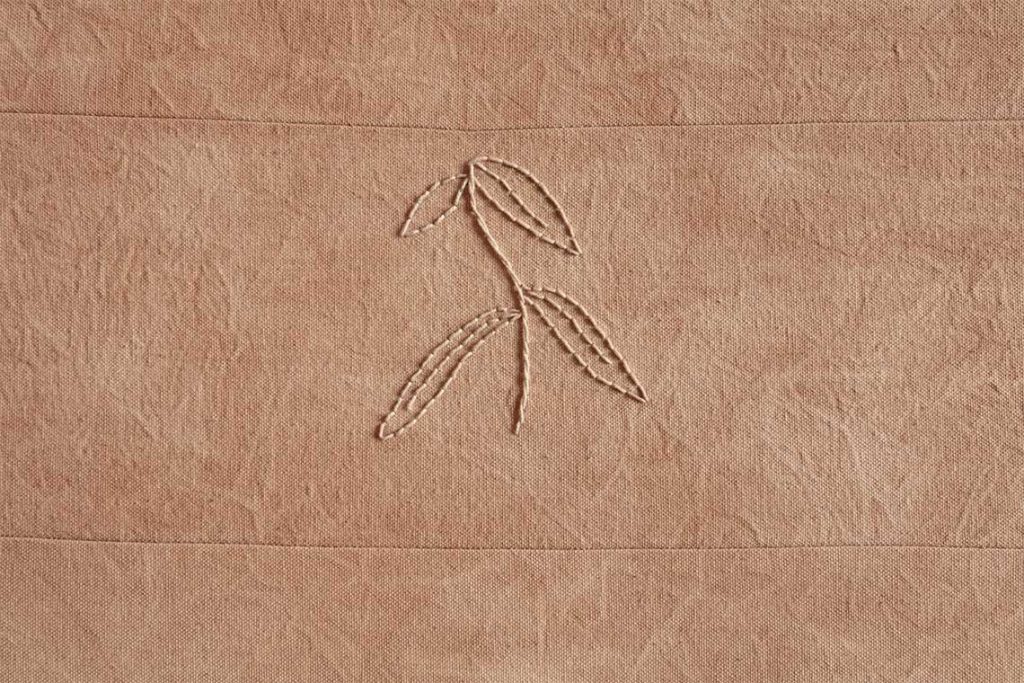
Texture and embroidery are also important elements within the exhibition. In this body of work, I collaborated with my mother, who helped produce parts of the embroidery. She learned stitching techniques as a child in one of the first girls’ boarding schools in northern Somalia and bringing that knowledge into the work introduced a deeply personal and intergenerational dimension to it. She often refers to her birth year as “the year of the Red Storm”, a memory tied to a major red dust storm in 1951. This relationship between memory and oral history also informs the way that I approach materials and the narrative within the work.
You often work with locally sourced sediment and natural materials. How do they shape your artistic practice?
Sourcing materials from specific places creates a direct relationship between the work and the environments it speaks from. The process of collecting, transporting and transforming these materials becomes part of the work’s meaning. For this exhibition, I worked with clay from northern Somalia and shells collected from Scotland during a residency in the summer of 2023 at The Roberts Institute of Art. I brought the shells back to my studio, where they were carefully cleaned, crushed and ground down into powder and gradually transformed to pigment through a slow hands-on process. Both materials carried different histories and conditions, yet bringing them together in Venice created an unexpected conversation between landscapes, migration and memory.
What kinds of conversations do you hope audiences in Venice will have after encountering the Somalia Pavilion?
I hope visitors leave with a more nuanced understanding of Somali culture and artistic practice. Somalia is often represented internationally through a narrative of conflict and instability, but there is an incredibly rich cultural tradition that extends through poetry, music, storytelling, dance and oral histories. I’ve already witnessed strong emotional reactions from people during the opening – many have cried and shared about feeling deeply affected by the materials, sounds and atmosphere of the exhibition. That response surprised me, but I think it reflects how immersive and intimate the pavilion experience has become.
The National Pavilion of the Federal Republic of Somalia is located at the Palazzo Caboto
This interview first appeared in Canvas 123: Venice Special Issue
