

The opening of the Centre for Contemporary Arts Tashkent and its inaugural exhibition, Hikmah, underline its position as a future-oriented space committed to creative dialogue and exchange.
Uzbekistan’s focus on strategic cultural development is establishing the nation as a vibrant platform for global contemporary culture. The Art and Culture Development Foundation (ACDF), under chairperson Gayane Umerova, is driving global exposure of the country’s rich cultural heritage. Navigating how tradition can be translated through contemporary initiative has seen the ACDF bring Uzbekistan into the Venice Biennale (2021–ongoing), launch the Bukhara Biennial in 2025, and initiate the Tadao Ando-designed Uzbekistan National Museum, opening in 2028. A key pillar for the ACDF’s ongoing mission to invigorate its cultural ecosystem is the Centre for Contemporary Arts Tashkent (CCA), the first permanent institution for contemporary art and research in Central Asia. One of the region’s most important urban centres, Tashkent is well positioned to serve as a cultural anchor. The CCA will demonstrate this wider potential, as well as its own ability to generate dialogue between artists and audiences, local narratives and global notions, and to harness the future potential of the past.
The CCA is “a site where public space and public time coexist, and our founder, Gayane Umerova, has always sought to serve the public and create an accessible and welcoming cultural environment,” says Dr Sara Raza, artistic director and chief curator. Located in the Uzbek capital’s historic centre, the CCA is a building with a layered past: a Soviet-era brick structure constructed in 1912, it served as a diesel station and then a depot for the city’s first tramline before being entrusted to the ACDF in 2019 as part of a long-term cultural development strategy. French architecture firm Studio KO, comprising architects Karl Fournier and Olivier Marty, transformed the space in line with Umerova’s vision. Engaging traditional Uzbek materials and motifs and imbuing them with renewed function and identity, Studio KO employed their self-coined “architectural alchemy” to create a physical and spiritual vessel for the region’s contemporary art. The overarching approach was not simply preservation; rather, it is indicative of ACDF’s wider ethos to orient the artistic ecosystem towards the future and cement the value of such facilities firmly in the public consciousness.
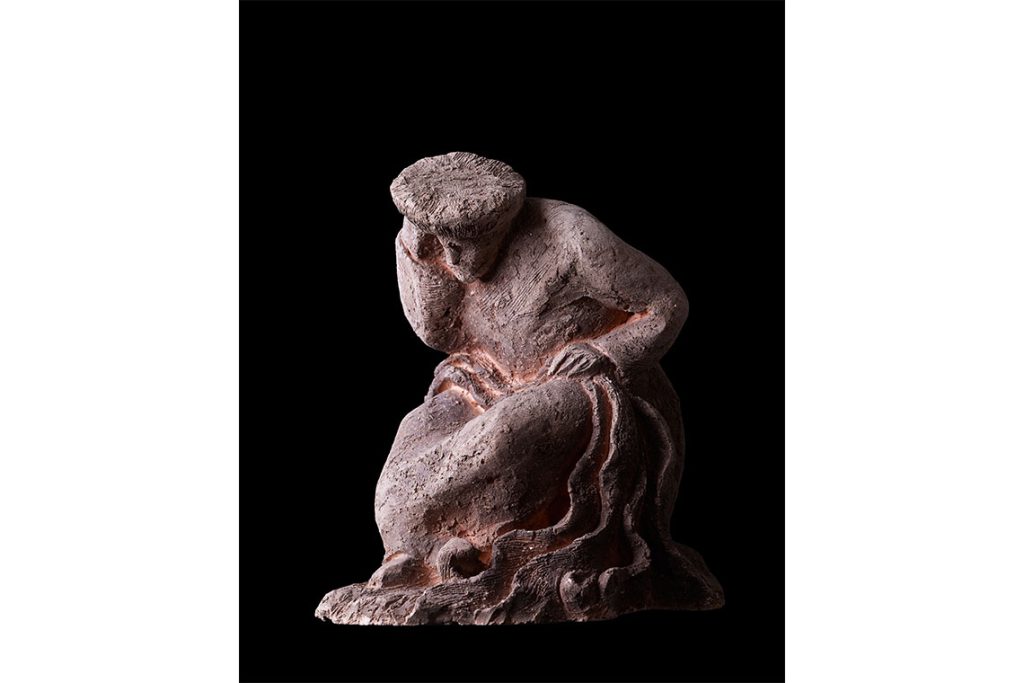
In forging a more globally relevant, progress-focused cultural industry for Uzbekistan, the ACDF is mindful of assimilating local insights and knowledge to encourage community engagement. The CCA soft-launched its programming in October 2024 with the CCA Artist Residency, and by autumn 2025 had begun revealing its wider offerings, including workshops, site visits, talks, sonic experiences, festivals, film and performance, youth initiatives and professional development programmes. It is scheduled to open formally in May and will be inaugurated by Hikmah, an exhibition exploring concepts of ‘becoming’ and ‘knowing’ by uniting spiritual and material forms of being. For this, Raza – also a noted global art curator, writer and faculty member at Yale School of Art and New York University – drew upon her transnational curatorial methodology, honed by two decades of work across Central Asia, the Middle East, North Africa and their diasporas. “I have long been interested in intellectual sciences and esoteric thought from Iran and Central Asia, and bringing these ideas into dialogue with artists I admire, some of whom I have worked with previously, is deeply important to me,” she says.
Hikmah is the Uzbek word for ‘wisdom’, but it also denotes the practice of elevating human consciousness and the soul, a tradition which reached its peak between the eleventh and sixteenth centuries under the guidance of masters who also established the fourteenth-century Naqshbandi Sufi order. Paired with the architectural and historical memory of the building it inhabits, “Hikmah felt like an apt exhibition and theme to set the tone for the CCA’s inaugural exhibition and to provide a foundation for intellectual exchange, offering next-generation students and emerging professionals space to develop their thinking alongside intergenerational audiences,” according to Raza. She is keen to assert, however, that the show is not rooted in nostalgia or romanticism: “While acknowledging its historical roots, my application of hikmah seeks to explore its capacity to investigate other embodied and abstract forms of wisdom, especially those embedded within the tacit knowledge that artists provide.”
Site-specific new commissions, recent artworks and major institutional loans from Uzbek and Karakalpak artists Shokhrukh Rakhimov, Vladimir Pan, Daribay Saipov and Bakhtiar Saipov, are featured alongside pieces by international artists Ali Cherri, Kimsooja, Nadia Kaabi-Linke, Nari Ward, Muhannad Shono and Tarik Kiswanson. Rounding out the exhibition are sonic explorations of how hikmah has existed aurally through time, overseen by Uzbek DJ and music producer Sabina Inoyatova. “Artists allow us to explore wisdom as something living, not didactic, something that is experiential and very much evolving,” notes Raza, who gravitates towards research-based practices. “I was guided by the building itself, studying its history and architectural features to create a conversation between artists and architecture.” Another element informing the exhibition is Raza’s subtle approach to decoloniality. “Hikmah does not explicitly seek to correct Imperial or Soviet era histories. Instead, I have attempted to subvert architectural ideologies through abstract thought and embodied wisdom,” she reveals. “In an age of radical gestures, I am more interested in the poetic, hidden and unrecorded elements that require a degree of hikmah to decode. With ten artists in the exhibition, there are ten distinct pathways to access this.”
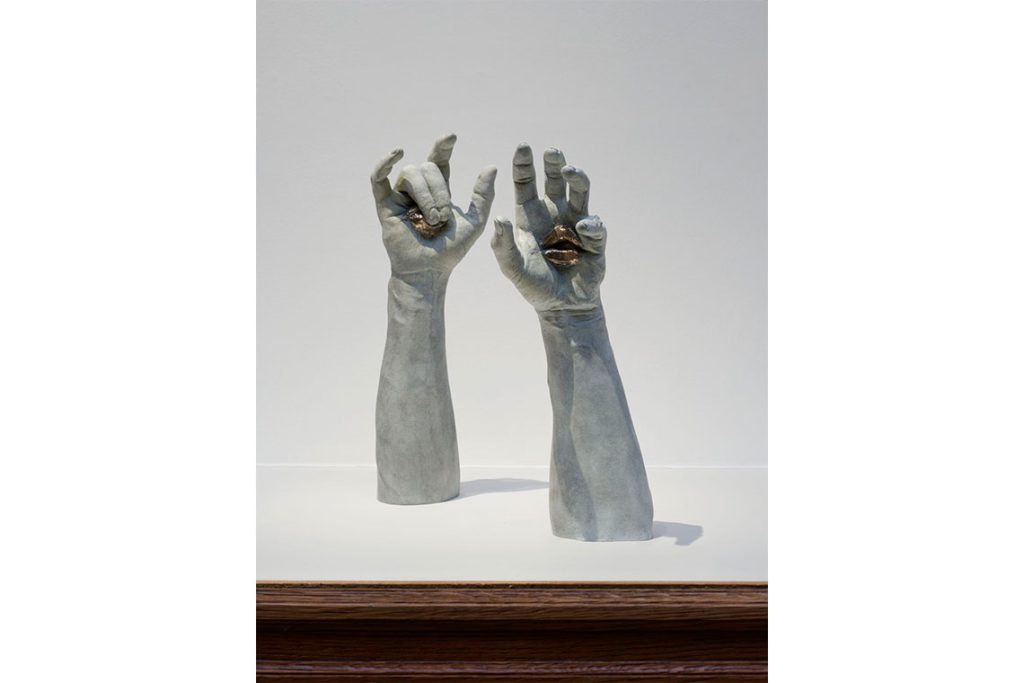
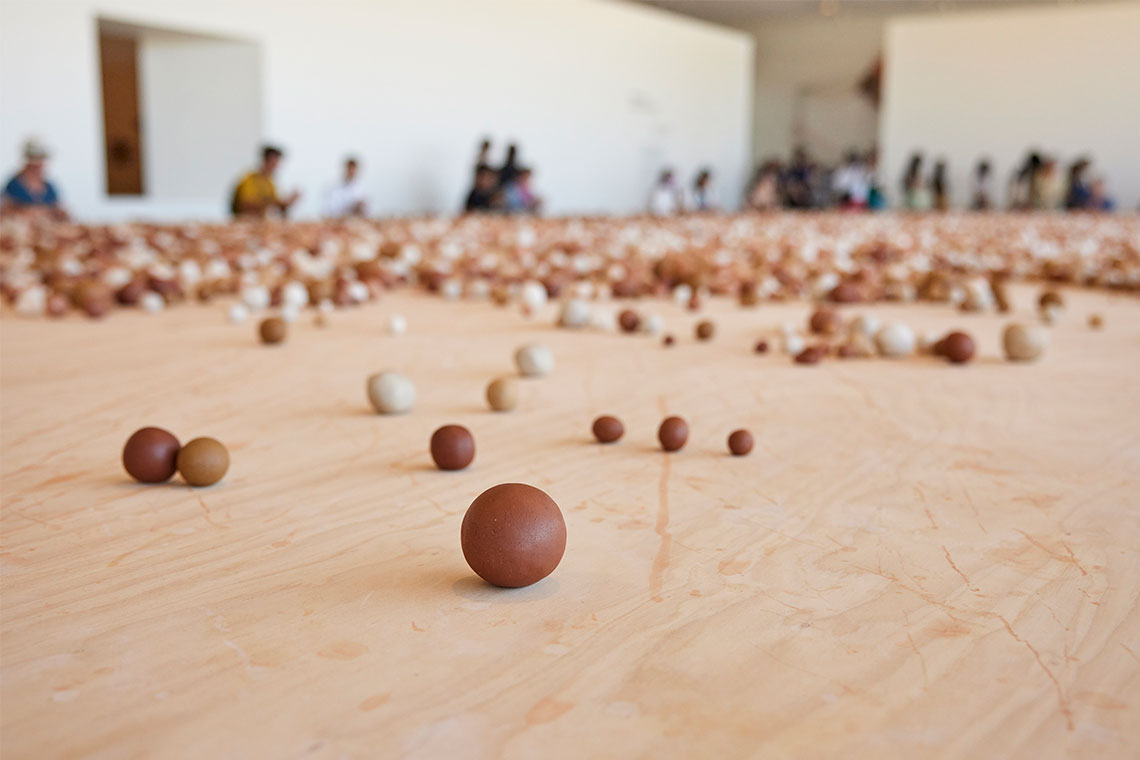
Artworks include Untitled (2026) by Nari Ward, a Jamaican-American artist and professor whose practice is rooted in found objects and local craft that touch on identity and collective memory specific to his USA-base and the visual culture of the African American diaspora. His floor and wall installation, composed of blocks inspired by Russian Imperial-era Nicolai bricks, is adjacent to the main stage. “Each brick is covered with a patinated copper lid, while cast-copper tools and traditional Uzbek bread stamps rest on the floor,” explains Raza. “The work reflects on labour, value and urban transformation, engaging directly with the building’s brick façade, while copper functions symbolically as both conductor and healing material.” South Korean artist Kimsooja similarly bridges the local-global axis with Archive of the Mind (2016/2026), a participatory work which has been performed in South Korea, Australia, the UK, USA, Denmark and Italy. Embracing a metaphysical lean, visitors form clay spheres which, when left behind on an expansive work surface, build a collective and tangible trace of human presence. The conceptual work comes from an artistic practice that centres on the totality of life and art – what Kimsooja considers “contemplative aesthetics and humanism” – and through which she experiments frequently with non-material modes of expression. Archive of the Mind investigates how mundane motions become meditative, an opportunity to empty the mind and transcend beyond the ‘noise’ to mental stillness. Meanwhile, Tunis-born, Berlin-based artist Nadia Kaabi-Linke’s Flying Carpets (2011), a stainless steel and rubber-thread installation on loan from the Guggenheim and presented in the CCA’s main hall, nods to the perilous journey of immigrants and subverts Orientalist ‘flying carpet’ fantasies.
Context and sense of self are also tackled, albeit from a different position, by seventh-generation Uzbek artist Shokhrukh Rakhimov’s The Colour of Silence, In Search of Truth (2026), positioned in the courtyard. Comprising seven ceramic orbs representing spiritual states, it is inspired by the colour-and-light theory in relation to stages of growth that was articulated by the twelfth to thirteenth-century Khwarezmian Sufi master, Najm al-Din Kubra. “‘Who are we?’ and ‘Why are we here?’ are questions everyone thinks about at some point,” says Rakhimov. “Different cultures and thinkers have tried to describe this inner journey.” It is a query with which he is intimately familiar – being born into a ceramic dynasty meant that he was immersed in the generational knowledge, techniques and discipline of a craft long before the thought of something new would occur. “We maintain the Usotz-Shogird [master-apprentice] system, where knowledge is transmitted directly, with responsibility and patience,” he explains.
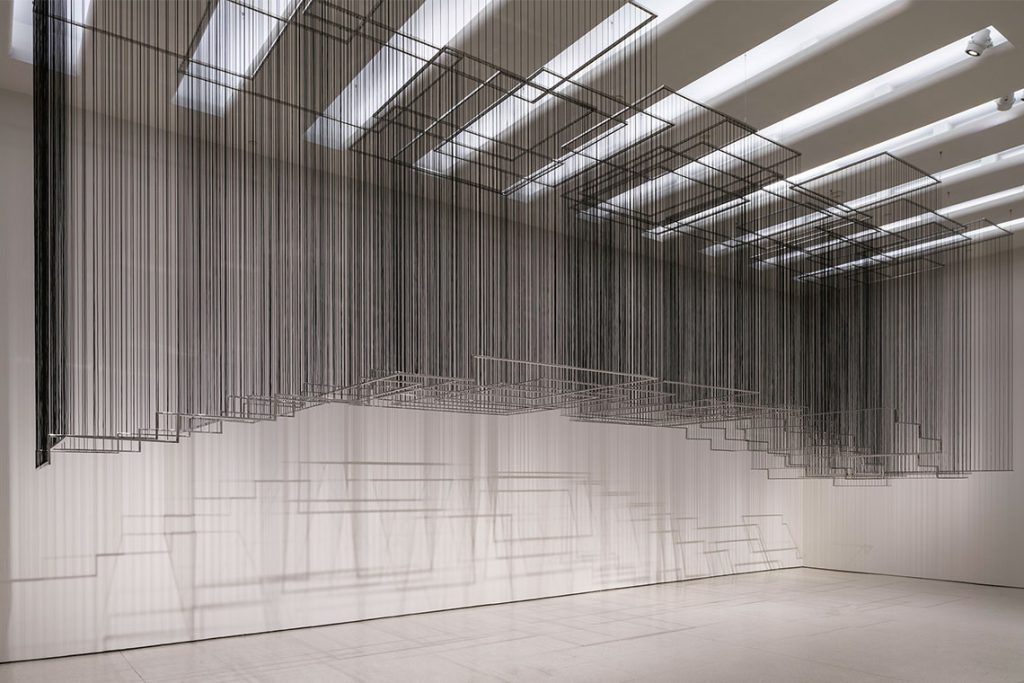
Image courtesy of Solomon R. Guggenheim Museum, New York Guggenheim UBS © Nadia Kaabi-Linke / VG Bild-Kunst, Bonn
His great-grandfather, Mukhitdin Rakhimove, was known for pushing boundaries, which taught his descendants that tradition always contains experimentation. As a result, Rakhimov’s current body of work navigates ancestral craft through the vehicle of contemporary expression, focusing on heritage, transmission and memory through clay, fire and glaze. “The line between traditional and contemporary expression can be understood as the difference between techniques and language,” he points out. “The technique can remain traditional, but the language must evolve. I do not see heritage as something to protect behind glass.” Observing that what is now considered ‘traditional’ was once pioneering, his understanding of Najm al-Din Kubra’s theory proposed a powerful visual language wherein he saw the potential to create a means for reflection. “It gave me a way to think about transformation in both material and human terms,” he adds.
Likewise installed in the courtyard and inspired by Sufi thought is Tower for a Single Breath by Muhannad Shono, a Saudi artist born to Circassian migrant parents and whose practice tackles ideas around origin and belonging while examining accepted social and ideological narrative constructs. Created as a result of his time at the 2024 CCA Artist Residency, the monumental sculpture comprises black ceramic bricks and is inspired by the Sufi concept of nafas (‘breath’) and the Naqshbandi Sufi tradition. Much of Shono’s residency was dedicated to researching and collaborating with local scientists to explore the relationships between place, people and history. “I was particularly interested in how language changes over time and distance as communities relocate across generations and how architecture attempts to cement beliefs and rituals while remaining open to new readings,” he explains.
Initial visits to Tashkent and the North Caucasus region, where Shono’s ancestors originated, led to the discovery that his great-grandfather was a Naqshbandi spiritual leader and writer who authored short books of poetry called نظم Nozum, which helped Chechen migrants to the Arab world learn Arabic. “This movement of language and traditions, and how they morph, transmute and change over time and distance from the point of origin, connects to the role of towers and architectures of communication across distance,” Shono affirms. This notion resonated strongly with Hikmah, and he elaborates how, architecturally, towers are conduits for the transmission of ideas, messages, calls and doctrines across borders. “When fragmenting the tower, making it porous, it is stripped of its singular function, becoming ruin, and ruin becomes the imagination,” he adds. “There is wisdom in a tower that speaks at its own pace, tongue and breath. It communicates in ways that we do not often hear, ways that are not set in stone.”
Hikmah invites audiences to consider how knowledge exists as lived experience and shared inheritance, and for the opening of the CCA Tashkent, Raza notes how this is the most compelling way to instigate enquiry. “In the context of CCA and Tashkent, it initiates a fluid and open-ended conversation,” she says. “It is not intended as something fixed, but rather as a dialogue centred on the cross-circulation of ideas, augmented through public programming and the reactivation of debate and discussion. The intention is to generate new intellectual and creative possibilities.” Moving forward, the CCA will launch the annual multi-disciplinary Navruz Gala and Festival (21–23 March 2026), the Tashkent Public Art Festival (21 June–9 August 2026) and Tashkent Film Encounters programme (December 2026), while Raza will curate the CCA’s Vyacheslav Akhunov: Instruments of the Mind (May–November 2026) at The Palazzo Franchetti, Venice, continuing the ACDF’s commitment to Uzbekistan’s cultural ecosystem, creative economy and future potential of its artistic practitioners
