

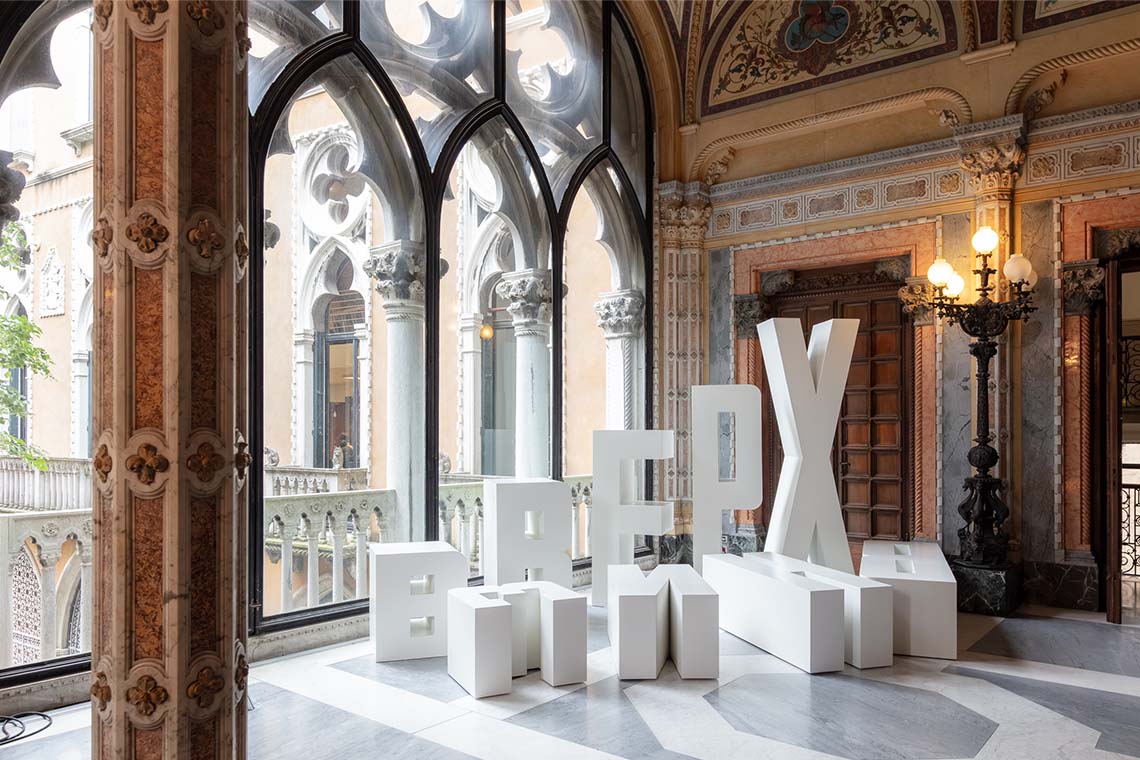
In a collateral exhibition by the Centre for Contemporary Arts Tashkent at this year’s Venice Biennale, Vyacheslav Akhunov is finally given full rein.
The first dedicated space of its kind in Central Asia, the Centre for Contemporary Arts Tashkent (CCA Tashkent) is presenting its inaugural official collateral project in Venice. Dedicated to Vyacheslav Akhunov, it is spread across 12 rooms at the Palazzo Franchetti and is Akhunov’s first-ever major solo institutional exhibition – although his work has been spotlit in the Italian city before as part of the exhibition Quand Fondra la Neige, où Ira le Blanc at the Palazzo Fortuny in 2016, and in the Central Asia Pavilion at the Biennale in 2005, 2007 and 2013.
Instruments of the Mind spans five decades of Akhunov’s practice, mingling political absurdity alongside themes pivoting around the heft of memory, the legacy of documentation and the fragility of erasure. Many of the new works make manifest seeds of ideas that date as far back as the 1970s but which never made it past sketches. It is heartening to see an artist given the means to produce creative impulses he could only summon in his imagination up until this point. “He was planning installations as hypothetical,” noted exhibition co-curator Sara Raza (also chief curator and artistic director of the CCA Tashkent) during a tour of the venue. “He had a sense of his own potential.” Raza, who met the artist during the Central Asia Pavilion presentation in 2005, further pointed out his prescience by way of his non-objective paintings. These have startling resonance with art movements going on in parallel in the Western world, although Akhunov had no way of knowing that, at the time.
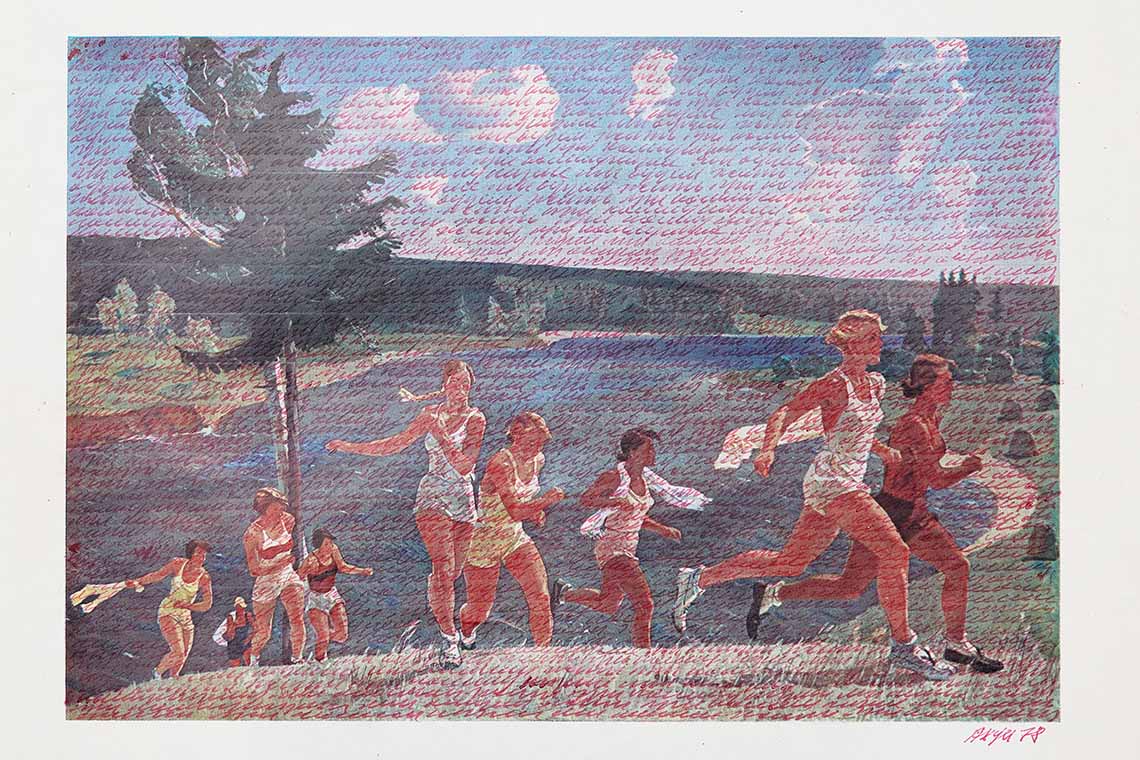
The sense of dormancy due to Akhunov’s ‘peripheral position’, by virtue of living in an overlooked geography, has been awakened here. His previous lack of institutional support prevented the artist from bringing drawings and sketches to fruition, left instead to sit in studio drawers for nearly half a century. Now, triumphantly, a number of these works are presented as fully realised installations for the first time. Akhunov himself stated in the accompanying text: “Much of this work began in the 1970s, in a time when ideas often had to exist quietly, even invisibly. Returning to these works now, alongside more recent ones, I see them as part of a continuous conversation… Instruments of the Mind is not about the past – it is about how thought survives.”
Akhunov (b. 1948) trained at the Moscow State Institute of Art (now Moscow School of Painting, Sculpture and Architecture), and has lived and worked in both Kyrgyzstan and Uzbekistan. He is a writer and curator, in addition to being a pioneer of contemporary art in Uzbekistan. His practice draws on Zoroastrian, Buddhist and Islamic traditions of Central Asia, as well as Marxist-Leninist slogans from the USSR, bridging Soviet and post-Soviet art scenes across collage, painting and installation. His artistic production explicitly channels 1970s Moscow Conceptualism using representative Socialist iconography, which he then cleverly reinvents to outmanoeuvre propagandistic meanings.
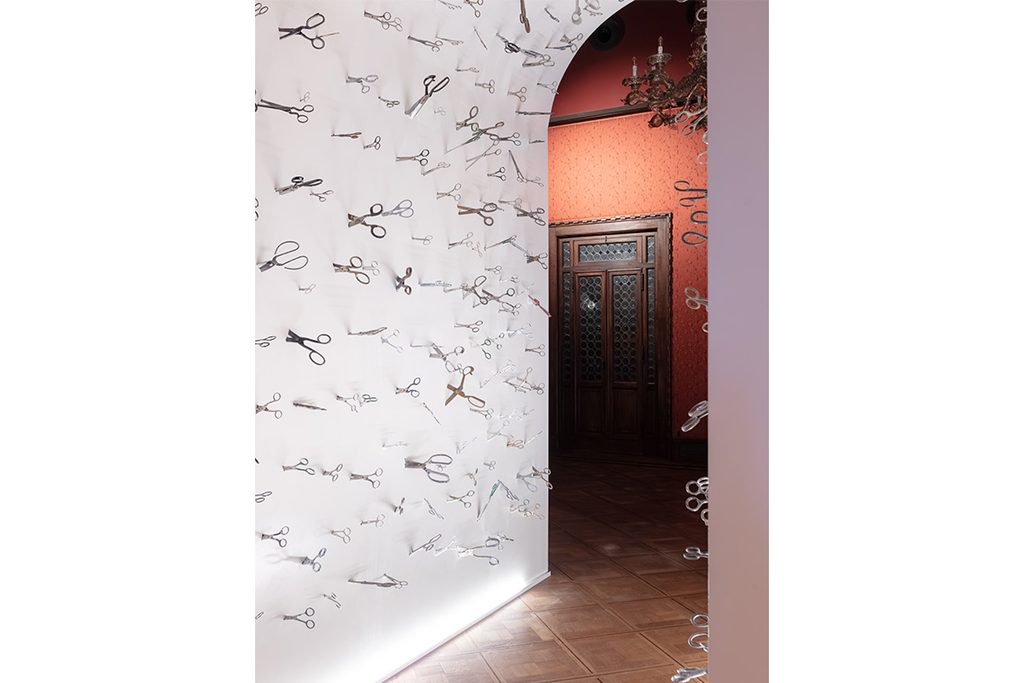
The foam installation at the exhibition entrance was inspired by a 1975 sketch. Up Down (1975/2026) takes the form of a staircase that appears as a kind of liminal limbo, a gesture to nowhere. In the first room, conceived from the artist’s 1979 drawing Triumphal Arch (1979/2026), a four-metre-tall ceremonial structure made of garden shears and manicure scissors, is accompanied by a stanchion and a ribbon: a sly commentary on Soviet-era televised ceremonies for projects that were never finished due to bureaucratic delays.
Akhunov grasped the incantatory potential of language, readily exemplified here through hand-written diary entries, drawings in walnut ink, artist’s books sampled from across his career, and repeated mantras articulated in blue and red ballpoint pen (Modelling, 1974–84) that layer handwritten text over mass-produced sewing patterns and newspapers. He also played with new media: one of his installations stacks vintage television sets (Hatarex, JVC, Panasonic), whose screens face inwards and imprison a medical skeleton inside (House of Eternity/Sarcophagus, 1986/2026).
In Monument to a Match (2011) Akhunov architecturally fashions cumulated matchboxes to resemble a skyscraper. The 4000 matchboxes each feature portraits of prominent Soviet-era public figures and military commanders; atop is a single match, the potential conflagration of absolute power barely latent.
While the absurdities of Soviet life are pertinent to a specific historical bracket, they also transcend the era being skewered. “The themes continue to resonate in a world still marked by conflicts and broken agreements,” notes Gayane, Chairperson of the Uzbekistan Art and Culture Development Foundation and co-curator of the exhibition, in an introductory text. Fittingly, this work sits across a newly produced neon (1979/2026) that originates from a sketch spelling out What Am I Doing Here – a question about rudderlessness that is as pertinent today, further compounded by our sociopolitical landscape spinning wildly out of control. Indeed, Akhunov’s pieces expose the demented visions of those in power and the dangers – even those once seemingly unthinkable – of the global political machine.
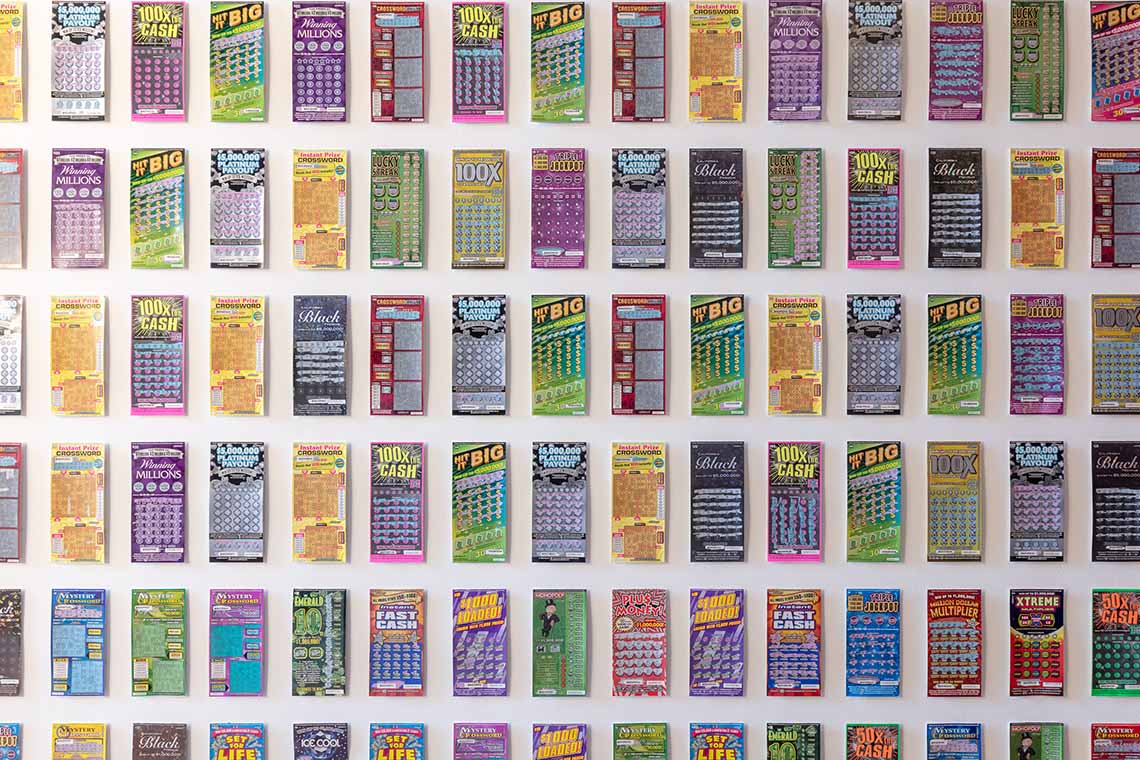
Down a narrow hallway, Code F63.0 Lottery Tickets (2018), which is the World Health Organisation’s code for pathological compulsive gambling mental disorder, is a top-to-tail wall installation composed of lottery tickets: HIT IT BIG, LUCKY STREAK, 100x THE CASH. Conjuring thirsty aspiration and the desire for rapidly delivered success, the artwork pays homage to the true story of a musician and compulsive gambler whose long-held dream was to win the lottery. Two photographs of the musician, Rudy K, and his guitar, accompany the installation one room over; the lore is, when diagnosed with terminal cancer, he passed away clutching a ticket. The impatience and delusion on view in this piece brush against the meticulous practice and the psychological forbearance of Akhunov. His practice is indicative of the fact, as Umerova states in her text, that “art in Uzbekistan possesses a distinct genealogy that can no longer be ignored in the global art conversation.”
