

This year’s Art Basel in Basel demonstrates a growing desire to connect with geographically diverse voices, highlighting some key talking points of our times.
Art Basel began in Basel 56 years ago with 90 galleries from 10 countries across Europe and beyond. It has grown significantly since then, with this edition showcasing 290 galleries drawn from five continents, demonstrating a clear interest in global narratives and in new voices from a geographically diverse art ecosystem.
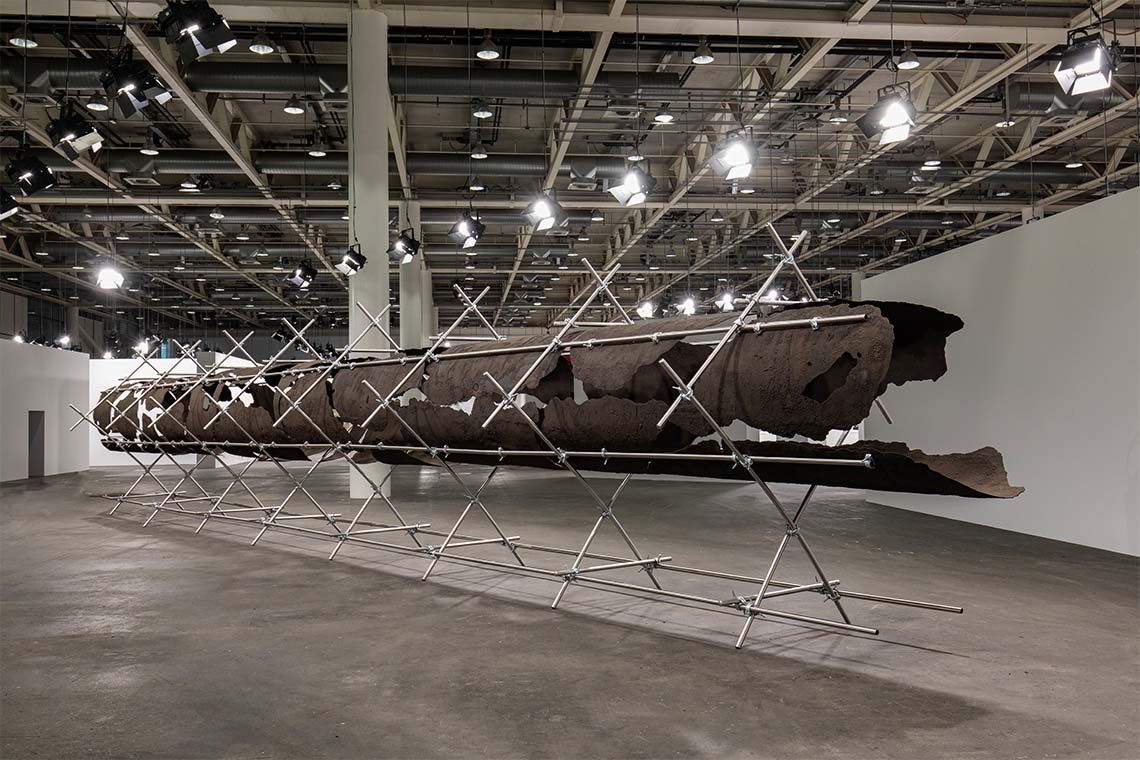
This year, the Unlimited Sector is under the direction of Ruba Katrib, who has curated large-scale installations and performances that go beyond the booth format. The presentations have been a much-talked-about highlight, featuring thought-provoking, immersive works that delve into pressing conversations of the moment.
Athr is presenting two works: Zahrah Alghamdi’s Streams Move Oceans (2026) forms a white wall consisting of thousands of knotted textiles which reflect on how small actions can create monumental change, and Towers of Infinite Horizons (2026) by Muhannad Shono, where industrial materials create a horizontal structure, appearing as a toppled or disintegrating tower that can be viewed from all sides and alludes to a collapse of rigid systems and asserted power – perhaps paving the way for openness and the opportunity to rebuild.
Sapar Contemporary showcases Rashid Al Khalifa’s interactive walk-in maze sculpture, Crate (2025), which plays on the title with references to confinement and cages as well as trade and movement. At Dirimart, İnci Eviner’s video installation plays over a 10-metre-wide double-sided screen, as Reenactment of Heaven (2018) explores how collective narratives are shaped by systems of power and the boundaries blurred between reality and spiritual realms. Also in this sector, showing with Lisson Gallery, Lia Rumma and Sfeir-Semler Gallery, Wael Shawky’s installation I Am Hymns of the New Temples (2023–26) investigates how myths are spread and endure.
Within the Galleries, a strong showing of artists from the SWANA region continues, with Sfeir-Semler Gallery showing works by established names including Rayyane Tabet, Tarik Kiswanson, Taysir Batniji, Alia Farid, Marwan, Samia Halaby, Akram Zaatari, Lawrence Abu Hamdan, Mounira Al Solh, Dana Awartani and Yto Barrada, with the latter two currently participating in the Venice Biennale with solo National Pavilions. Also, with artists across multiple sectors, Athr has brought Ayman Yossri Daydban’s The Nest (2026) from the artist’s Treehouse series. Filling the entire booth, the white structure allows light to seep through its panels, exposing the fragility of boundaries and asserting the notion of home as shifting rather than rooted.
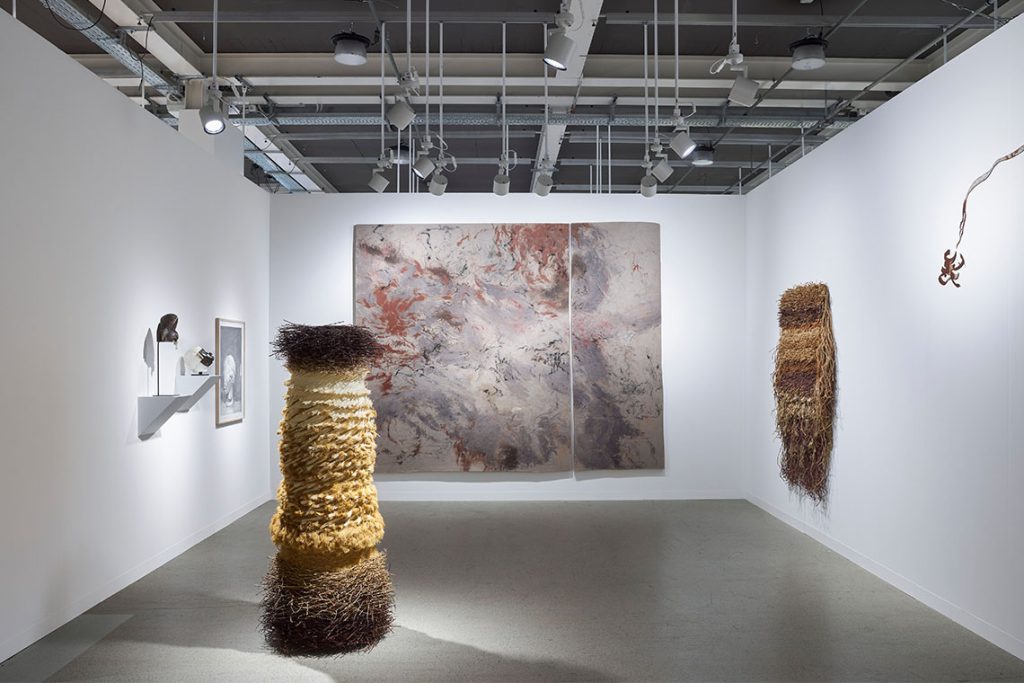
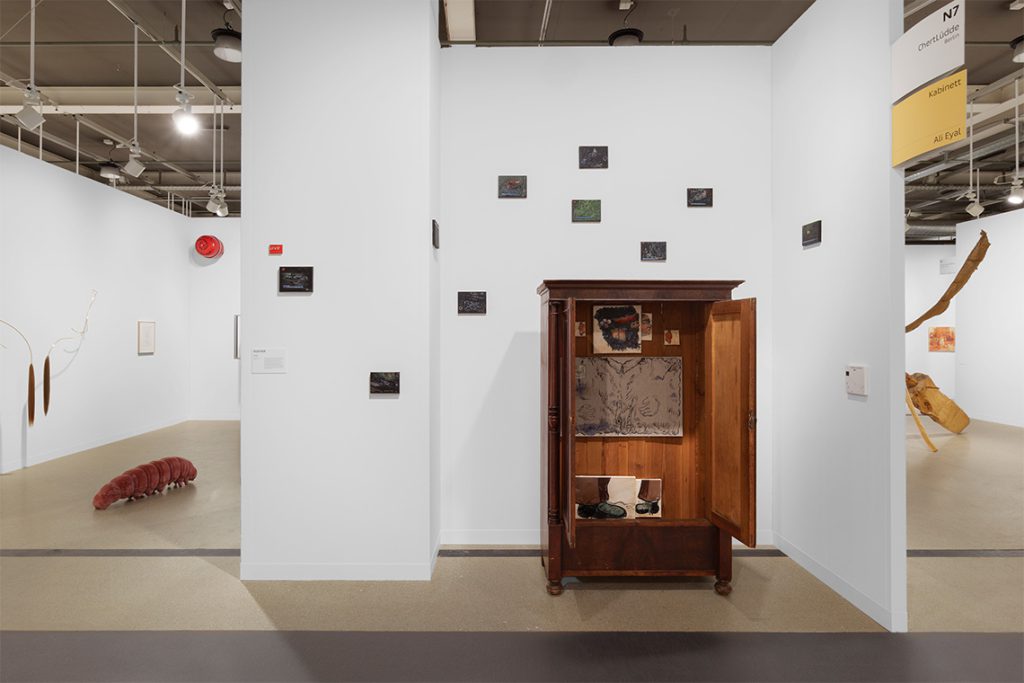
Selma Feriani’s booth brings together works by Mohamed Amine Hamouda, Monia Ben Hamouda and Nidhal Chamekh that reactivate cultural memories and historical narratives through material transformations. Ben Hamouda also features in ChertLüdde’s booth, alongside others including Ali Eyal, whose Kabinett project features an intimate display of paintings and works on paper that merges lived experience and fiction, memories, displacement and fractured histories. The carefully curated sense of ambiguity invites viewers to construct their own narratives.
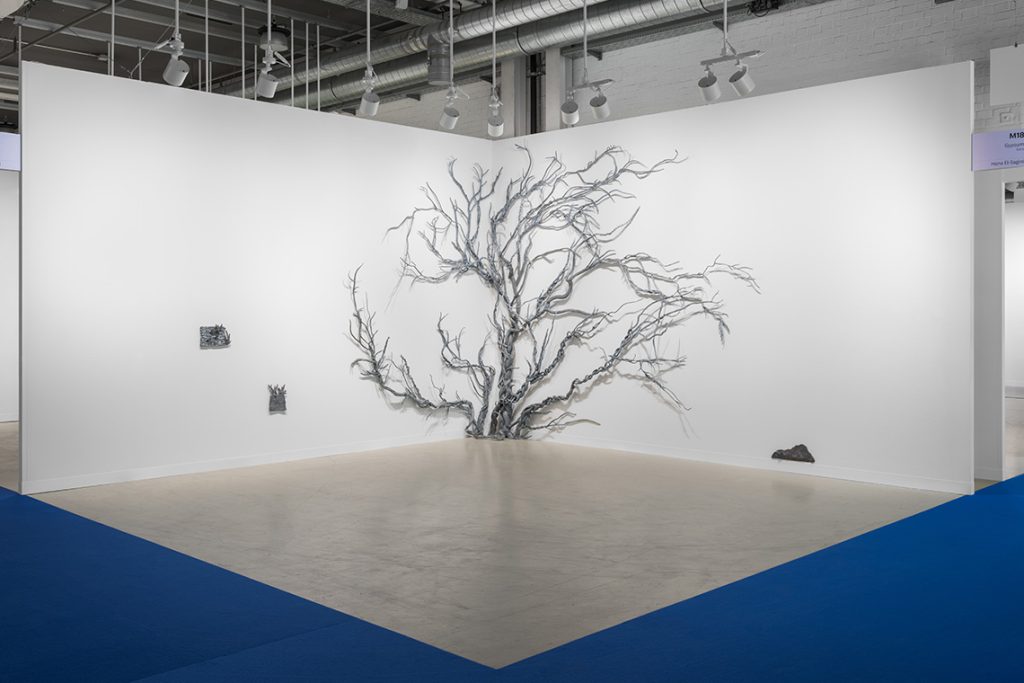
In the Statements sector, dedicated to solo presentations by emerging artists, Gypsum exhibits a presentation by Hana El-Sagini entitled Plot Twist, a site-specific bronze installation of braids that probes the body’s simultaneous vulnerability and strength. Marfa’ also features in this sector, with Majd Abdel Hamid’s Compositions (2026), a series of time-intensive improvised embroideries.
Across other gallery booths, works by other notable names from the region are on display, such as Rami Farook’s oil on canvas, Surrender, Truce, Ceasefire, Peaceful Intent, or Request for Negotiation (2024), with Turin’s Galleria Franco Noero, Tala Madani at David Kordansky and Maryam Hoseini with Deborah Schamoni. In Mor Charpentier’s booth, Bouchra Khalili’s embroidery on linen, Sea-Drifts (2024) continues the artist’s long-term research on migration routes across the Atlantic, considered among some of the deadliest. The gallery also showcases Kader Attia’s Repaired Broken Mirror (2026), which reflects on how different cultures react to damage and healing and echoes contemporary society.
Overall this year, the increase in the number and range of international voices stands out. Ambitious installations and more sharply focused critical discourse are addressing issues such as migration, power structures and social change – a reflection of how galleries are responding to a broader market appetite, seeking out new names and trying to learn from globally relevant perspectives and practices.
Art Basel runs until 21 June
